Cite
MLA
“Battle of Ramnagar.” Hindu History, 2026, https://www.hinduhistory.in/battles/battle-of-ramnagar-1848/. Accessed .
APA
Hindu History. (2026). Battle of Ramnagar. Retrieved , from https://www.hinduhistory.in/battles/battle-of-ramnagar-1848/
The Company’s cavalry attack was thrown back with heavy loss and two of its senior officers killed; the Sikhs held the Chenab.
01The Punjab rises again
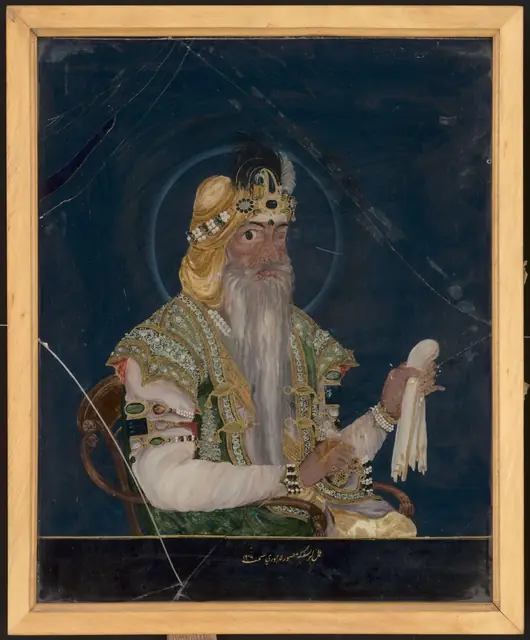
In April 1848 Diwan Mulraj of Multan rebelled against the British-run Lahore Darbar. In September Sher Singh Attariwala, sent to help put him down, went over to the rebels with his troops, and his father Chattar Singh rose in Hazara. Sher Singh moved north to the Chenab. Gough, commanding the Company’s army of the Punjab, marched to meet him.
02Death in the sand
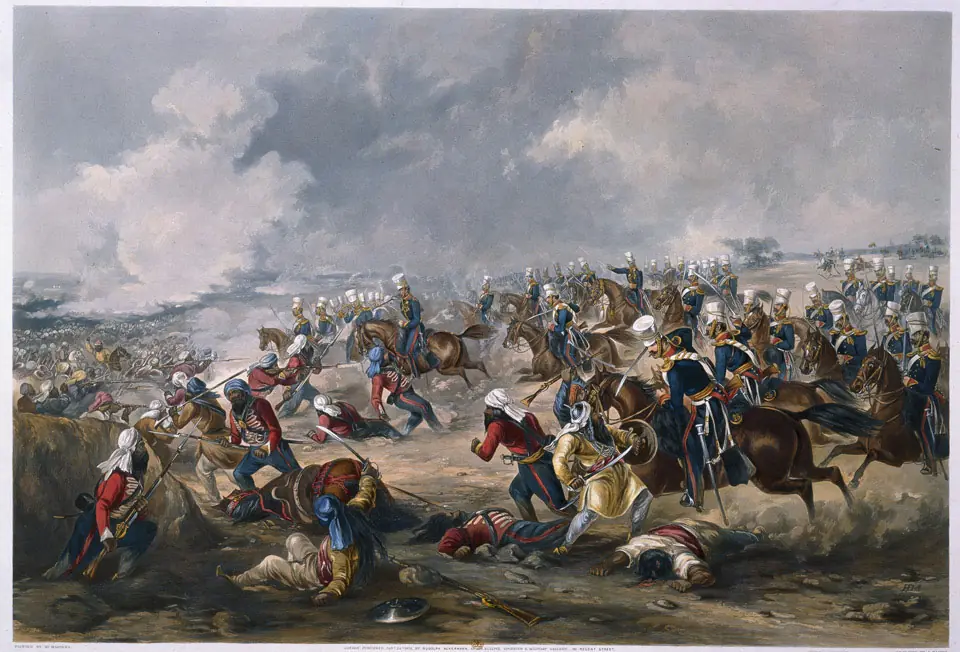
On 22 November 1848 Gough found a Sikh rearguard on the near bank by Ramnagar and sent his horse artillery and cavalry to drive it across. The guns stuck in the soft sand of the riverbed, and the Sikh batteries on the far bank opened fire. The 14th Light Dragoons charged a body of Sikh horse and infantry and rode into the guns’ range. Their colonel, William Havelock, was killed, and Brigadier-General Charles Cureton, the cavalry commander, fell trying to recall them. Gough broke off the action.
03Towards Chillianwala
Ramnagar was a small battle, but it showed that the Sikh gunners had lost none of their skill. Gough turned the Sikh position by crossing upstream, Sher Singh drew back towards the Jhelum, and the two armies met again at Chillianwala in January 1849, the bloodiest battle the Company fought in India.
The Sikh success at Ramnagar opened the Second Anglo-Sikh War with a check to the Company and led on to Chillianwala.