
Cite
MLA
“The Khond rising.” Hindu History, 2026, https://www.hinduhistory.in/battles/khond-rising-1846/. Accessed .
APA
Hindu History. (2026). The Khond rising. Retrieved , from https://www.hinduhistory.in/battles/khond-rising-1846/
The rising was worn down by repeated expeditions; Chakra Bisoi was never captured and disappeared from the record in the 1850s.
01Ghumsur and the agency
The Company took the zamindari of Ghumsur after the rising of its raja in 1835–37, and with it a long frontier of Kandha hill country that had never paid anyone revenue. In 1845 a special agency was set up to end the meriah sacrifice, the offering of a human victim to the earth goddess. The agents went into the hills with troops, seized victims, and set up chiefs of their own choosing. The Kandhas saw their land and their customs taken out of their hands.
02Chakra Bisoi’s war
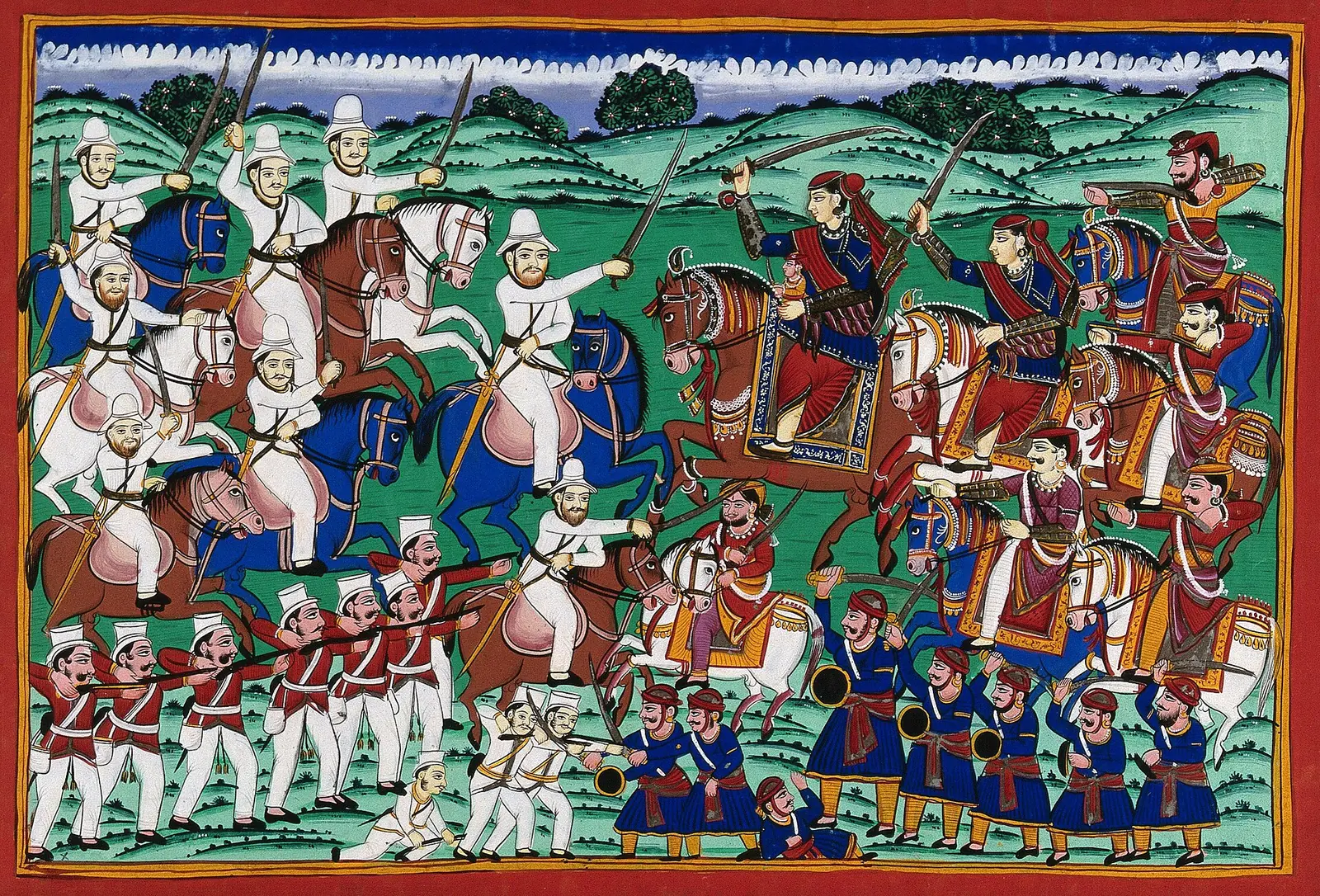
Chakra Bisoi, of a family that had served the old Ghumsur rajas, raised the Kandhas late in 1846 and gave the movement a cause beyond the meriah issue: the return of the Ghumsur line. Bands attacked the agency’s camps and the chiefs it had set up. Troops from Madras and Cuttack went in season after season, burning villages and offering pardons. The resistance faded by the mid-1850s, but Chakra Bisoi himself was never taken, and he is honoured in Odisha as a freedom fighter.
The Kandha rising was one of the long tribal resistances of eastern India before 1857.