
Cite
MLA
“Matale Rebellion.” Hindu History, 2026, https://www.hinduhistory.in/battles/matale-rebellion-1848/. Accessed .
APA
Hindu History. (2026). Matale Rebellion. Retrieved , from https://www.hinduhistory.in/battles/matale-rebellion-1848/
The rising was put down under martial law; Puran Appu was shot, Gongalegoda Banda was transported, and the harsh repression led to Torrington’s recall.
01Taxes and a king
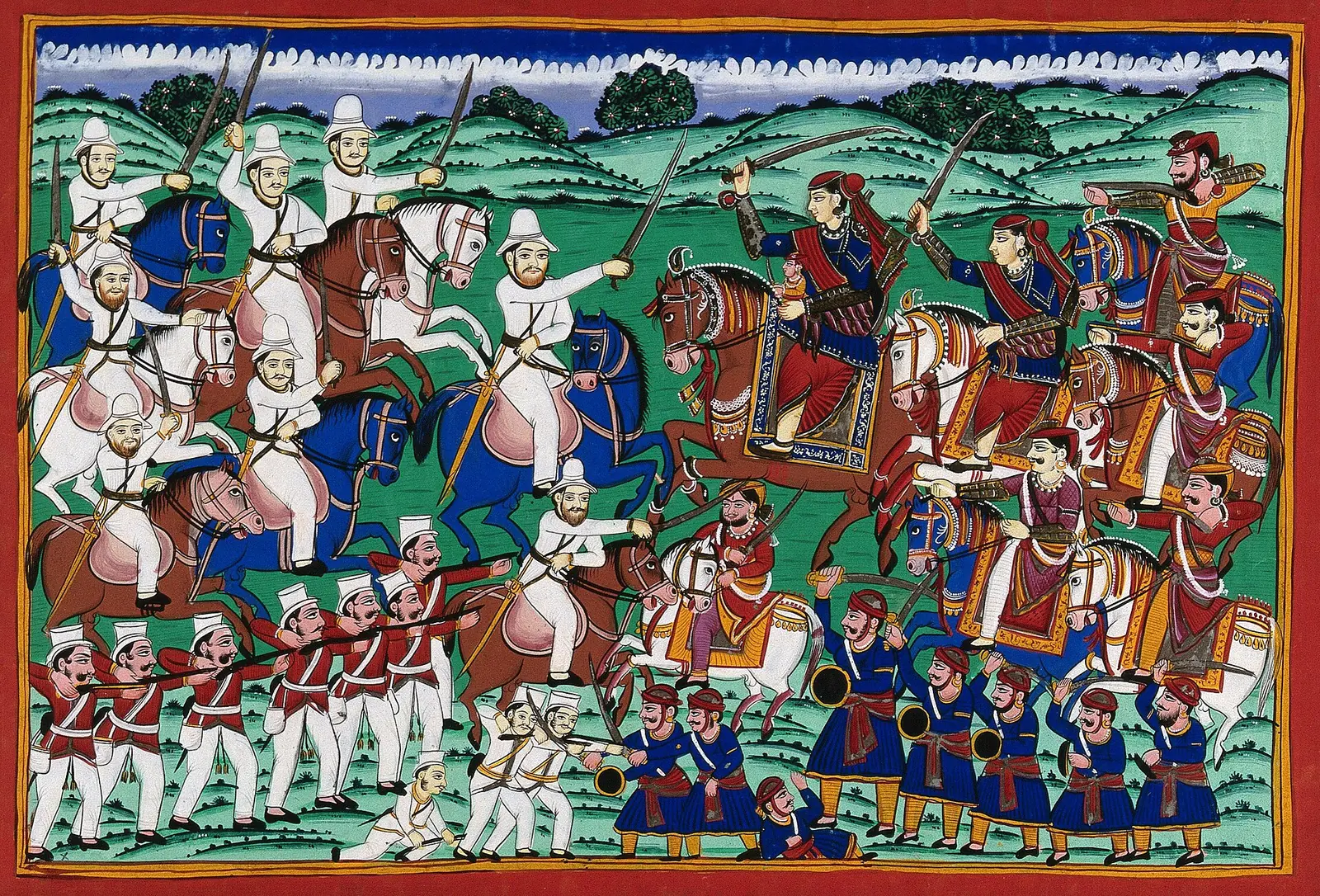
Governor Torrington’s new ordinances of 1848 taxed shotguns, dogs and shops, and required six days’ road labour a year or a money payment. In the Kandyan districts, under British rule since 1815, this fell on poor cultivators already losing hill land to coffee planters. A movement grew around Gongalegoda Banda, who was presented as heir of the Kandyan kings. On 28 July he was proclaimed king at Dambulla, with Puran Appu as his chief captain.
02Martial law
The rebels sacked government buildings in Matale and marched on Kurunegala, where troops fired on them. Torrington proclaimed martial law across the Kandyan provinces. Courts-martial condemned men in haste; Puran Appu was shot at Kandy in August, and others were hanged, including a Buddhist monk. Gongalegoda Banda was caught in October and sent to Malacca. The severity caused an outcry in Parliament, a select committee was appointed, and Torrington was recalled in 1850.
Sri Lanka counts 1848 among its early struggles for freedom, and Puran Appu and Gongalegoda Banda are named national heroes there.