Cite
MLA
“Jhalkari Bai.” Hindu History, 2026, https://www.hinduhistory.in/people/jhalkari-bai/. Accessed .
APA
Hindu History. (2026). Jhalkari Bai. Retrieved , from https://www.hinduhistory.in/people/jhalkari-bai/
Life in moments
- 011830
Born at Bhojla village near Jhansi in 1830
- 02
Wife of Puran Kori of the Jhansi artillery
- 03
Led women soldiers of the Durga Dal
- 041858
Took the Rani’s place during the siege of Jhansi in April 1858
- 052001
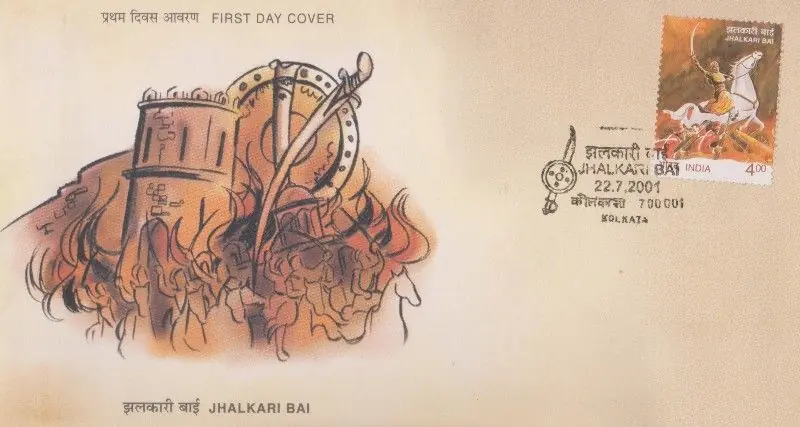
India Post issued a stamp on her in 2001
01The girl from Bhojla
Bundelkhand remembers her as a girl who herded cattle, gathered wood in the jungle and once killed a leopard with an axe. She married Puran Kori, a soldier in the Jhansi artillery, and through him came to the notice of Rani Lakshmibai. The Rani was raising a troop of women trained in the musket, the sword and horse riding, later called the Durga Dal. Jhalkari became one of its leaders. People in Jhansi also said she looked remarkably like the Rani herself.
02April 1858
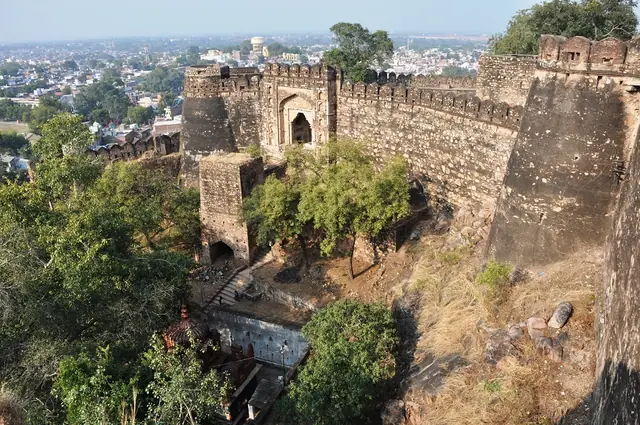
When Sir Hugh Rose’s army stormed Jhansi in early April 1858, the Rani left the fort by night for Kalpi. The Bundeli accounts say Jhalkari put on the Rani’s dress, rode out to the British camp and held their attention long enough for the real Rani to get clear. How she died is told differently: some say she fell in the fighting, others that she was released and lived on. Her story was kept alive in Bundeli songs long before historians wrote it down. India Post issued a stamp in her honour on 22 July 2001.