Cite
MLA
“Sri Anandamayi Ma.” Hindu History, 2026, https://www.hinduhistory.in/people/anandamayi-ma/. Accessed .
APA
Hindu History. (2026). Sri Anandamayi Ma. Retrieved , from https://www.hinduhistory.in/people/anandamayi-ma/
Life in moments
- 011896
Born Nirmala Sundari on 30 April 1896 at Kheora, now in Brahmanbaria, Bangladesh.
- 021908
Married in 1908 to Ramani Mohan Chakrabarti, whom she called Bholanath.
- 031922
Performed her own initiation on the full-moon night of 3 August 1922.
- 041929
Her first ashram was built at Ramna, Dhaka, in 1929.
- 051982
Left the body at Dehradun on 27 August 1982; samadhi at Kankhal, Haridwar.
01Nirmala of Kheora
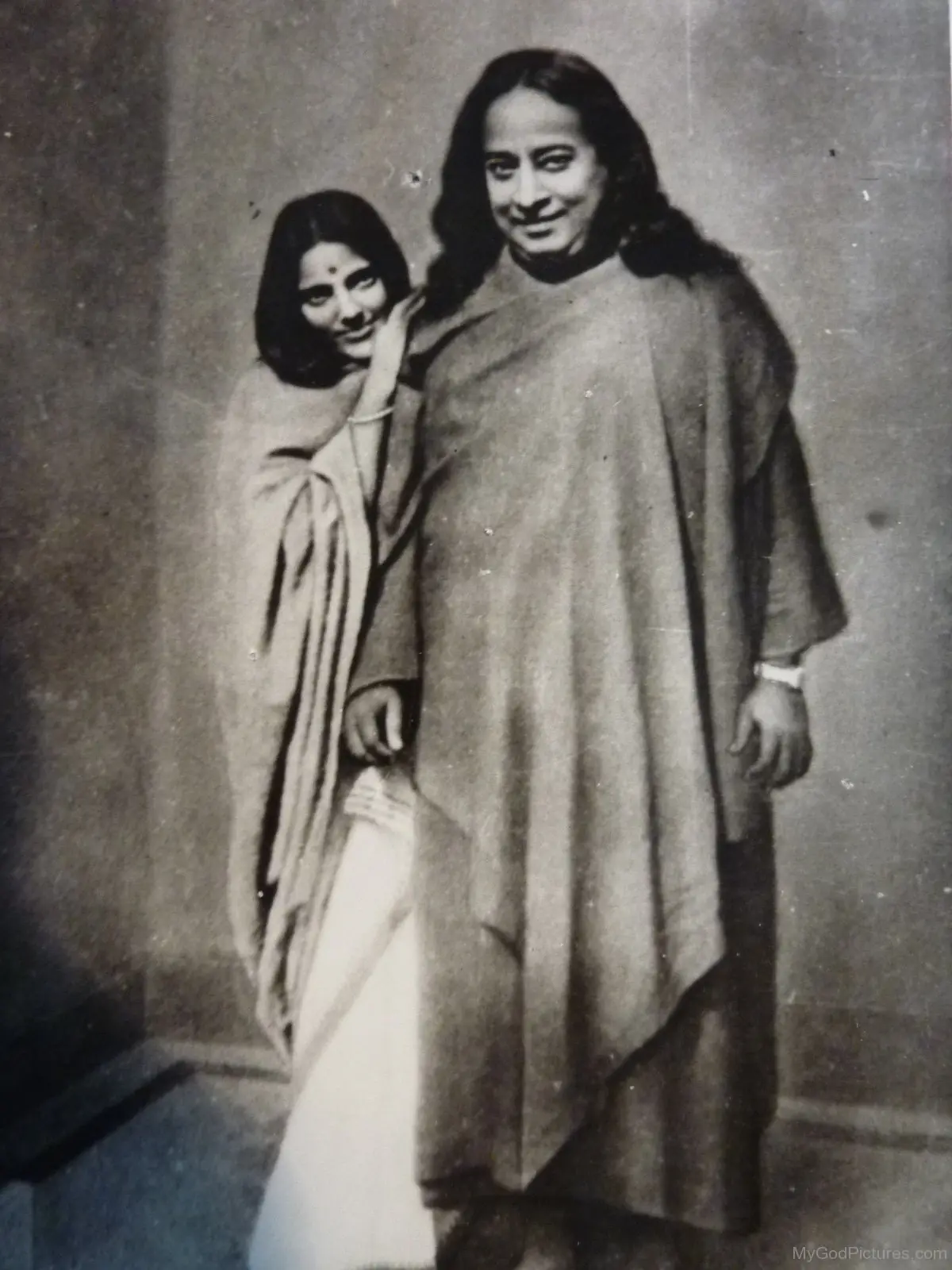
She was born on 30 April 1896 at Kheora, in Tippera district of Bengal, today Brahmanbaria in Bangladesh, to Bipin Bihari Bhattacharya, a Vaishnava singer, and Mokshada Sundari Devi. The family was poor. Her brothers died young, and with no one to walk her the long way to school she went for only a few months. Her mother worried at how unmoved and happy the child always seemed. In 1908, at twelve, she was married to Ramani Mohan Chakrabarti of Bikrampur, whom she later called Bholanath. She spent five years in her brother-in-law’s house doing the housework in a quiet, inward way. At Ashtagram, where she joined her husband at about seventeen, a neighbour named Harakumar began to call her Ma and bow to her morning and evening.
02Bajitpur, the night of 1922, and Shahbag
From 1918 to 1924 the couple lived at Bajitpur. At kirtan she would fall into bhava, ecstasy, and lie on the ground for hours, and from the end of 1918, her biographers say, the name of God ran through her with every breath, and yogic postures formed in her body of their own accord. On the full-moon night of 3 August 1922 she performed her own initiation, with flowers, yantra and fire, rites she had never been taught. ‘As the guru I revealed the mantra; as the disciple I accepted it’, she later said. In 1924 Bholanath became caretaker of the Nawab of Dhaka’s gardens at Shahbag, and the crowds at her kirtans grew. Jyotish Chandra Ray, known as Bhaiji, first proposed the name Anandamayi Ma, and built her first ashram at Ramna, in the precinct of the Ramna Kali temple, in 1929. In 1926 she had an old, abandoned Kali temple at Siddheshwari put back into worship.
03Sixty years on the road, and Kankhal
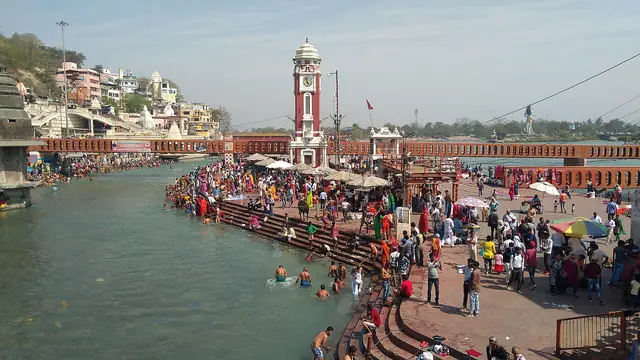
From Dehradun, where she moved in the 1930s, she travelled the length of India for the rest of her life, rarely staying long in one place. Scholars came to her: Mahamahopadhyaya Gopinath Kaviraj, the Sanskritist and principal of the Government Sanskrit College at Varanasi, was among her followers, and the dancer Uday Shankar sought her out. Paramahansa Yogananda met her in 1935 and wrote of her as the ‘joy-permeated mother’. She called herself a little unlettered child, and would say that whatever was asked of her came from the one Self. The Shree Shree Anandamayee Sangha, with its headquarters at Varanasi, grew round her from the 1950s; it still holds the yearly Samyam Mahavrata, a week of collective fasting, meditation and kirtan. She left the body on 27 August 1982 at Dehradun, and two days later her samadhi was built in the courtyard of her ashram at Kankhal, on the Ganga at Haridwar.