Cite
MLA
“Yakshagana.” Hindu History, 2026, https://www.hinduhistory.in/kala/yakshagana/. Accessed .
APA
Hindu History. (2026). Yakshagana. Retrieved , from https://www.hinduhistory.in/kala/yakshagana/
What defines it
- 01
Bhagavata, the singer-director
- 02
Chande and maddale drums
- 03
Towering kireeta headdress
- 04
Improvised Kannada dialogue
- 05
Tenkutittu and Badagutittu styles
01Song of the yakshas
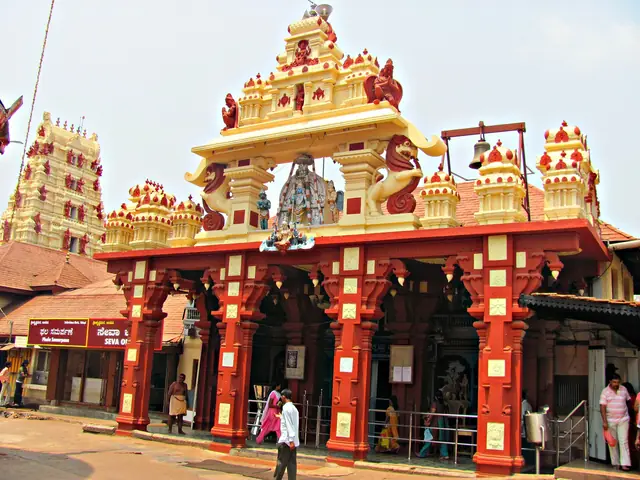
The name means the song of the yakshas. The form was well established by the 16th century in the Vijayanagara lands, and its poets wrote prasangas, sung scripts in Kannada, on episodes of the Ramayana, Mahabharata and Bhagavata. Parthi Subba of Kumbla, around 1600 by most accounts, is the earliest named poet of the tradition. Temple-based troupes, the melas, attached to shrines like Dharmasthala, Kateel and Mandarthi, toured from village to village through the dry season.
02Bhagavata, chande and the hero
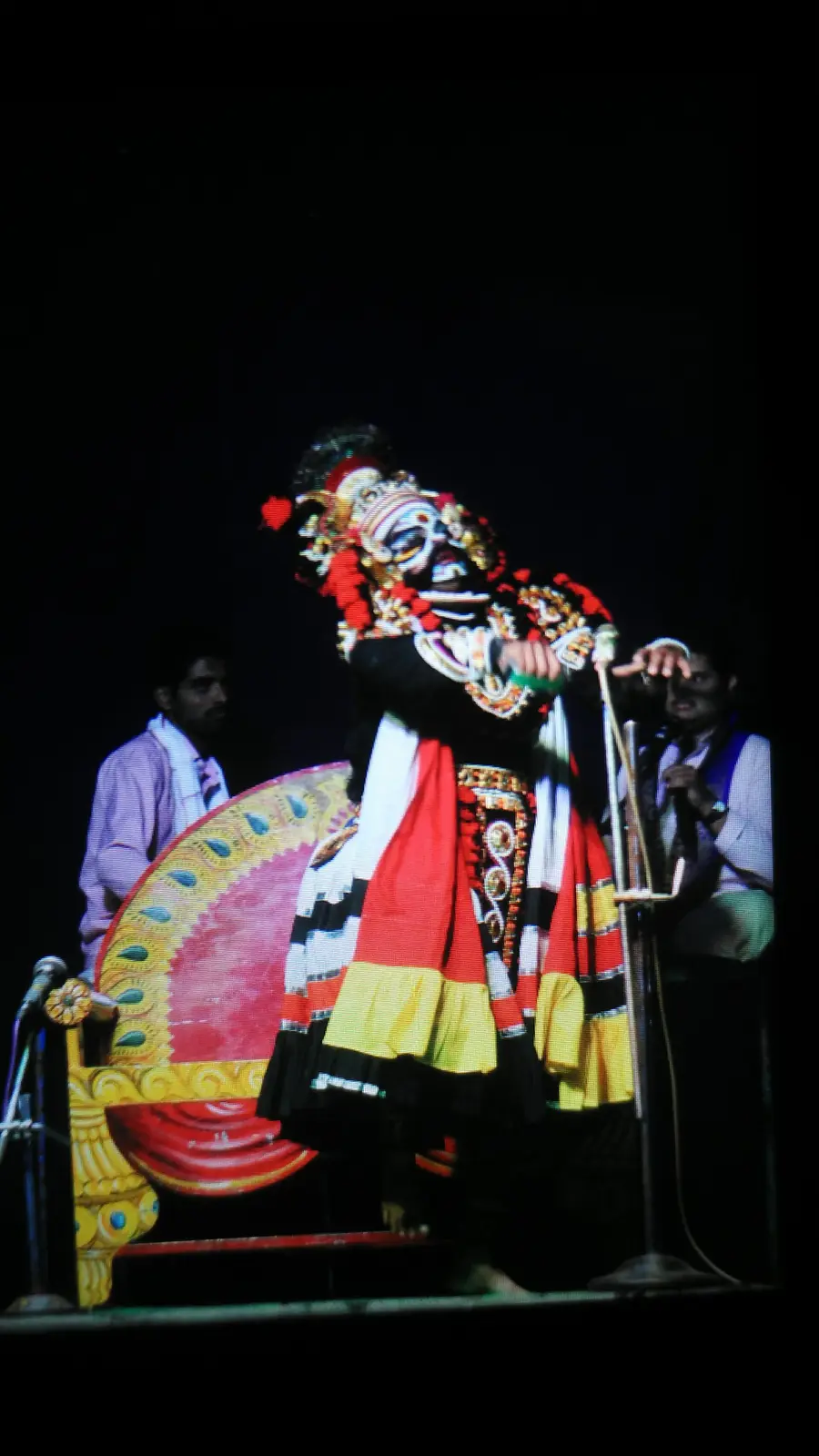
The bhagavata, the lead singer, keeps time with small cymbals and directs the night. The chande, a loud upright drum, and the maddale accompany him. Dancers wear tall, many-tiered kireeta headdresses, bright face paint and padded costumes, and spin and leap; after each song they speak in Kannada, improvising arguments that can go on for many minutes. The Tenkutittu style of the south is more vigorous; the Badagutittu of the north, shaped by Keremane Shivarama Hegde, is more dance-like. Talamaddale is the seated, spoken form without costume.
03Masters and where to see
Keremane Shivarama Hegde and Chittani Ramachandra Hegde were among its great actors, and the writer Shivarama Karanth studied it and brought it to new stages. The Yakshagana Kendra at Udupi trains young performers. From November to May the melas of Dharmasthala, Kateel and Saligrama play every night in villages of Dakshina Kannada and Udupi; if you hear the chande after dark, follow it.