Cite
MLA
“Koodiyattam.” Hindu History, 2026, https://www.hinduhistory.in/kala/koodiyattam/. Accessed .
APA
Hindu History. (2026). Koodiyattam. Retrieved , from https://www.hinduhistory.in/kala/koodiyattam/
What defines it
- 01
Koothambalam, the temple theatre
- 02
Mizhavu copper drum
- 03
Retelling in mime before each act
- 04
Vidushaka speaking Malayalam
- 05
Nangiar Koothu, the women’s solo
01Sanskrit plays in the temple
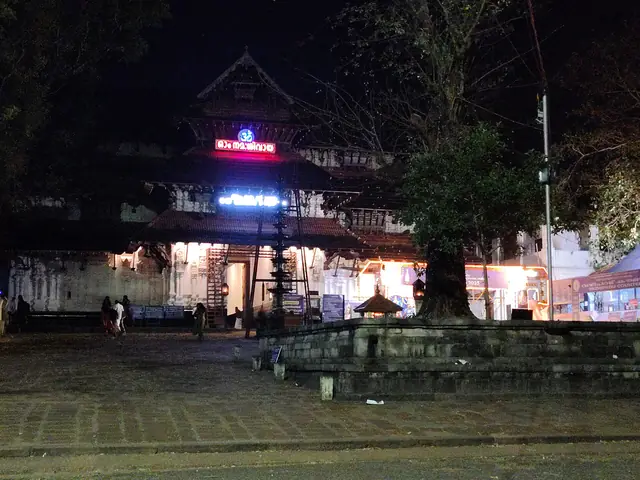
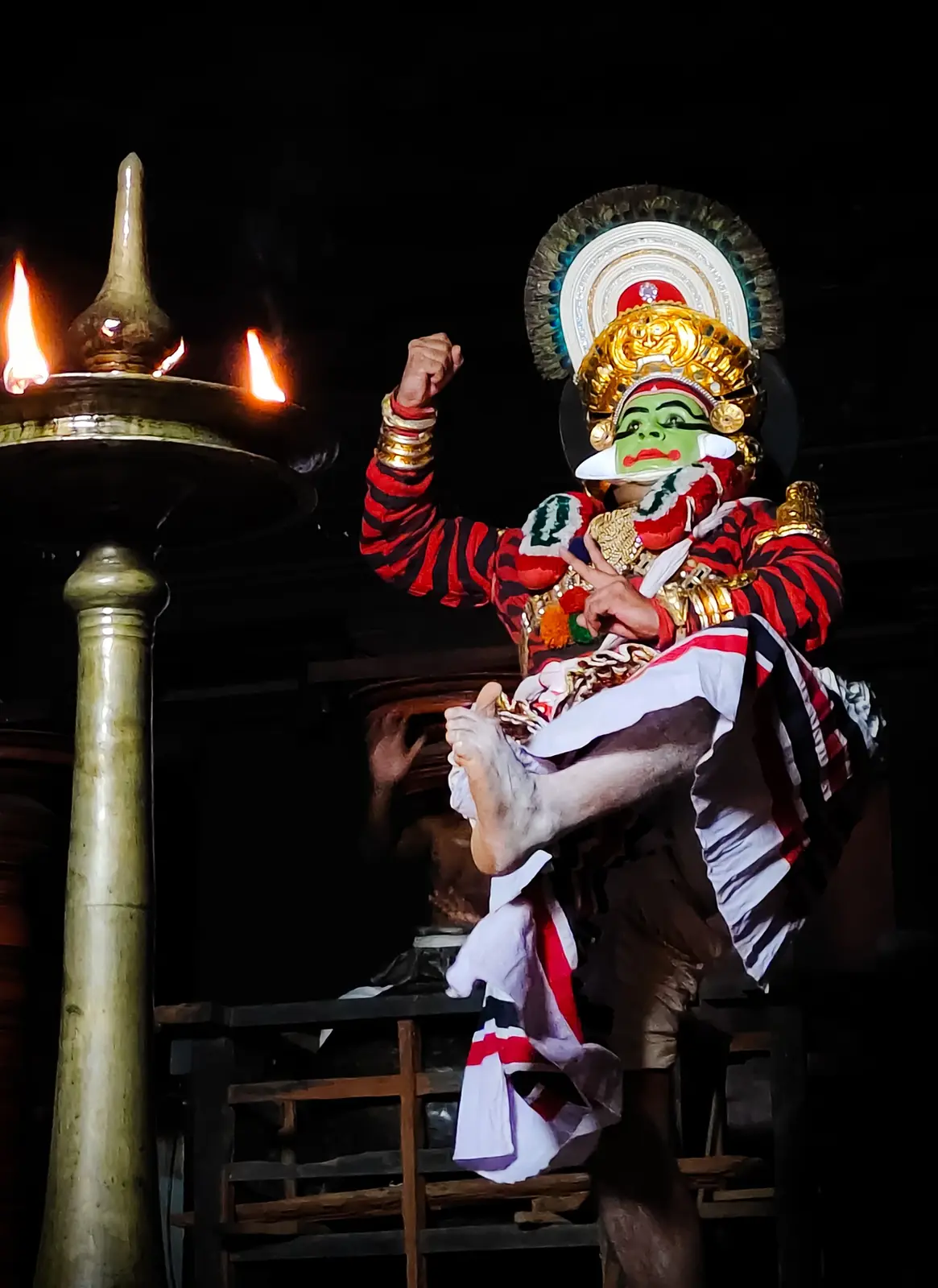
Koodiyattam means acting together. Tradition says the Chera king Kulasekhara Varman, himself the author of the plays Tapatisamvaranam and Subhadradhananjayam, reformed the performance with his Brahmin friend Tolan, letting the vidushaka speak Malayalam so that ordinary people could follow. It is played as an offering in the koothambalam, the theatre hall of the temple, built to the plan the Natya Shastra lays down. Plays of Bhasa, Harsha and Shaktibhadra’s Ashcharyachudamani are still staged.
02Many nights for one act
A single act can take many nights, because the actor first tells, in mime, everything that led up to the scene. In the Anguliyankam, Hanuman’s handing of Rama’s ring to Sita, the performance runs for many days. The actor’s eyes are trained for years, and a single line can be elaborated for an hour. The mizhavu, a great copper pot-drum covered with hide, played only by the Nambiar community, is the sound of Koodiyattam; the Nangiars, women of the Nambiar families, sing and play the cymbals and perform the solo Nangiar Koothu.
03Masters and where to see
For centuries it was never performed outside the temple. Painkulam Rama Chakyar took it to the Kerala Kalamandalam and outside audiences in the mid-20th century; Mani Madhava Chakyar, famous for his eyes, and Ammannur Madhava Chakyar, who founded the Ammannur Chachu Chakyar Smaraka Gurukulam at Irinjalakuda, trained a new generation. See it at the koothambalam of the Vadakkunnathan temple in Thrissur, the Koodalmanikyam temple at Irinjalakuda, or at Margi in Thiruvananthapuram.