Cite
MLA
“Maa Narmada.” Hindu History, 2026, https://www.hinduhistory.in/devata/narmada-devi/. Accessed .
APA
Hindu History. (2026). Maa Narmada. Retrieved , from https://www.hinduhistory.in/devata/narmada-devi/
सबिन्दुसिन्धुसुस्खलत्तरङ्गभङ्गरञ्जितं
द्विषत्सु पापजातजातकारिवारिसंयुतम्।
कृतान्तदूतकालभूतभीतिहारिवर्मदे
त्वदीयपादपङ्कजं नमामि देवि नर्मदे॥
sabindusindhususkhalattaraṅgabhaṅgarañjitaṃ
dviṣatsu pāpajātajātakārivārisaṃyutam |
kṛtāntadūtakālabhūtabhītihārivarmade
tvadīyapādapaṅkajaṃ namāmi devi narmade ||
A young Devi, fair, seated on a makara, the crocodile of the river, with a pot of water and a lotus, at her shrines at Amarkantak and along the ghats. The river herself is the form most worshipped: lamps are floated on her at dusk, and a smooth stone from her bed, the banalinga or Narmadeshwar, is set up as a Shiva linga in homes and temples across India.
01Daughter of Shiva
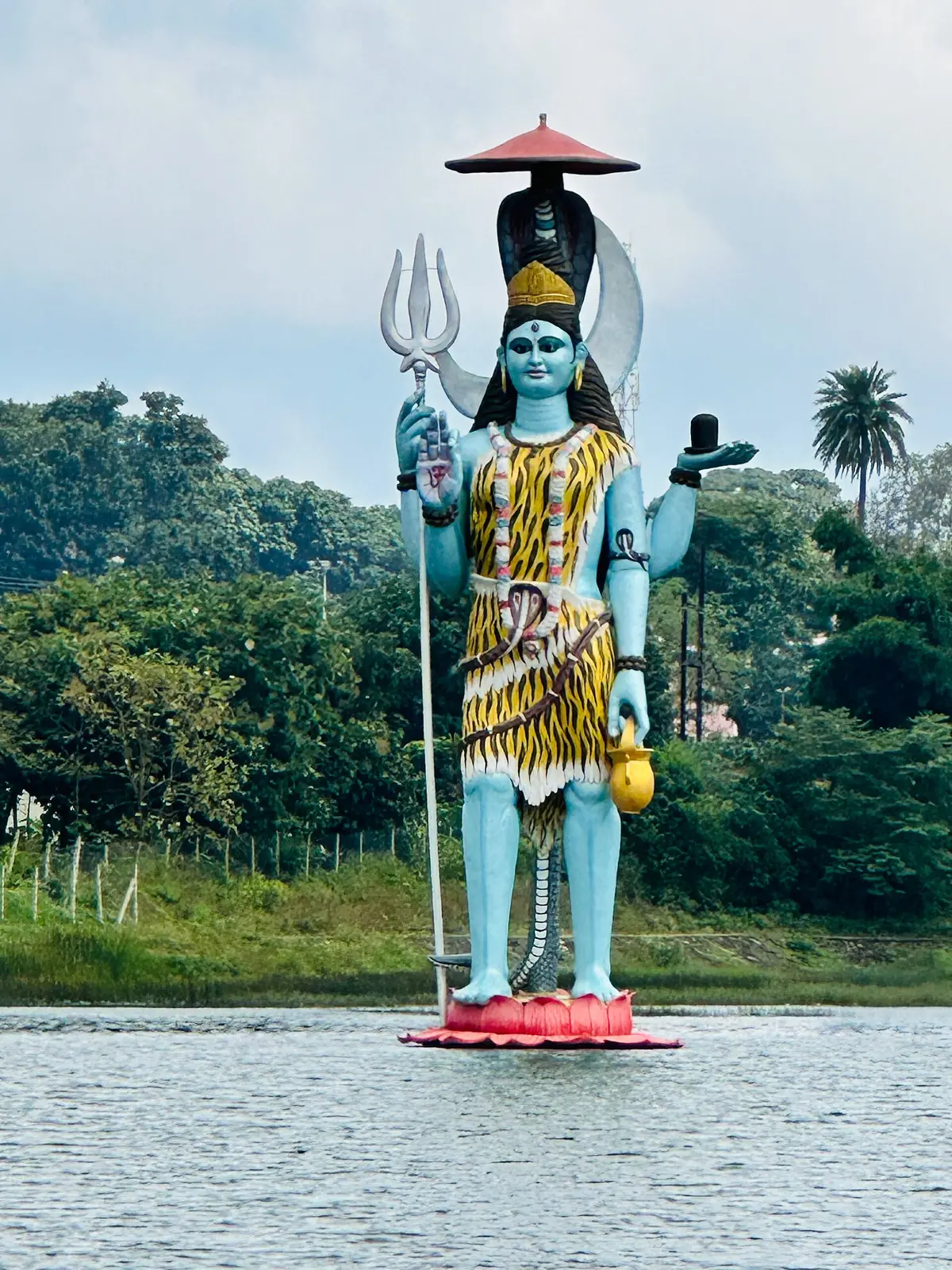
The Reva Khanda of the Skanda Purana tells that Bhagwan Shiva sat in tapas on Mount Riksha, and from the sweat of his body a river was born; so the Narmada is Shiva’s daughter, Shankari, and every pebble in her bed is a Shiva. People say it in four words: Narmada ke kankar, utte Shankar. Another katha has two tears of Brahma become the Narmada and the Son. The Puranas name her Reva, the leaping one, for the way she bounds over her rocky bed, and the Matsya Purana declares all her banks holy. A well-known saying ranks the rivers: bathing in the Ganga purifies, drinking from the Yamuna purifies, and the mere darshan of the Narmada purifies.
02The parikrama
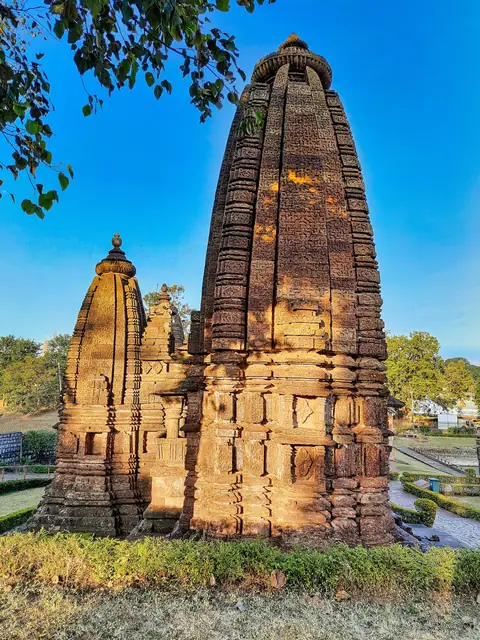
The Narmada rises in a small walled kund at Amarkantak on the Maikal plateau, where the Vindhya and Satpura ranges meet, and runs about 1,312 km west to the Gulf of Khambhat. She is the one river of Bharat whose whole length is walked as a parikrama. Pilgrims set out from Amarkantak or from a ghat of their choosing, go down one bank to the sea near Bharuch, cross, and come back up the other, about 2,600 km, never stepping over the river. Done in the old way it takes three years, three months and thirteen days. Behind the Narmada Udgam at Amarkantak stand Kalachuri stone temples built under King Karna, who ruled about 1041 to 1073.
03Omkareshwar, Maheshwar, Bhedaghat
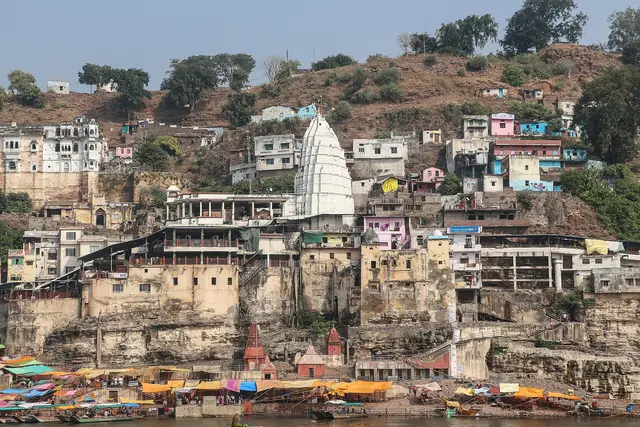
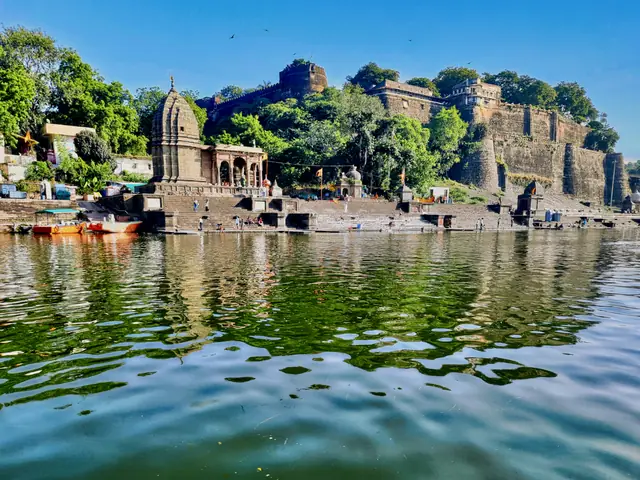
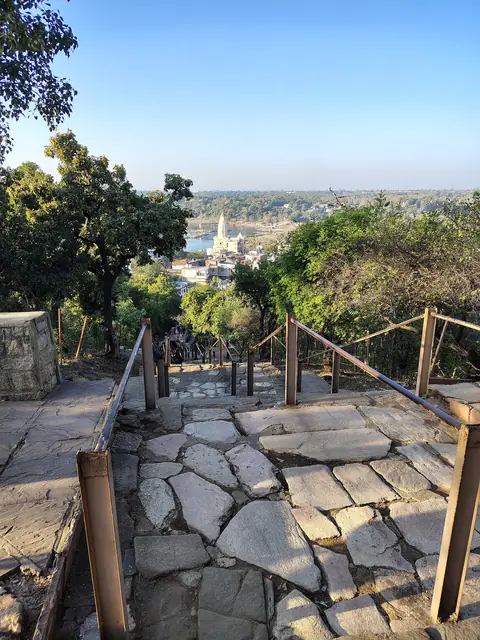
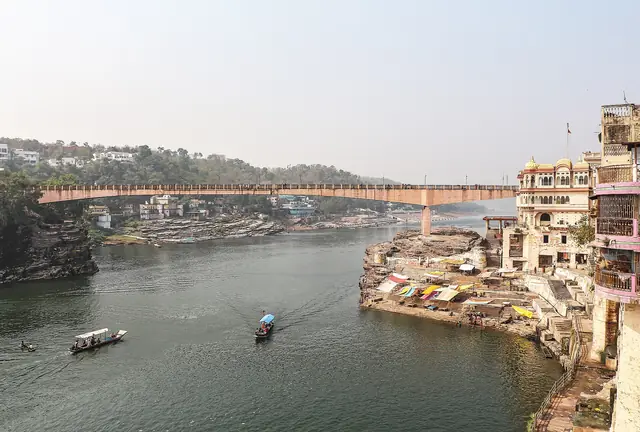
On her banks stand some of Bharat’s holiest places. At Omkareshwar the river wraps around the island of Mandhata, held to be shaped like the syllable Om, and there the Jyotirlinga stands. On that island, the Shankara tradition says, the young Shankara found his guru Govinda Bhagavatpada, and his Narmadashtakam ends every verse with tvadīyapādapaṅkajaṃ namāmi devi narmade, I bow to your lotus feet, Devi Narmada. Downstream lie the long ghats of Maheshwar, and near Jabalpur the river cuts through the white marble gorge of Bhedaghat, past the Dhuandhar falls and the Chausath Yogini temple on its hill. Narmada Jayanti is kept on Magha Shukla Saptami.
In the texts
- Skanda Purana, Reva Khanda
- Matsya Purana
- Narmadashtakam of Adi Shankaracharya