Cite
MLA
“Mariamman.” Hindu History, 2026, https://www.hinduhistory.in/devata/mariamman/. Accessed .
APA
Hindu History. (2026). Mariamman. Retrieved , from https://www.hinduhistory.in/devata/mariamman/
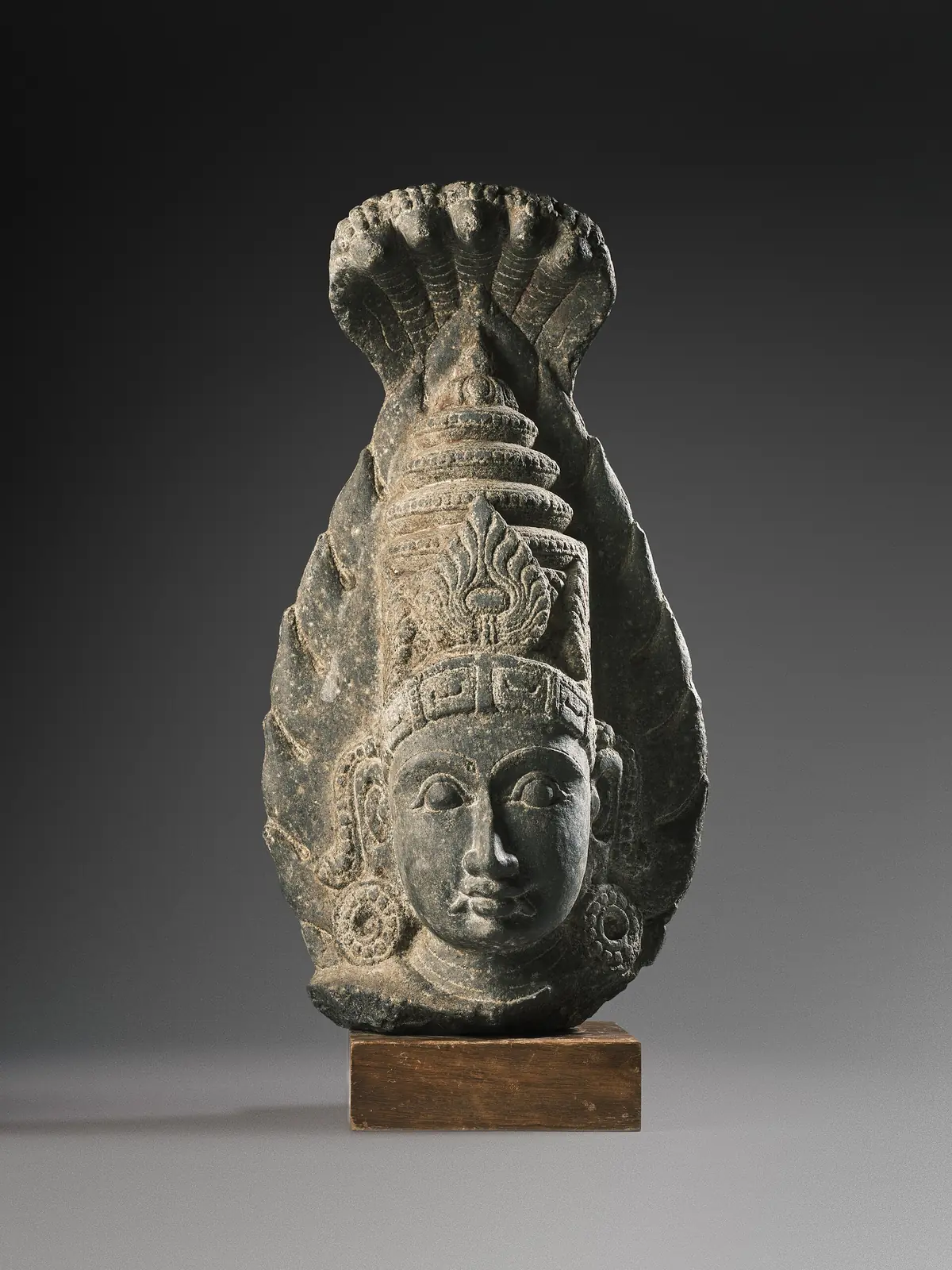
A seated Devi with a calm face, often under the hood of a five-headed cobra, holding a trident, a drum, a noose and a bowl; at many village shrines she is only a head or a stone smeared with turmeric and kumkum, with neem leaves heaped before her.
01Mari, the rain
In old Tamil, mari means rain, and amman means mother. She is the Devi a Tamil village calls on when the sky stays dry, and the one it fears to forget when fever comes. Henry Whitehead, who toured the villages of the south before 1916, found her the commonest Devi of the Tamil country and called her plainly the goddess of smallpox. When pox entered a house, families hung neem leaves at the door, fanned the sick with neem and kept them cool. Cholera and chickenpox were brought to her too. Even now, in the hot months, women carry pots of water mixed with turmeric and neem to her shrine.
02Renuka’s head
A katha told across the Tamil country joins Mariamman to Renuka, wife of the rishi Jamadagni and mother of Bhagwan Parashurama. When Parashurama struck off his mother’s head at his father’s command and then asked for her life back, the heads were set on wrongly in the hurry, so the Devi who rose had a changed form, and she was worshipped as Mariamman. This is why at many shrines only her head is worshipped, set on the ground or on a pedestal. Whitehead recorded tellings of the same katha in the villages he visited, and the link between Mariamman and Yellamma, Renuka of the Kannada and Telugu country, is made by devotees in both regions.
03Samayapuram and the month of Aadi
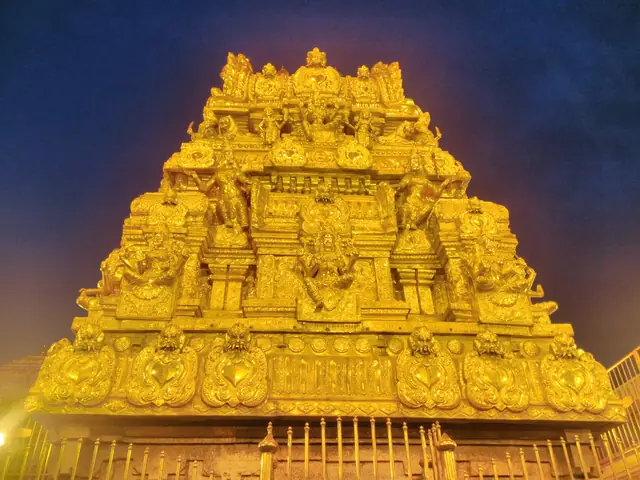
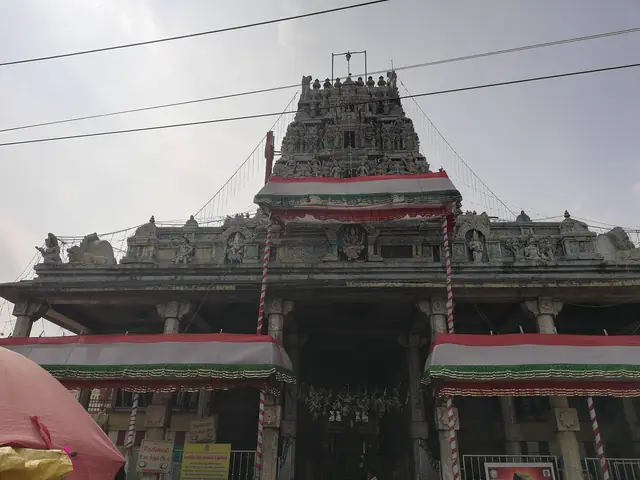
Samayapuram, north of the Kaveri near Tiruchirappalli, is her best-known temple. There the order is reversed: in the month of Masi the Devi herself keeps a fast of twenty-eight days for her people, and is offered no cooked food. In April a ten-day festival fills the roads; some devotees carry pots decked with neem, some pierce their cheeks or tongues with small vel-like spears. Across Tamil Nadu the great season of Mariamman is Aadi, July to August, when the rains are awaited. Pongal of rice and green gram is cooked in new clay pots in the temple yard, and koozh, a thin millet porridge, is shared out from big earthen vessels. Karumariamman at Thiruverkadu, on Chennai’s edge, is crowded every Sunday of Aadi.
04Across the seas
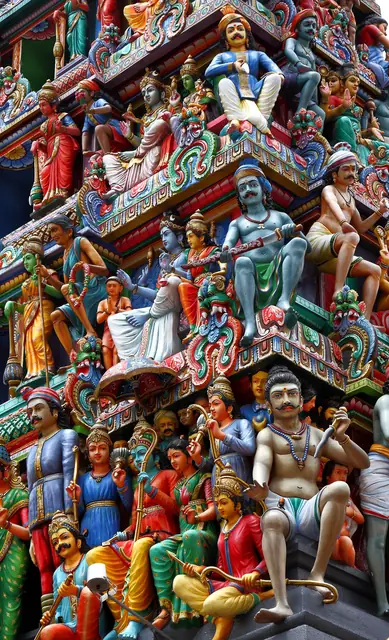
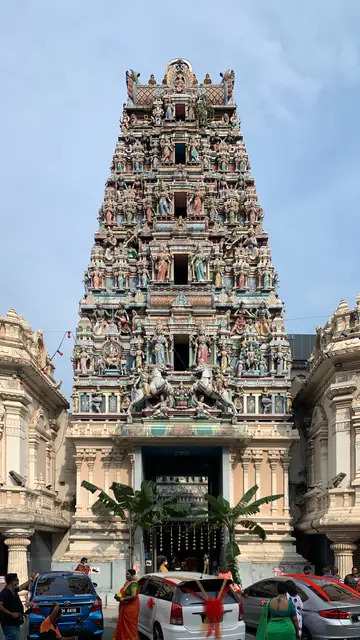
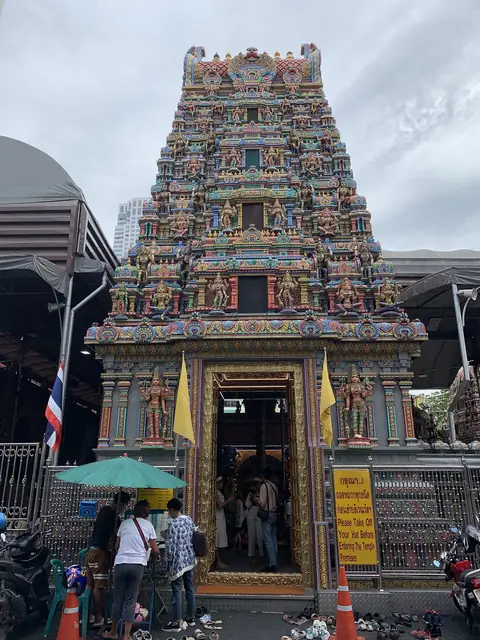
Wherever Tamil families went in the nineteenth century, as traders or as indentured labourers, a Mariamman shrine went with them. In Singapore, Naraina Pillai, who came to the island with Stamford Raffles, founded the Sri Mariamman Temple in 1827, now the oldest Hindu temple there; its yearly firewalk, theemithi, draws thousands. Kuala Lumpur has its Sri Mahamariamman temple, Bangkok its Sri Maha Mariamman on Silom Road, and there are Mariamman shrines in Fiji, Mauritius, Reunion, South Africa, Guyana and Trinidad. In many of these places the first temple was a small shed by a plantation line, and the Devi who had guarded a village on the Kaveri became the guardian of a whole community far from home.
In the texts
- Samayapuram and Punnainallur temple traditions
- Tamil village songs and amman kathas