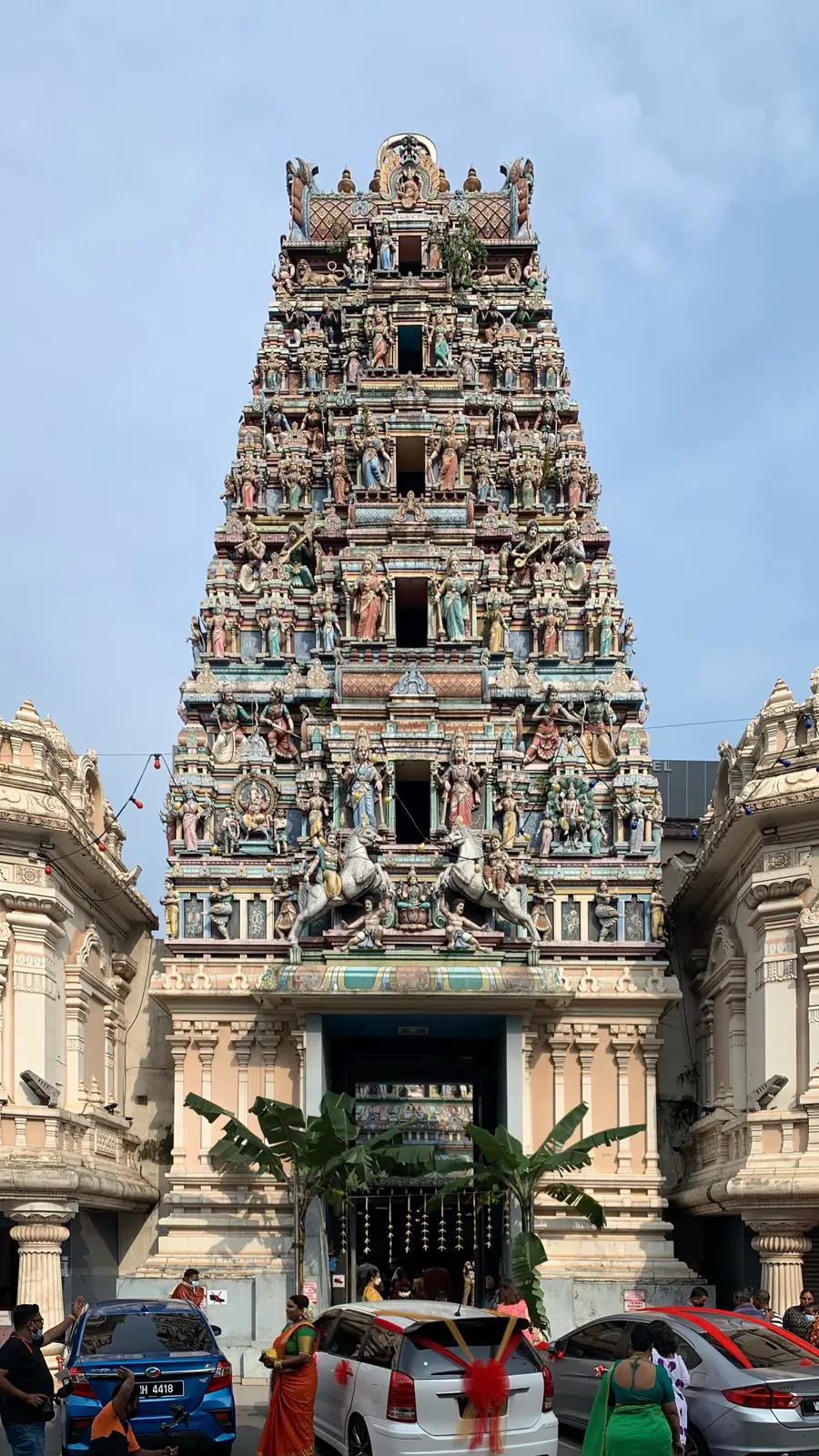
01A family shrine for a mining town
Kuala Lumpur grew in the 1860s and 70s as a tin-mining settlement, and Tamil workers came to build its railways and roads. Thamboosamy Pillai, a Tamil from Singapore who became one of the town’s leading men, set up a shrine of Mariamman in 1873, at first for his own family, near where the railway station now stands. In 1885 it moved to its present site on what was High Street, and in 1887 the attap hut gave way to a brick temple. The family opened it to all Hindus in the late 1920s and later handed it to a board of trustees.
02Gopuram and chariot
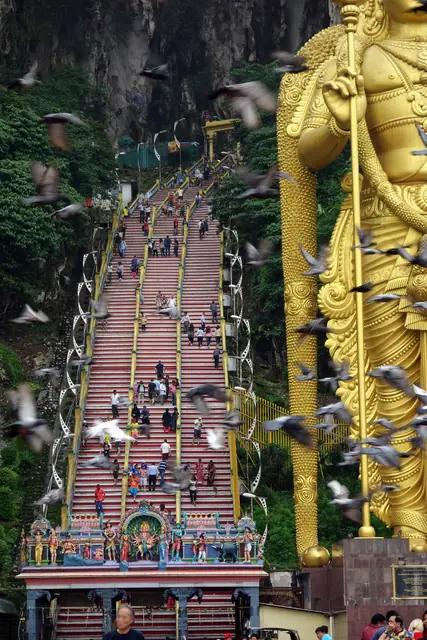
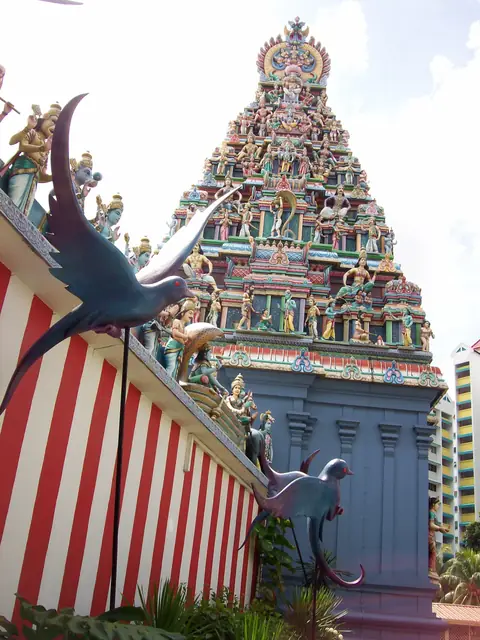
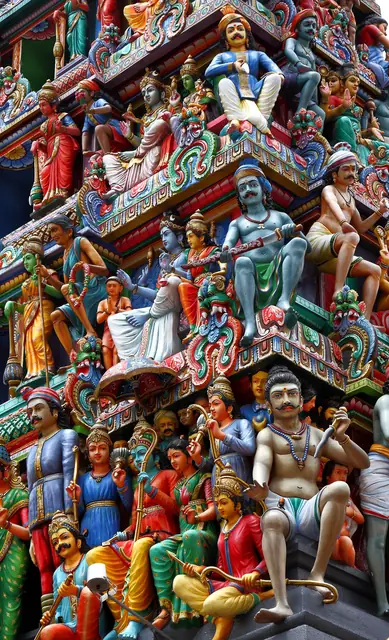
The brick temple was replaced by the present building, completed in 1968, and its five-tiered gopuram, crowded with more than two hundred painted figures, was finished in 1972; the temple was consecrated in 1973. Craftsmen from Tamil Nadu did the work. The temple keeps the great silver chariot that carries Murugan’s Vel to Batu Caves on the eve of Thaipusam, a procession of about 15 km through the night streets, with tens of thousands walking behind it.
The life of this place
- 1873K. Thamboosamy Pillai founds the shrine.
- 1885The temple moves to its present site.
- 1972The five-tiered gopuram is completed.
- 1973The rebuilt temple is consecrated.
Jalan Tun H. S. Lee, near Pasar Seni station. Shoes are left at the gate; Thaipusam eve is the great night.