Cite
MLA
“Bhagavati of Kerala.” Hindu History, 2026, https://www.hinduhistory.in/devata/bhagavati-of-kerala/. Accessed .
APA
Hindu History. (2026). Bhagavati of Kerala. Retrieved , from https://www.hinduhistory.in/devata/bhagavati-of-kerala/
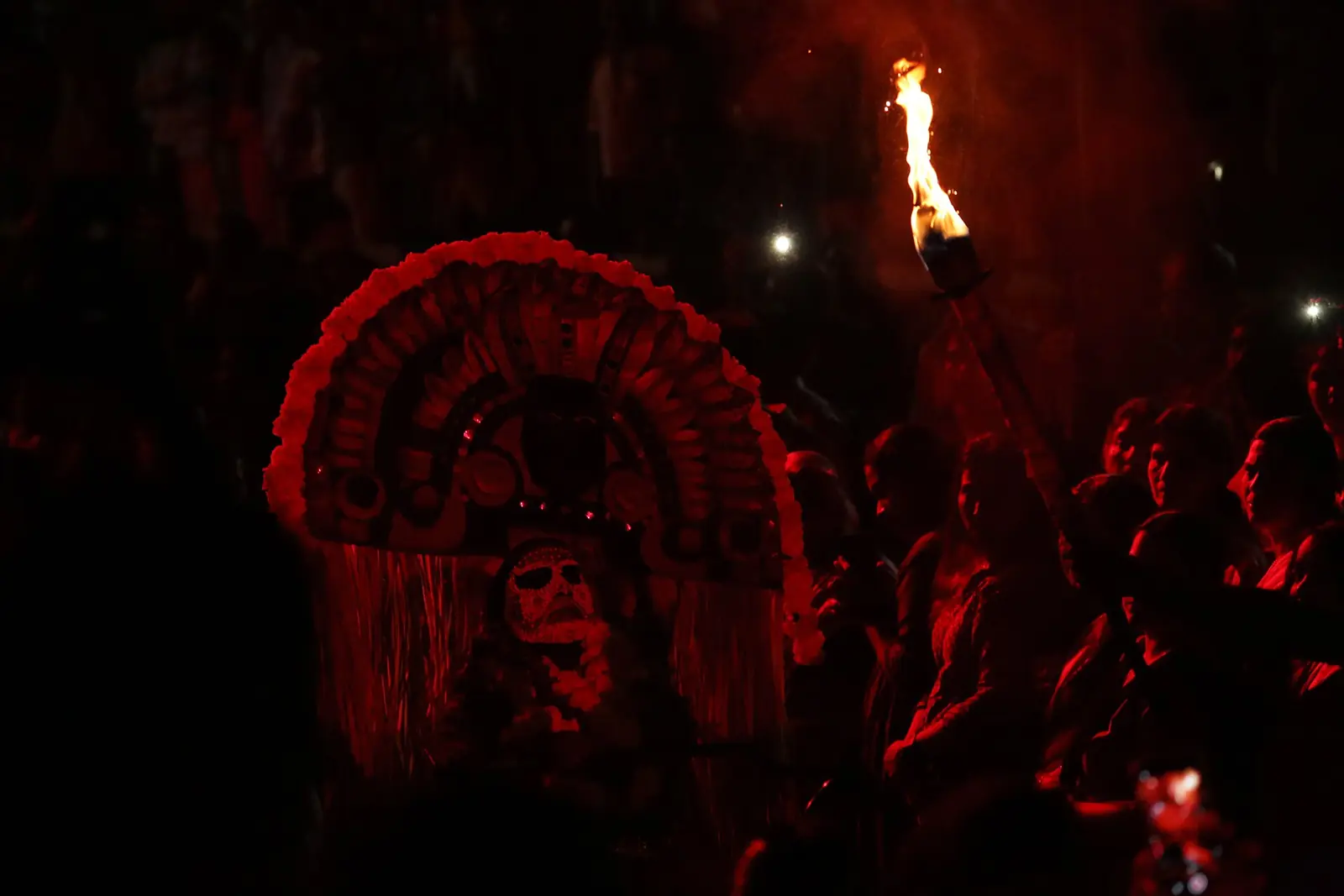
A fierce Devi with eight arms, dark-faced, with protruding fangs, holding a sword, the severed head of Darika, a bell and an anklet; in Mudiyettu and theyyam she wears a towering headdress and a face painted red, black and white.
01Darika and the third eye
The katha sung in Kerala’s Bhagavati shrines is the Darikavadham. The asura Darika won a boon that no man could kill him and began to torment the worlds. The devas went to Shiva, and from his third eye sprang Bhadrakali, who rode out on the vetala, fought Darika, cut off his head and brought it to Shiva. At Kodungallur the temple tells that Parashurama, troubled by Darika after he had raised Kerala from the sea, was told by Shiva to install the Devi there. The whole battle is played out each year in Mudiyettu, the ritual dance-drama of central Kerala’s Bhagavati kavus, which begins with a large image of Kali drawn on the floor in coloured powders and was inscribed by UNESCO in 2010.
02Kannagi becomes Bhagavati
The Tamil epic Silappatikaram of Ilango Adigal tells of Kannagi, a merchant’s wife of Puhar, whose husband Kovalan was wrongly executed by the Pandya king at Madurai. She proved his innocence before the king, and in her grief and anger set Madurai on fire, then walked west into the Chera country, where she rose to heaven. The Chera king Senguttuvan raised a shrine to her as Pattini, the faithful wife. Kerala’s Bhagavati temples keep her memory. Kodungallur, the old Chera capital, holds that Kannagi was installed there and seeks union with the Bhadrakali of the sanctum, and Attukal in Thiruvananthapuram knows its Devi as Kannagi too, who rested there on her way.
03Bharani at Kodungallur
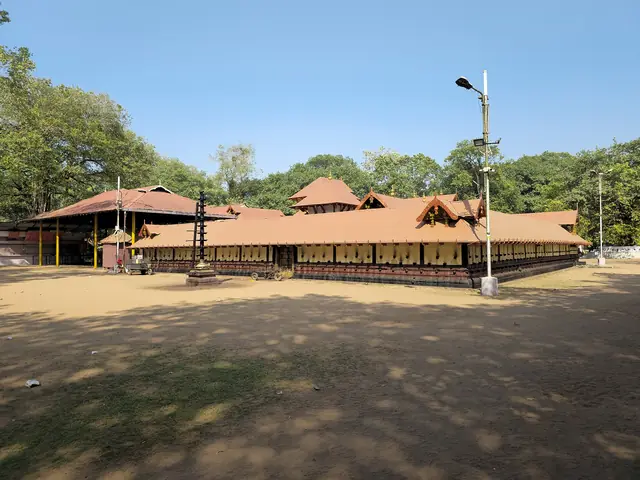
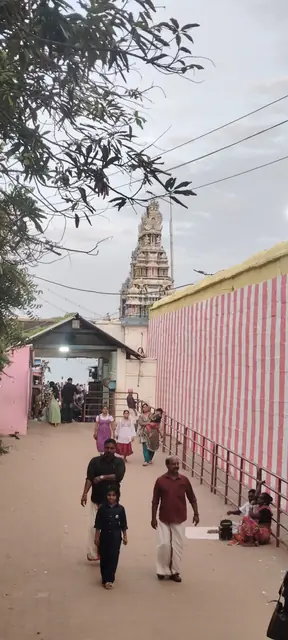
The Kodungallur Bhagavathy temple heads sixty-four Bhadrakali kavus of Malabar, and its Bharani festival runs from the Bharani star of the month of Kumbham to seven days after the Bharani of Meenam, in March and April. Its most famous day is the Kavu Theendal, opened by the Raja of Kodungallur, when hundreds of velichappadu, the Devi’s oracles in red, run round the temple striking the air with curved swords, and crowds pour in to the temple courtyard. The temple was managed by the Kodungallur royal family until the Cochin Devaswom Board took it over in 1950. The Devi faces north, fierce, with eight arms.
04Pongala at Attukal
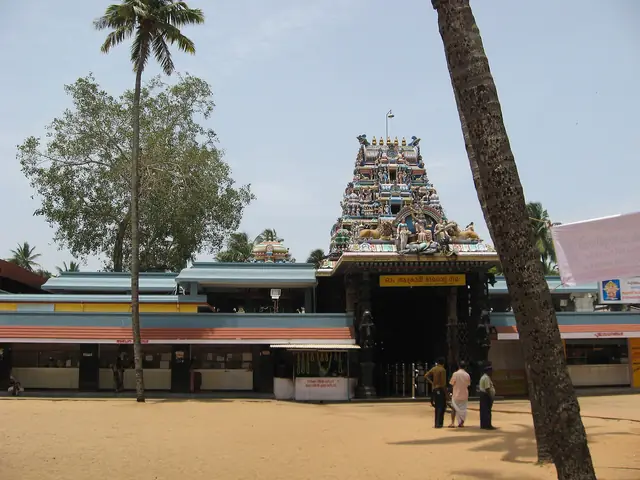
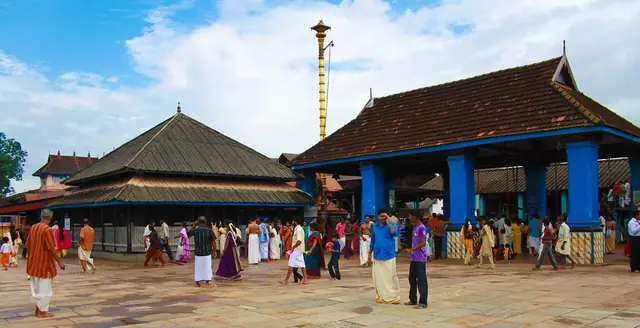
At Attukal in Thiruvananthapuram, on one morning of the month of Kumbham, the women of the city and far beyond cook pongala, rice with jaggery and coconut, in new clay pots on bricks set along the roads for kilometres around the temple. When the fire is lit at the temple hearth, the flame is passed down the lines, and when the cooking is done the priests sprinkle holy water over the pots. Guinness World Records counted 1.5 million women in 1997 and 2.5 million on 10 March 2009, the largest yearly gathering of women anywhere. Other Bhagavatis keep their own ways: at Chottanikkara near Kochi the Devi is worshipped as Saraswati, Lakshmi and Durga in the course of a single day.
In the texts
- Silappatikaram of Ilango Adigal
- Darikavadham songs and Bhadrakali Pattu (Malayalam)
- Markandeya Purana (Devi Mahatmya)