Cite
MLA
“Third Carnatic War.” Hindu History, 2026, https://www.hinduhistory.in/battles/third-carnatic-war/. Accessed .
APA
Hindu History. (2026). Third Carnatic War. Retrieved , from https://www.hinduhistory.in/battles/third-carnatic-war/
The English took Chandernagore, beat Lally at Wandiwash and captured Pondicherry in 1761; the Treaty of Paris (1763) returned the French posts only as unfortified trading stations.
01War comes from Europe
The truce of 1754 lasted only until Britain and France went to war again in 1756. In Bengal, Clive and Admiral Watson took the French settlement at Chandernagore in March 1757, three months before Plassey. In the south, France sent the Comte de Lally with a royal army. He took Fort St David in 1758 and laid siege to Madras that winter, but the arrival of a British fleet in February 1759 forced him to withdraw.
02Wandiwash and Pondicherry
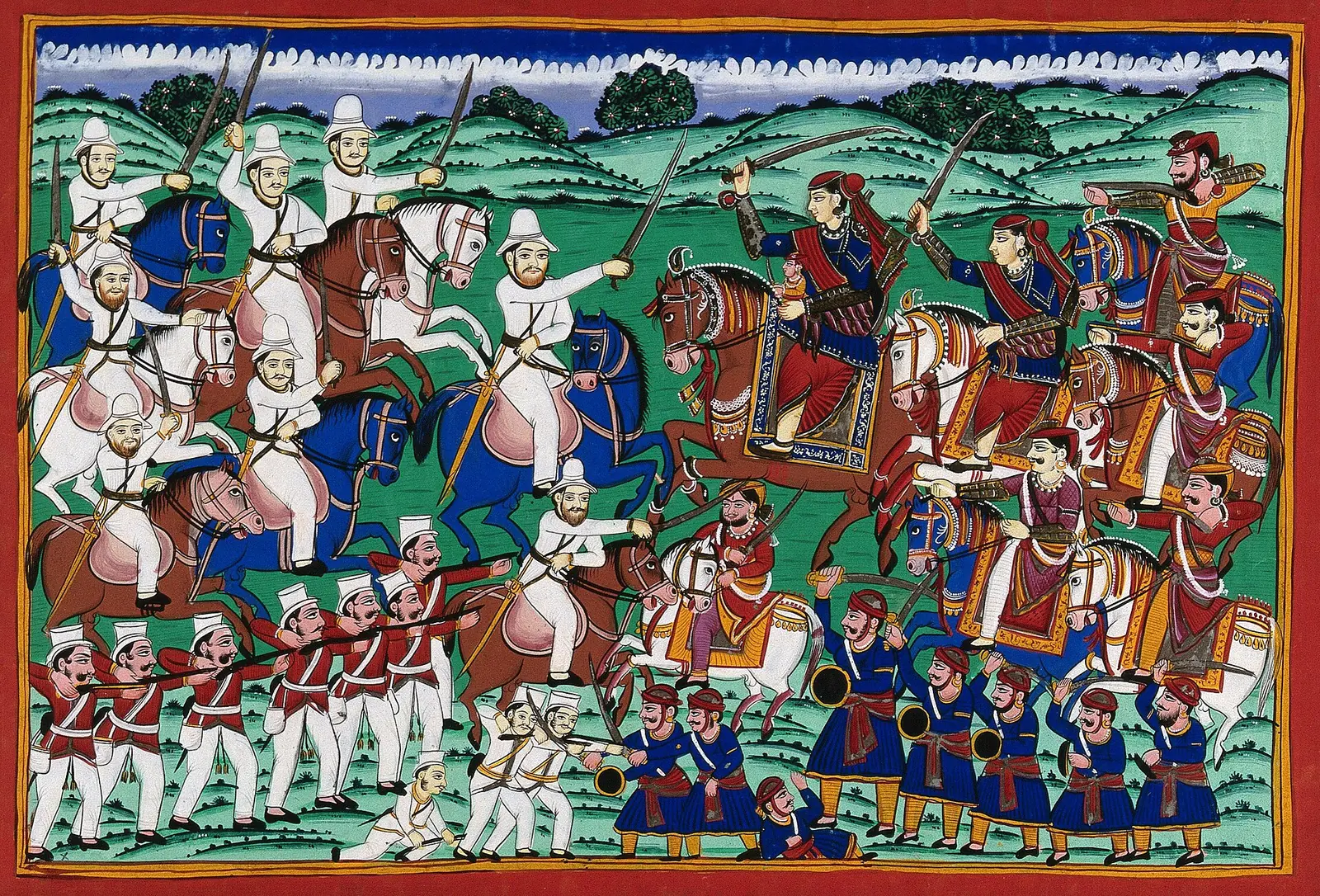
Lally recalled Bussy from Hyderabad, and the English sent Colonel Forde to take Masulipatam and the Northern Circars from the French. On 22 January 1760 Eyre Coote beat Lally at Wandiwash and Bussy was taken prisoner. Coote then closed on Pondicherry, which surrendered in January 1761 after a long siege, and its fortifications were razed. By the Treaty of Paris in 1763 France got back its Indian settlements, but only as trading stations without walls or troops.
With the French removed as a power, the English company was free to turn its whole weight on Bengal, Mysore and the Marathas.