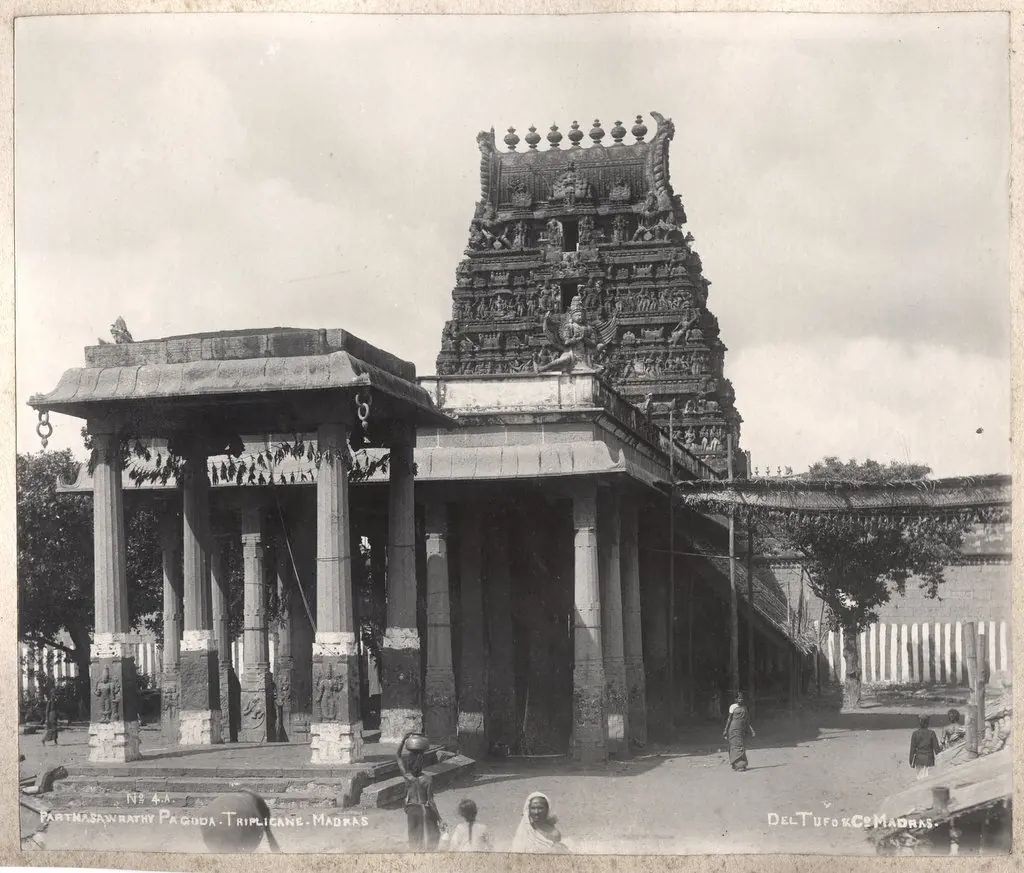
01Krishna with his family
The murti in the sanctum is Venkatakrishna, standing, with Rukmini at his side, Balarama, his son Pradyumna, grandson Aniruddha and Satyaki. No other Divya Desam shows Krishna with his family around him. The utsava murti is Parthasarathy, the charioteer of the Kurukshetra war, and he carries no weapon, for Krishna had vowed not to fight; he holds only a conch. Devotees point to the marks on his face, the arrows of Bhishma that he took for Arjuna. The temple was sung by Peyalvar, Thirumazhisai Alvar and Thirumangai Alvar.
02Five shrines, one lily pond
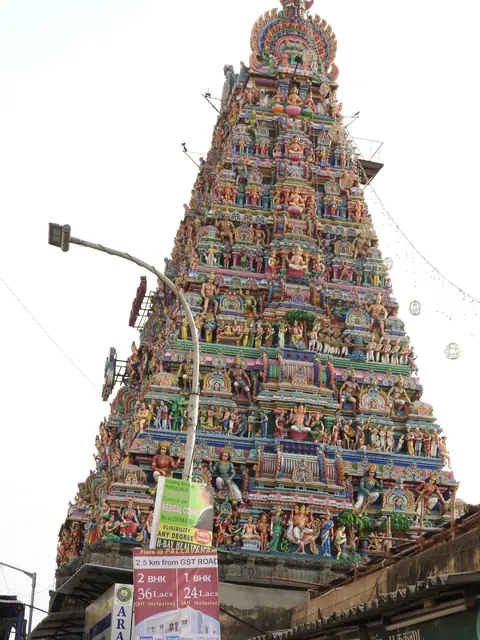
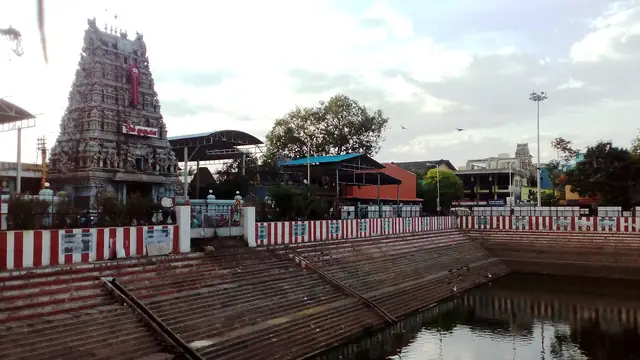
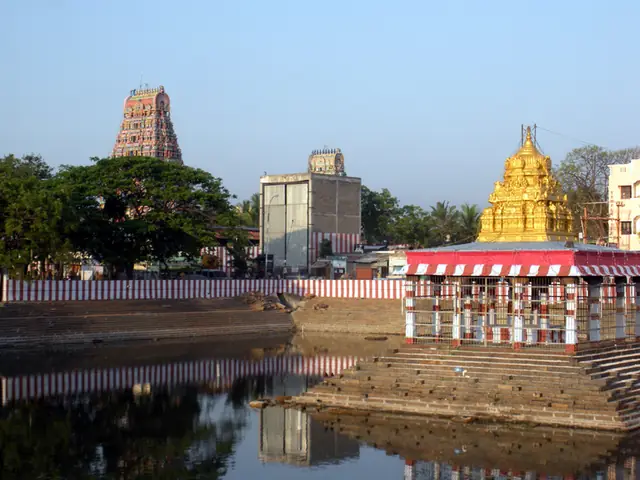
Tiru-alli-keni means the sacred pond of lilies, and the tank in front still carries the name. Around the main shrine stand four more, each sung as a form of the Divya Desam: Ranganatha reclining, Rama with Sita and his brothers, Narasimha as Azhagiya Singar facing west, and Varadaraja on Garuda. A Tamil inscription of the Pallava king Dantivarman, of the late 8th century, is the oldest record on the walls. The street outside is where the poet Subramania Bharati lived his last years.
The life of this place
- Late 8th centuryInscription of the Pallava king Dantivarman on the temple.
- 16th centuryVijayanagara-period additions to the mandapas and gopurams.
In Triplicane, a short walk from the Marina beach; Thiruvallikeni station on the MRTS line. Vaikuntha Ekadashi brings the largest crowds.