Cite
MLA
“Siege of Pondicherry (1760–61).” Hindu History, 2026, https://www.hinduhistory.in/battles/siege-of-pondicherry-1760/. Accessed .
APA
Hindu History. (2026). Siege of Pondicherry (1760–61). Retrieved , from https://www.hinduhistory.in/battles/siege-of-pondicherry-1760/
Starved out by land and sea, Lally surrendered on 15 January 1761 and the British razed the fortifications.
01Blockade
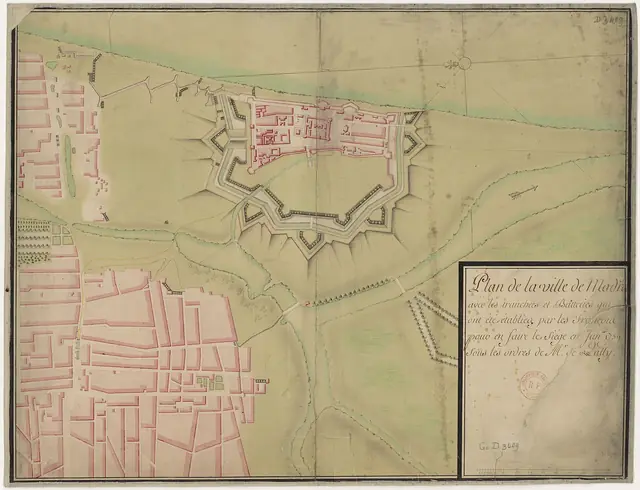
Through 1760 Coote took the French posts one by one, Arcot among them. Lally tried to hire help from Mysore, and Haidar Ali sent a force that achieved little. By September the British had invested Pondicherry on the land side, while a squadron under Steevens kept supply ships away. Inside, food ran out and Lally quarrelled bitterly with the civil council. A storm on 1 January 1761 wrecked several British ships, but the blockade held.
02The fall of the French capital
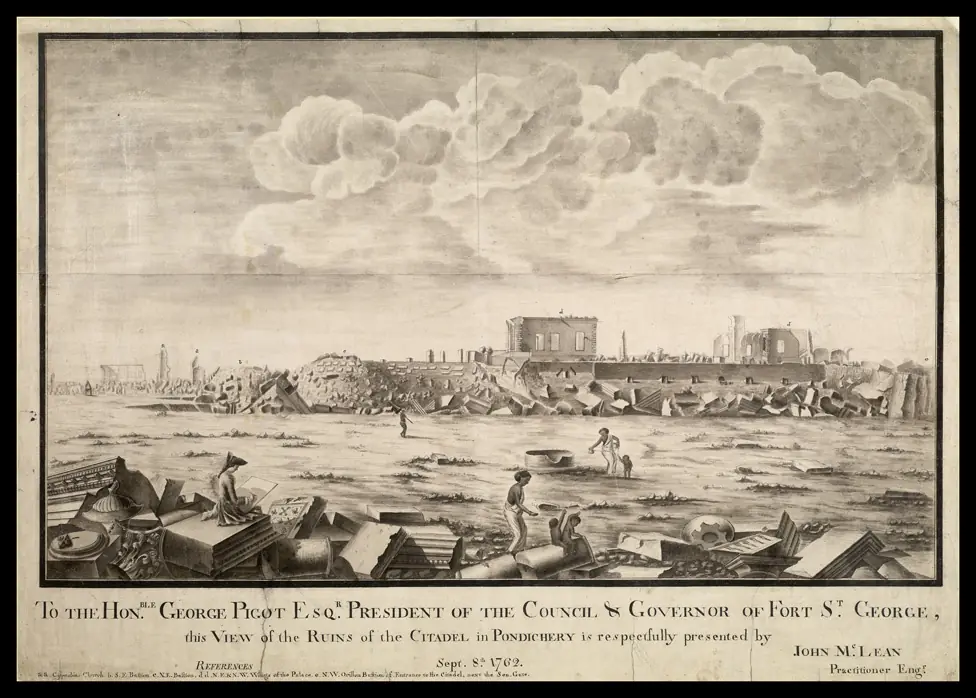
The British batteries opened in December and breached the walls. On 15 January 1761, with his garrison starving, Lally surrendered. The Company’s Madras council ordered the fortifications and public buildings destroyed, to settle the score for the French razing of Fort St David. Lally was sent to England as a prisoner, went back to France to answer for the defeat, and was tried and beheaded in Paris in 1766. Pondicherry was returned to France by treaty in 1763.
The fall of Pondicherry ended French power in India. The French kept their towns as trading posts, but never again had an army fit to challenge the Company.