Cite
MLA
“Siege of Chanderi.” Hindu History, 2026, https://www.hinduhistory.in/battles/siege-of-chanderi-1528/. Accessed .
APA
Hindu History. (2026). Siege of Chanderi. Retrieved , from https://www.hinduhistory.in/battles/siege-of-chanderi-1528/
The fort was stormed; its women performed jauhar and its men died fighting.
01After Khanwa
Medini Rai, a Rajput lord of Malwa, had taken Chanderi from the Sultans of Malwa and fought beside Rana Sanga at Khanwa in March 1527. The defeat there did not end the Rajput confederacy, and Babur set out to break its strongest remaining member. He wrote in his own memoir, the Baburnama, that he offered Medini Rai the town of Shamsabad in exchange for Chanderi. The offer was refused.
02The storm
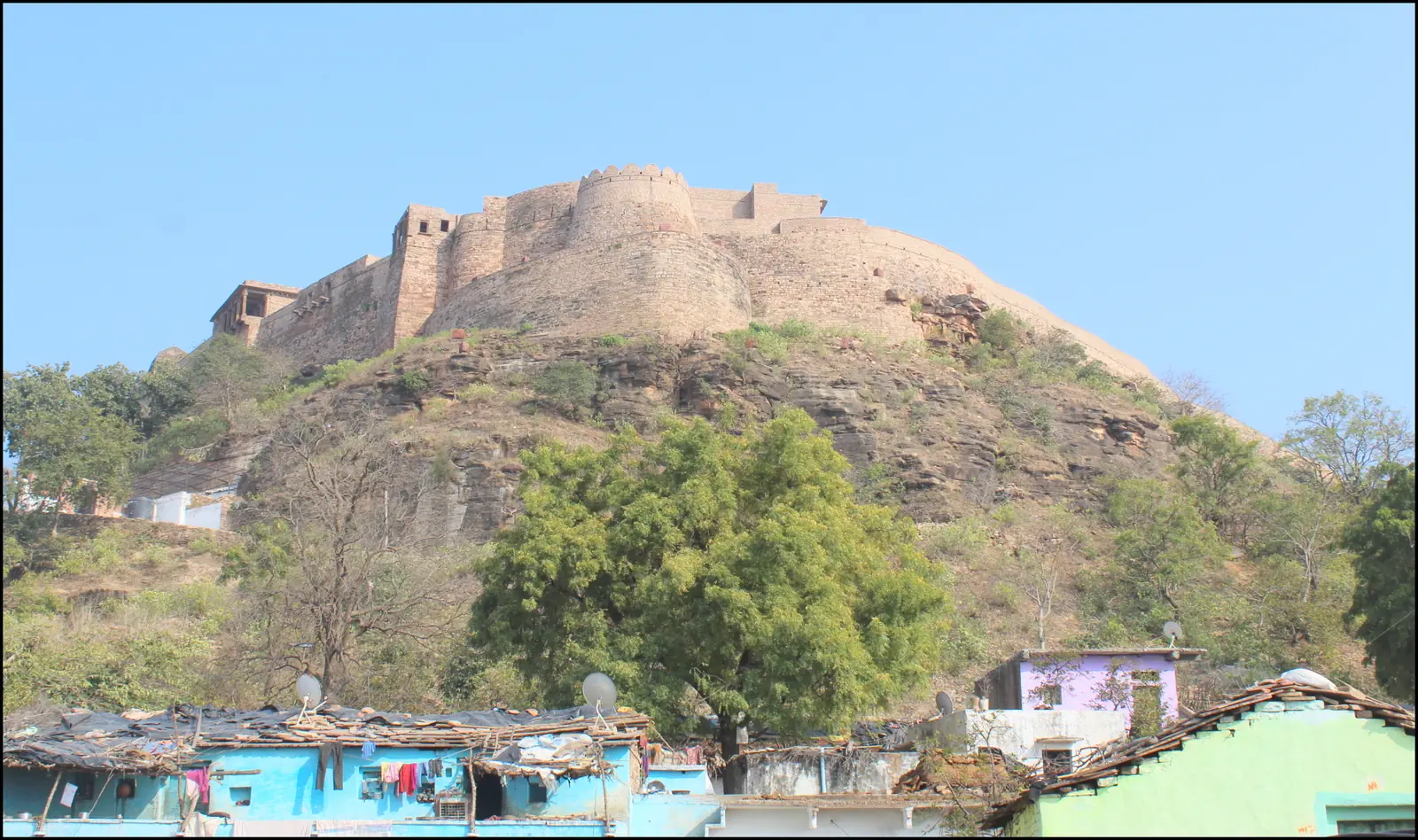
Chanderi stands on a hill above the town with a long wall and a covered way down to water. Babur’s men attacked the water-way first and then the walls. Babur himself describes what happened inside: the Rajputs, seeing the fort lost, killed their women and came out stripped for a last fight, and few survived. The Chanderi women’s jauhar is remembered in Bundelkhand and Malwa beside those of Chittor. Babur had a tower of the dead raised on a hill outside the fort.
03The town that remained
Chanderi passed to Mughal governors and later to the Bundelas of Orchha. The fort and its gates still stand. The town went on weaving the fine silk-cotton saris that carry its name, a craft its people trace back many centuries. Babur himself noted that its houses, high and low, were built of stone.
Chanderi was the last stand of Rana Sanga’s confederacy and one of the great jauhars of Rajput memory.