Cite
MLA
“Siege of Kalinjar (1202).” Hindu History, 2026, https://www.hinduhistory.in/battles/kalinjar-1202/. Accessed .
APA
Hindu History. (2026). Siege of Kalinjar (1202). Retrieved , from https://www.hinduhistory.in/battles/kalinjar-1202/
The fort surrendered when its water ran out; the Ghurids also took Mahoba.
01The hill of Neelkanth
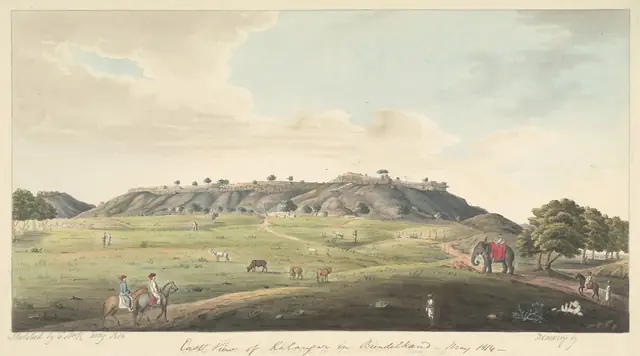
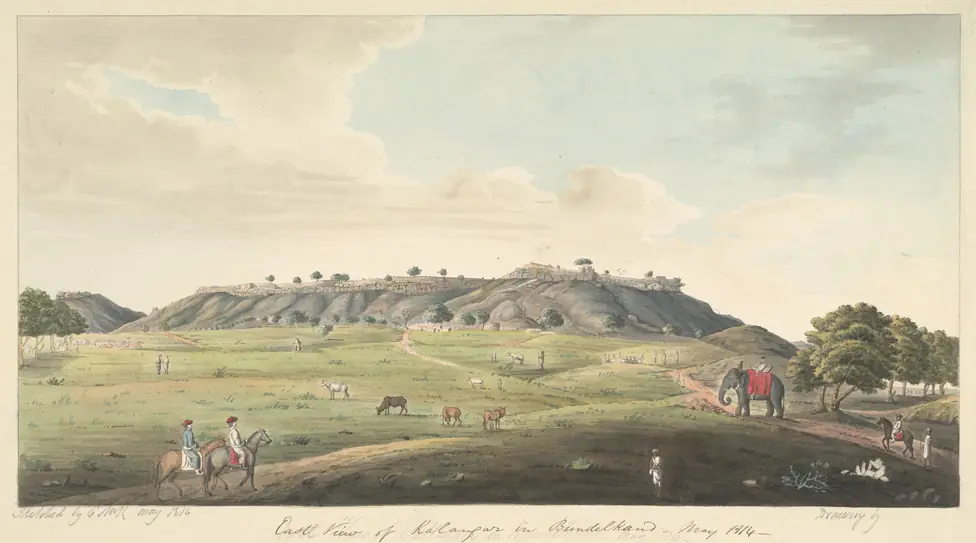
Kalinjar sits on a flat-topped hill in the Vindhyas, ringed by cliffs, with the Neelkanth temple of Mahadev cut into its western face. It was the strongest place of the Chandelas, the kings who built Khajuraho. Paramardi, the Parmal of the Alha-Udal ballads, had already lost Mahoba to Prithviraj Chauhan in 1182. Twenty years later he faced a harder enemy.
02The siege as Hasan Nizami tells it
Hasan Nizami, the court chronicler of the Taj-ul-Maasir, writes that Paramardi was shut in the fort, agreed to submit and pay tribute, and died before he could hand it over. His minister Aja Deva refused the terms and fought on. The Ghurids held the approaches. In the end the water tanks on the hill ran dry in the summer heat and the garrison came down. The chronicler records that the temples of Kalinjar were turned into mosques. Bundelkhand tradition remembers Paramardi’s end differently, and the two accounts cannot be fully reconciled.
03Taken back
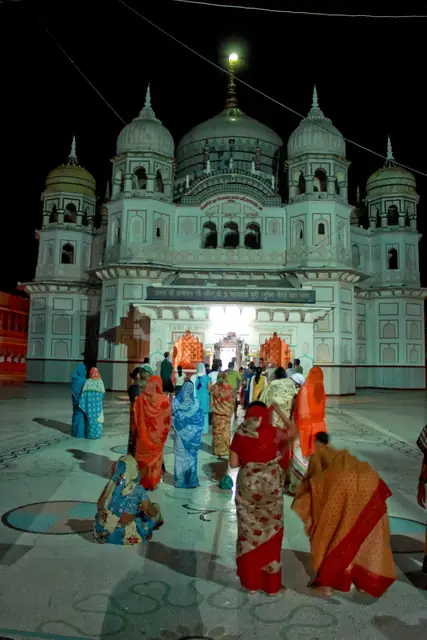
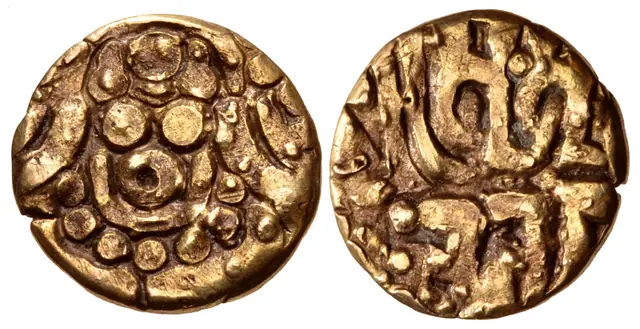
The Delhi garrison did not keep Kalinjar long. Paramardi’s son Trailokyavarman recovered the fort, and Chandela inscriptions show the family ruling from it through the thirteenth century. It fell for good only in 1545, to Sher Shah, who died beneath its walls. The Neelkanth shrine on the hillside is still visited by pilgrims, above all at Shivaratri.
The fall opened Bundelkhand to the new Delhi power, but the Chandela recovery showed how hard the hill country was to hold.