
The invading army was cut to pieces on its retreat and only a handful of riders came back to Bengal.
01The march to Tibet
Minhaj-us-Siraj, who wrote in Delhi a generation later, says Bakhtiyar set out with about ten thousand horsemen. He crossed a great river by an old stone bridge of many arches, left men to guard it, and pushed into the hills. The hill people and the defenders of the passes wore his force down. When he turned back, the bridge had been broken. His men tried to swim the river and drowned in numbers. Minhaj puts the survivors at about a hundred. Bakhtiyar reached Devkot in Bengal a broken man and was killed there soon after.
02The rock that remembers
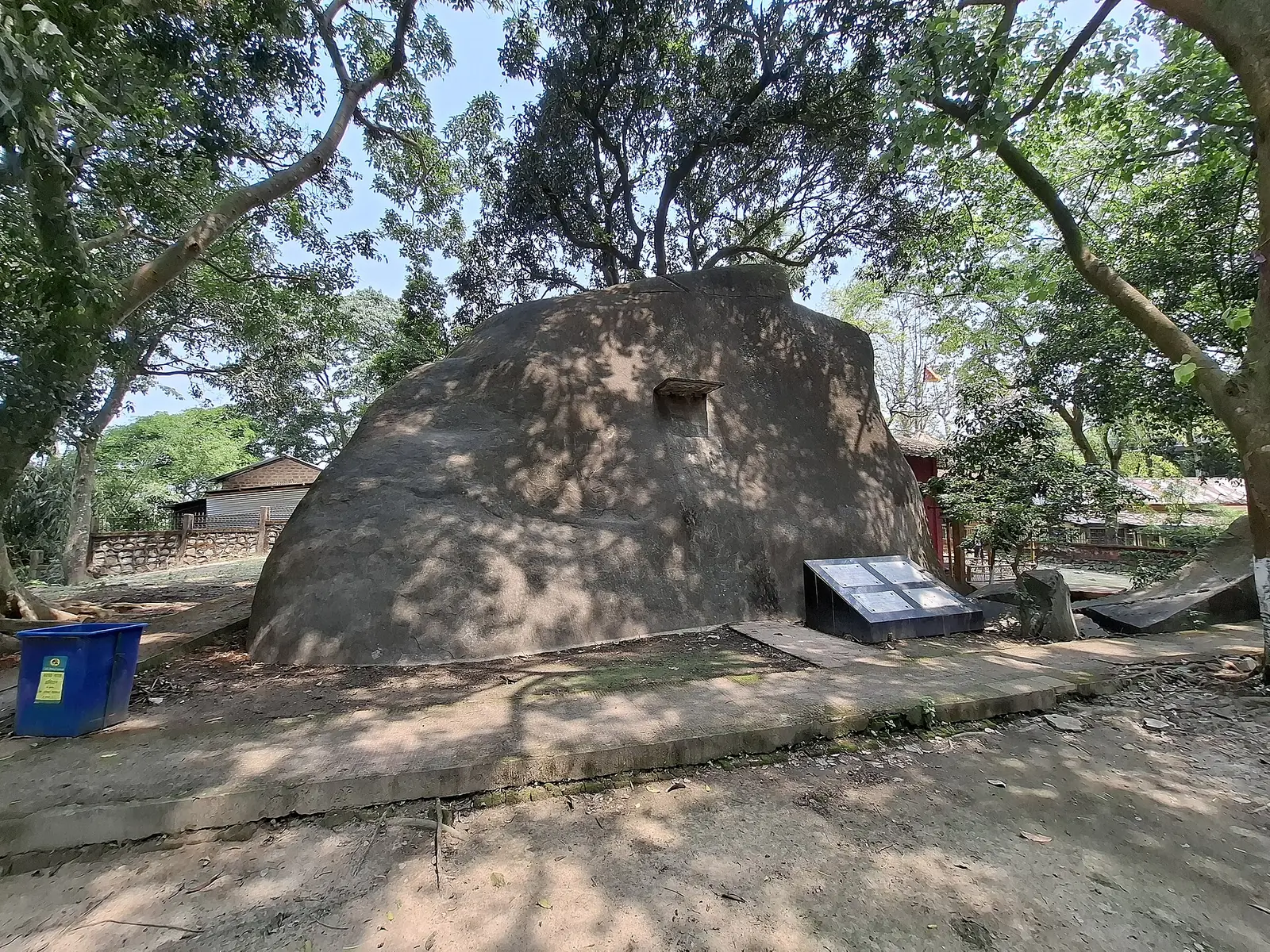
At North Guwahati, on a rock called Kanai Barashi Boa, a short Sanskrit line is cut in the stone. It records that in Saka 1127, on the thirteenth of Chaitra, the Turks who came into Kamarupa were destroyed. Saka 1127 falls in 1205–06 CE, which matches the Persian account. It is one of the very few places where the defenders’ own record of a victory over the early Turkish armies survives, written by the side that won.
The north-east stayed out of the Sultanate’s hands; no Delhi army held Kamarupa or the Brahmaputra valley in the centuries that followed.