Cite
MLA
“Chanda Sahib’s seizure of Tiruchirappalli and Madurai.” Hindu History, 2026, https://www.hinduhistory.in/battles/chanda-sahib-takes-madurai-1736/. Accessed .
APA
Hindu History. (2026). Chanda Sahib’s seizure of Tiruchirappalli and Madurai. Retrieved , from https://www.hinduhistory.in/battles/chanda-sahib-takes-madurai-1736/
Chanda Sahib took Tiruchirappalli by a false oath and then Madurai; Queen Meenakshi was imprisoned and took her own life, ending the Madurai Nayak dynasty.
01A queen’s quarrel
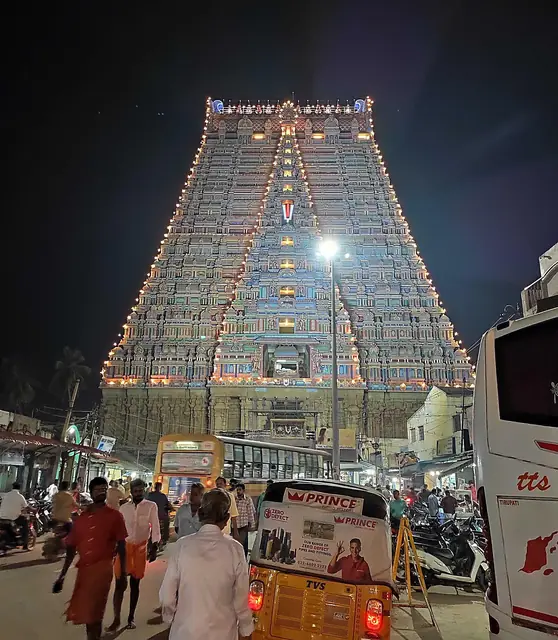
Vijayaranga Chokkanatha Nayak of Madurai died in 1731 without a son, and his widow Meenakshi ruled from Tiruchirappalli, the Nayaks’ capital since the 1660s, with an adopted son. A relative, Bangaru Tirumala, the boy’s natural father, rose against her. In 1734 an army from Arcot under Safdar Ali and Chanda Sahib came south to collect tribute, and both parties sought its help. Meenakshi bought Chanda Sahib’s support with a large sum.
02The oath on a brick
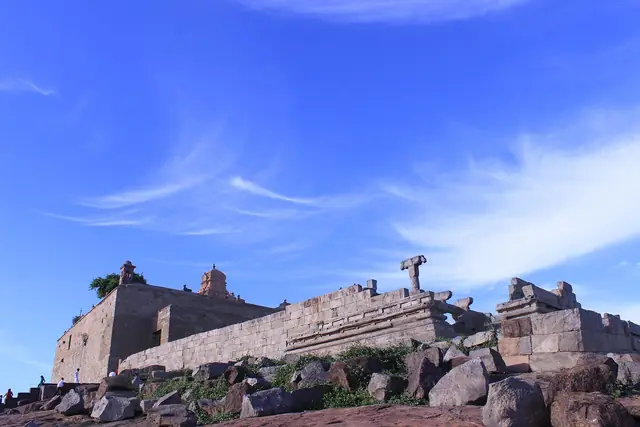
In 1736 Chanda Sahib returned and asked to be admitted to the Trichy fort. The Madurai accounts say that he swore loyalty to the queen on a Quran, which was in fact a brick wrapped in cloth. Once inside with his troops, he took control of the fort, confined Meenakshi, and went on to take Madurai and Dindigul, defeating Bangaru Tirumala. The queen, a prisoner in her own palace, took poison. Chanda Sahib held Trichy until the Marathas took it from him in 1741.

The fall of Meenakshi ended two hundred years of Nayak rule at Madurai, begun under Vijayanagara in 1529, and drew the Marathas, the French and the English into the struggle for the Tamil country.