Cite
MLA
“Battle of Cochin (1504).” Hindu History, 2026, https://www.hinduhistory.in/battles/battle-of-cochin-1504/. Accessed .
APA
Hindu History. (2026). Battle of Cochin (1504). Retrieved , from https://www.hinduhistory.in/battles/battle-of-cochin-1504/
The Zamorin’s army failed to force the fords and withdrew after five months; Cochin and its Portuguese allies held.
01Calicut and Cochin
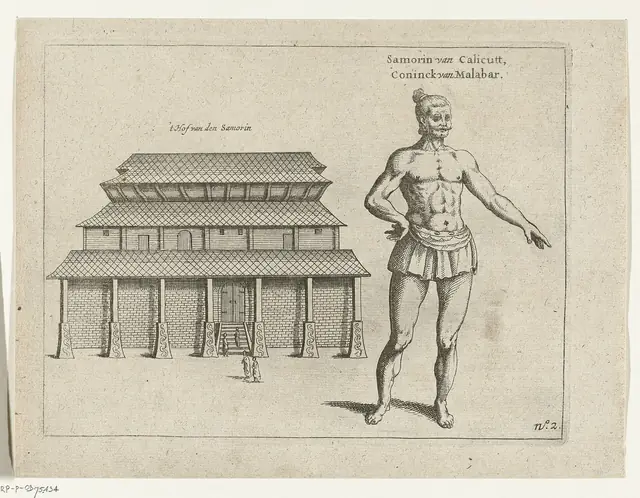
The Zamorins of Calicut were the greatest power on the Malabar coast, lords of the pepper trade with Arab and Gujarati merchants. Cochin was a smaller kingdom that paid them homage. After Vasco da Gama and Cabral quarrelled with Calicut, the Portuguese found a friend in the Raja of Cochin and built a fort there in 1503. Early in 1504 the Zamorin brought a large army down the coast to settle the matter.
02Holding the fords
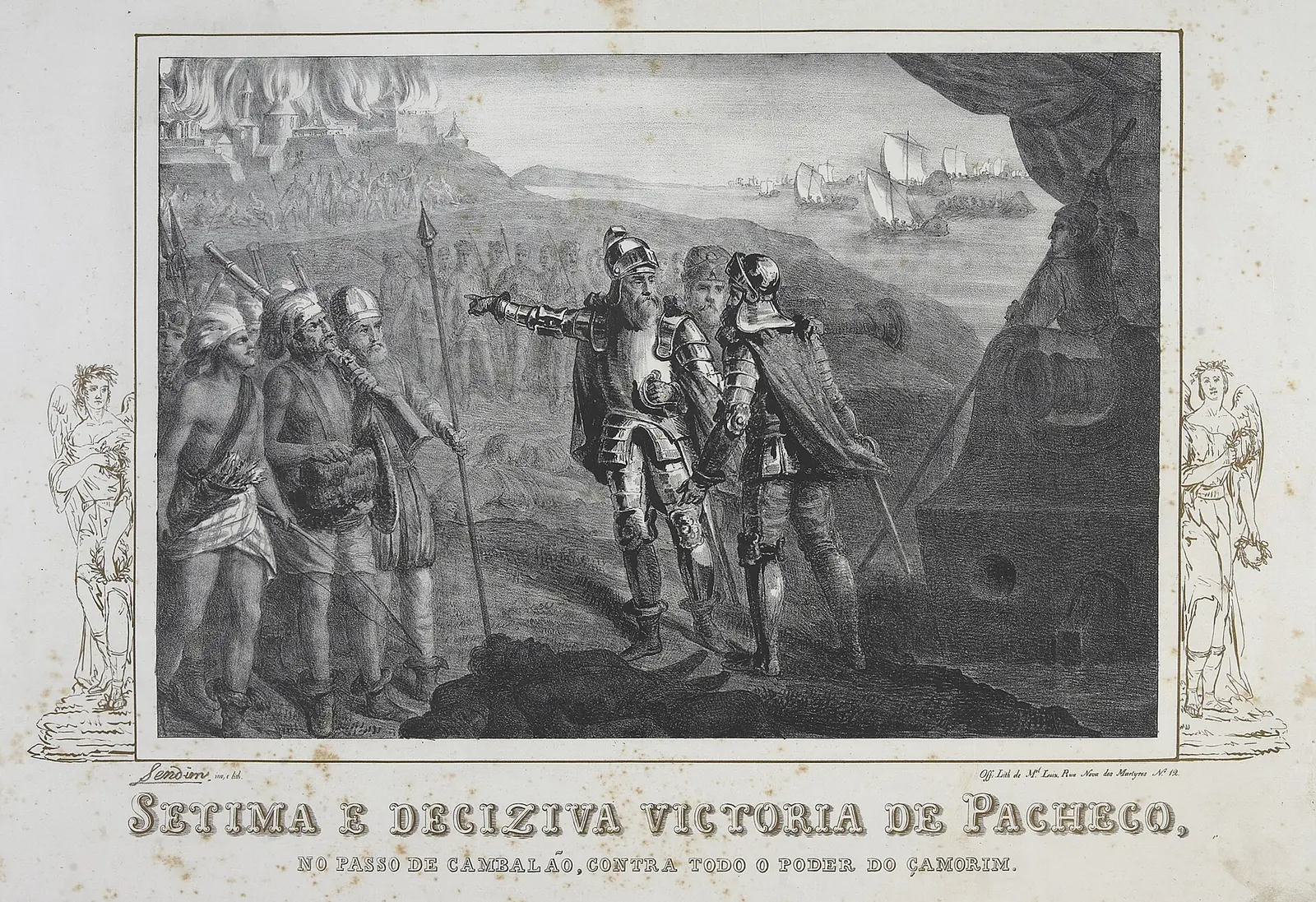
Kochi is cut off from the mainland by backwaters, and an army can cross only at a few shallow fords. Duarte Pacheco Pereira, left behind with a handful of Portuguese and a few boats, set them with stakes and guns at Kumbalam and the other crossings and moved his boats to whichever ford was attacked, with Cochin’s Nairs fighting beside him. The Portuguese chroniclers Castanheda and Gaspar Correia give the Zamorin tens of thousands of men against barely 150 Portuguese. Those figures are theirs and are not checked by any Malayali record. After repeated assaults, sickness and the coming of the monsoon, the Zamorin withdrew in July.
03What it began
The siege decided that the Portuguese would stay. Cochin became their base until Goa was taken in 1510, and its rajas remained their allies for a century and a half. The Zamorins kept fighting the Portuguese at sea for a hundred years, with the Kunjali Marakkars commanding their fleets.
Calicut’s failure at Cochin let the first European power take root on Indian soil.