Cite
MLA
“Krishi Parashara and the ploughed field.” Hindu History, 2026, https://www.hinduhistory.in/vijnana/krishi-parashara-farming/. Accessed .
APA
Hindu History. (2026). Krishi Parashara and the ploughed field. Retrieved , from https://www.hinduhistory.in/vijnana/krishi-parashara-farming/
01The field at Kalibangan
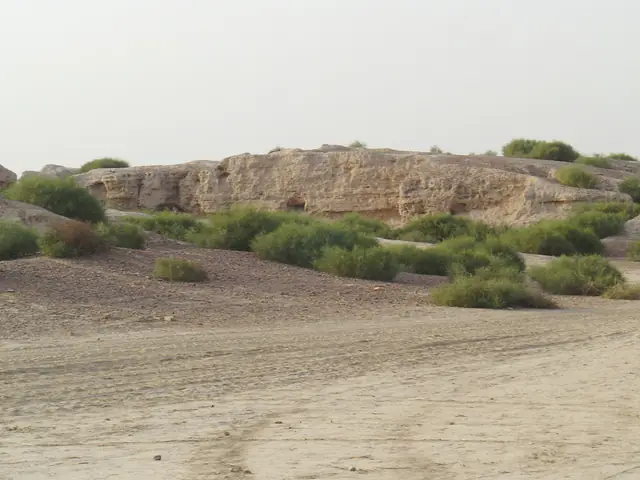
Excavating Kalibangan on the Ghaggar in Rajasthan in the 1960s, B. B. Lal and B. K. Thapar found, outside the early town wall, a field with furrows in a grid: one set about 30 cm apart running east-west, another about 1.9 metres apart running north-south. It belongs to the pre-Harappan phase, around 2800 BCE. Farmers in the same district still plough this way, sowing mustard in the wide rows and gram or horse gram in the close ones, so two crops share one field.
02The manual of Parashara
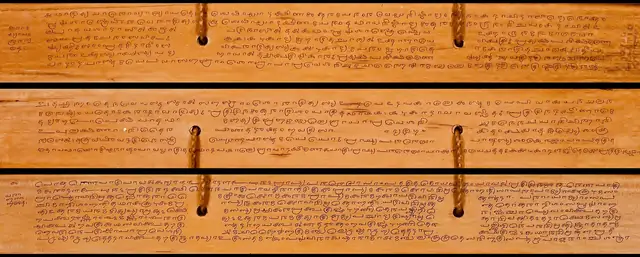
The Krishi Parashara has about 243 verses, mostly in anushtubh. It opens by praising krishi as the base of life, then spends much of its length on forecasting rain from the position of the planets, the clouds, the winds and the behaviour of animals. It lists the parts of the plough with measurements, the yoke, the share and the goad; it gives rules for keeping seed dry and sorted, for transplanting rice, for weeding and for cattle sheds. Its date is uncertain; editors have placed it anywhere in the first millennium CE, up to about the 11th century.
03What the text is good for
The seed-storage and field-practice verses match what farmers of eastern India still do and have been studied for that reason. The rain forecasts rest on astrological rules and have not been shown to work by modern testing; the site gives them as the text’s method, not as science. Kautilya’s Arthashastra, with its Sitadhyaksha, the superintendent of crown farms, and Varahamihira’s Brihat Samhita on signs of rain, belong to the same body of Indian agricultural knowledge.
In the texts
- Krishi Parashara
- Arthashastra, Sitadhyaksha chapter (2.24)
- Brihat Samhita