01Gayasura’s boon
The Vayu Purana’s Gaya Mahatmya tells of the asura Gaya, whose tapas made him so pure that whoever touched him went straight to Vaikuntha. The devas asked for his body as the ground for a yajna. He lay down, and when he would not keep still Bhagwan Vishnu placed his foot on the rock set upon him. Gaya asked one boon: that whoever offers pinda on this ground frees his ancestors. The Puranas bring Shri Rama and Mata Sita to Gaya for Dasharatha’s shraddha.
02Pitru Paksha
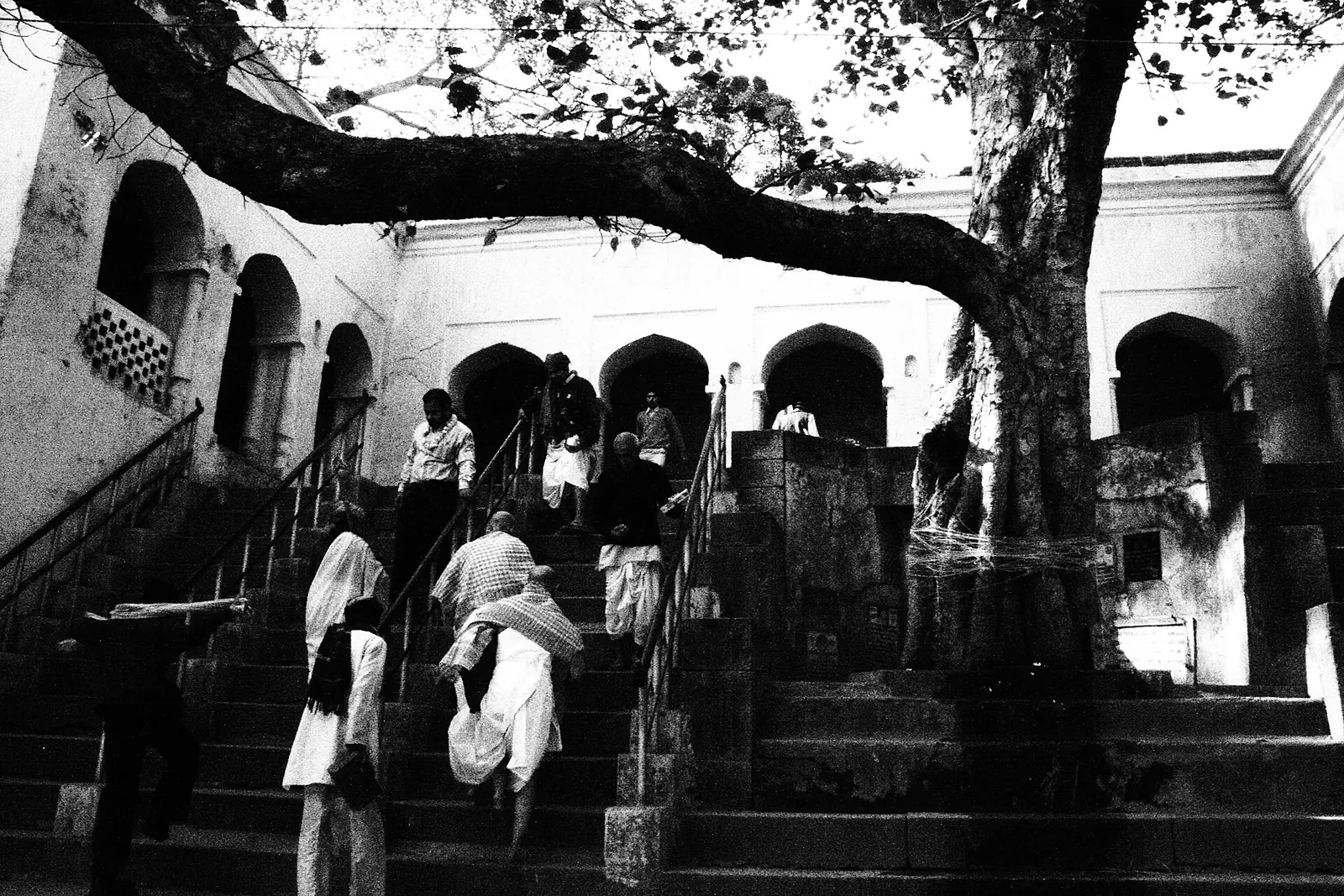
In the dark fortnight of Ashvin, Pitru Paksha, lakhs of families come to Gaya. The full rite takes the pilgrim to many vedis, altars on the Phalgu sands, at the Vishnupad, at the Akshayavat banyan and at Pretshila hill, with the Gayawal pandas who keep family registers going back generations. Many come with a handwritten page naming a great-grandfather who came before them. The Phalgu runs mostly underground; in the dry months pilgrims dig in the sand for water.
03Ahilyabai’s temple
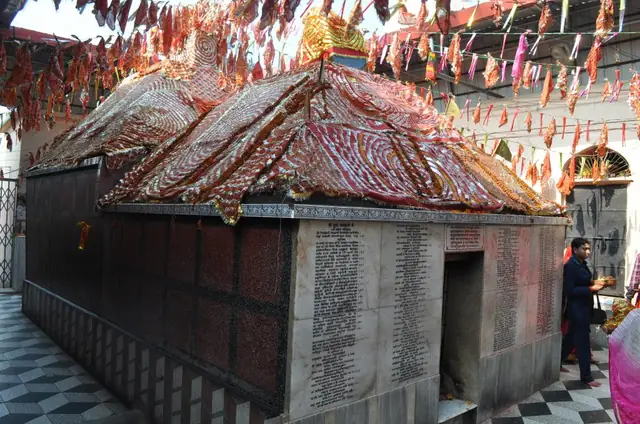
The older shrine had decayed by the 18th century. In 1787 Rani Ahilyabai Holkar of Indore built the present temple, an octagonal grey granite tower about 30 metres high with a pillared mandapa, using stone from the nearby hills. She rebuilt or endowed temples from Somnath to Kashi in the same years. A gold flag and a silver-plated basin round the footprint were later gifts.
The life of this place
- 1787Ahilyabai Holkar builds the present temple over the footprint.
Gaya Junction is 3 km away and Bodh Gaya 12 km. For Pitru Paksha, fix your panda and lodging weeks ahead.