Cite
MLA
“Dimapur and the Kachari Ruins.” Hindu History, 2026, https://www.hinduhistory.in/places/dimapur/. Accessed .
APA
Hindu History. (2026). Dimapur and the Kachari Ruins. Retrieved , from https://www.hinduhistory.in/places/dimapur/
01Hidimba’s city
The Dimasa remember their kings as the line of Ghatotkacha, son of Bhima and Hidimba, and the name Hidimbapur still clings to Dimapur. The Ahom Buranjis call the kings Timisa and place them at Dimapur on the Dhansiri river, holding the plains between the Dikhou and the Kolong when the Ahoms first met them in the thirteenth century. A Dimasa king struck a coin in 1520 in the name Viravijay Narayan, invoking the goddess Chandi; it is the earliest Hindu coin of the Brahmaputra valley. The city sat on the river, with a brick wall on three sides and great tanks dug for water.
02The pillars
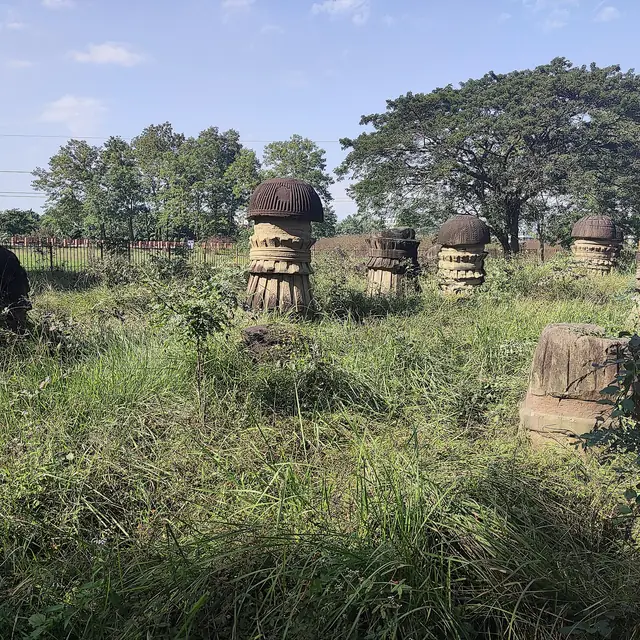
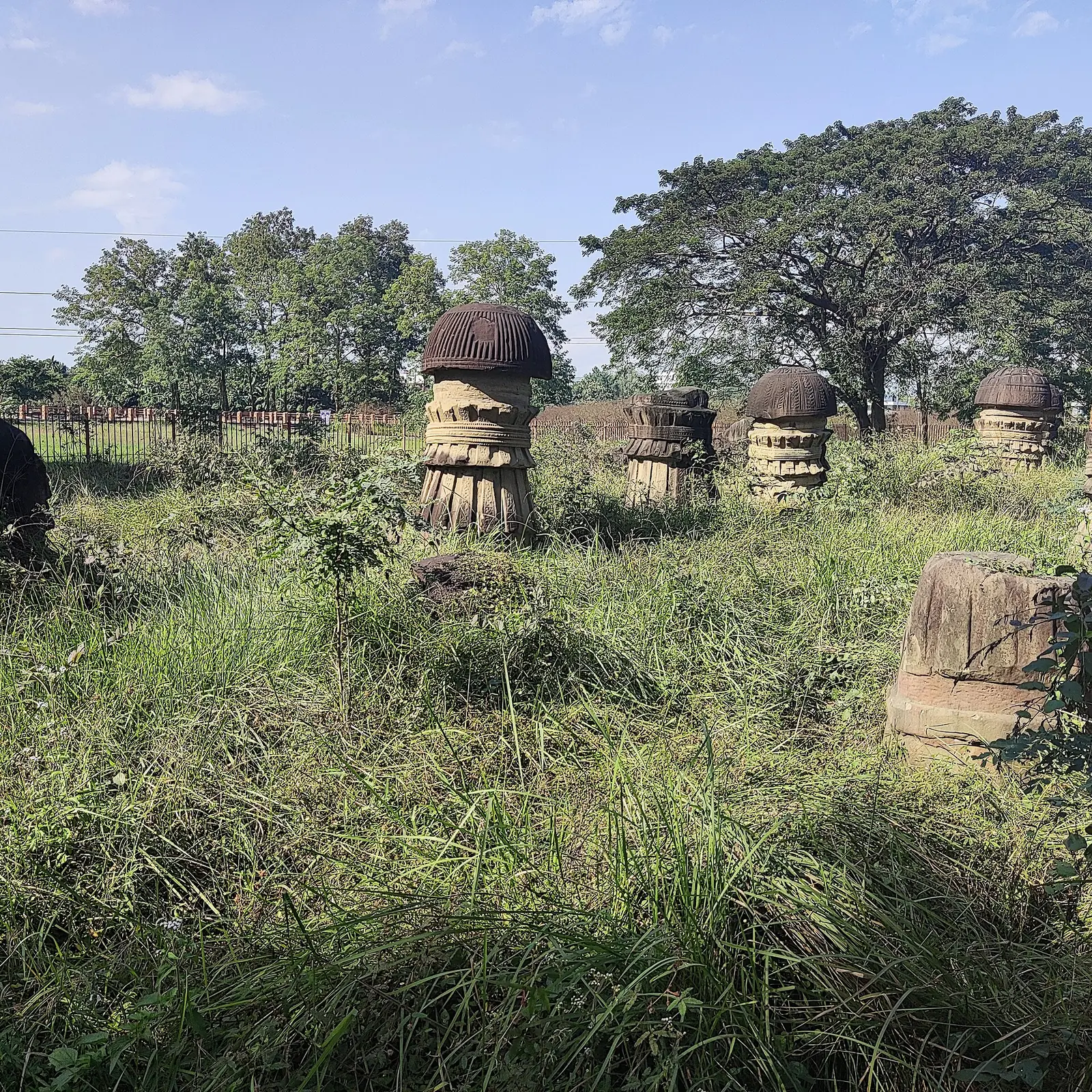
What remains is a gateway of brick, its arch long gone, and inside the old wall several rows of monoliths of sandstone, the tallest well over the height of two men. Most are round pillars swelling into a dome at the top, like a great mushroom; others are forked, shaped like a V. Their sides are carved with lotuses, creepers, birds, elephants, deer and the sun, in a style found nowhere else in Bharat. What they were raised for is not settled. Some say they were memorials, others that they stood in pairs for some rite of the kingdom; the Dimasa remember them as part of the royal city. The site is kept as an enclosure known as Rajbari in Dimapur town.
03The sack of 1536
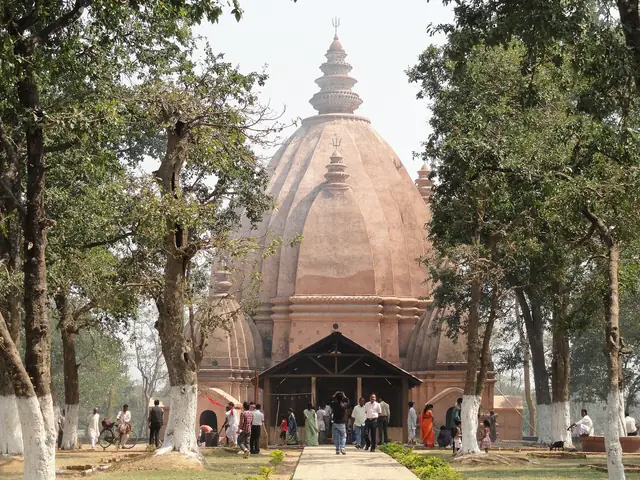
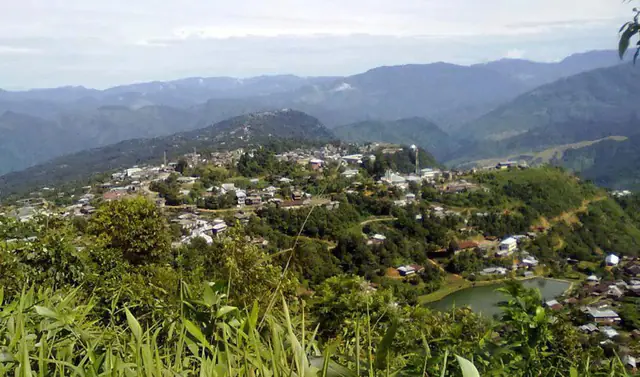
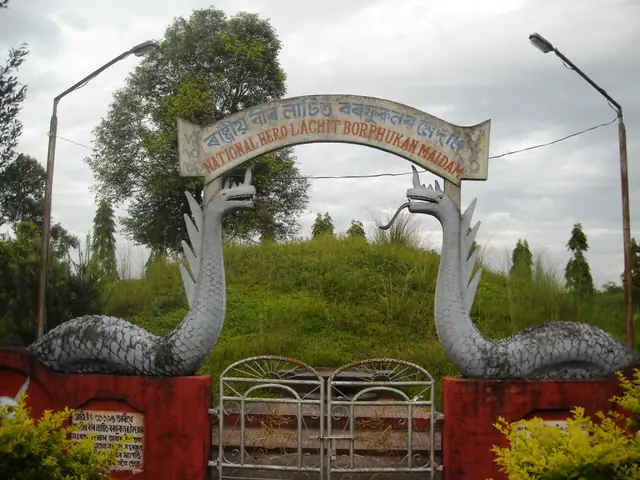
In 1536 the Ahom king Suhungmung, the Dihingia Raja, sent his army up the Dhansiri. Dimapur was taken and sacked, and the Dimasa king Detsung was killed. The court did not come back. It moved south into the hills and settled at Maibang on the Mahur river, where the later kings built in stone, and later still at Khaspur in the Barak valley. Dimapur was left to the forest for three centuries. The railway came to it in the early twentieth century, and in 1944 it was the supply base behind the battle of Kohima. Today it is Nagaland’s largest town, and the pillars stand among its streets.
The life of this place
- 1520 CEA Dimasa king struck a coin as Viravijay Narayan, naming the goddess Chandi.
- 1536 CEThe Ahom king Suhungmung sacked Dimapur and the Dimasa king Detsung was killed.
- 1944 CEDimapur was the supply base for the battle of Kohima.
The Rajbari ruins are in the middle of Dimapur town, a short ride from the railway station.