Cite
MLA
“Gond Rajas of Garha-Mandla.” Hindu History, 2026, https://www.hinduhistory.in/dynasties/gond-garha-mandla/. Accessed .
APA
Hindu History. (2026). Gond Rajas of Garha-Mandla. Retrieved , from https://www.hinduhistory.in/dynasties/gond-garha-mandla/
01Fifty-two garhs
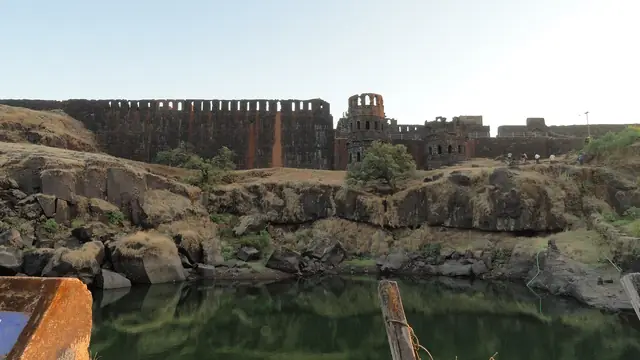
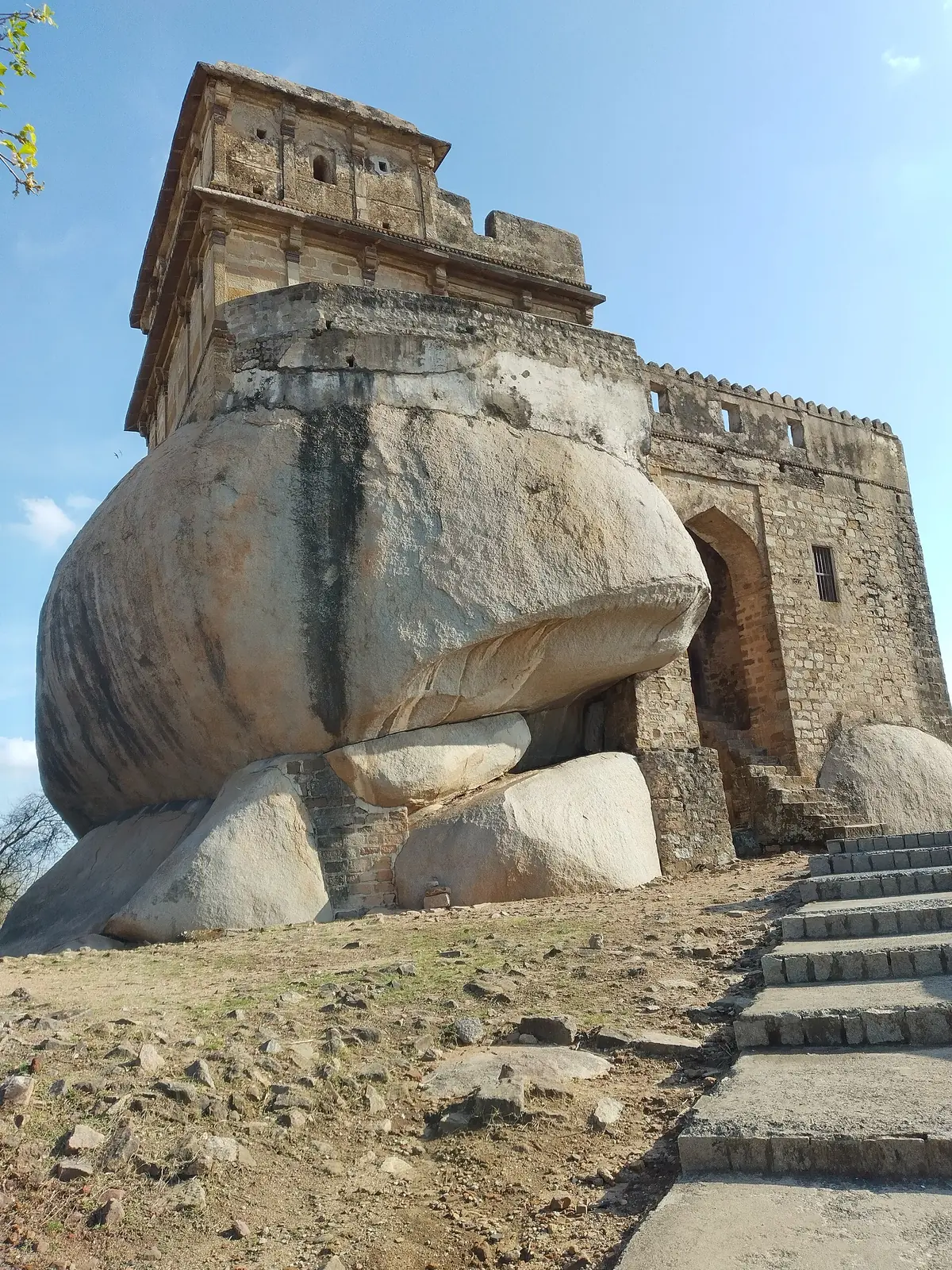
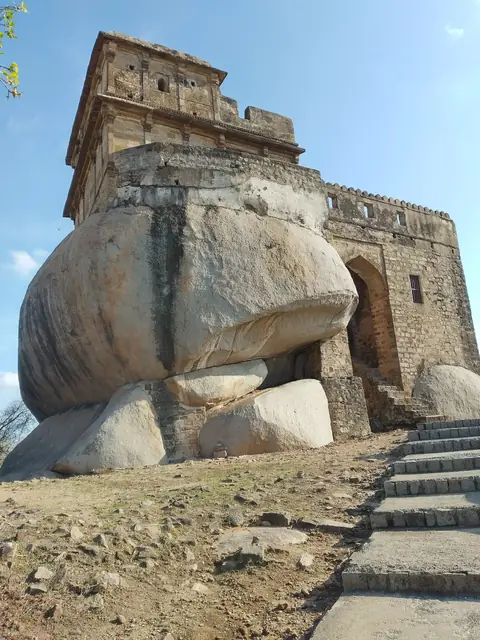
The Ramnagar inscription of 1667 counts the rajas back to Yadavaraya, called Jadurai in Gond memory, who is said to have served the older lords of Garha before taking their seat. For a long time the kingdom was small. Kharji and his grandson Sukhan Das enlarged the army in the fifteenth century, and then Sangram Shah, the forty-eighth raja of the list, carried Gond rule over the Narmada valley, Damoh, Sagar and the Satpuras. His kingdom was counted in garhs, fortified districts, and he held fifty-two of them. Each garh was split into chaurasi of eighty-four villages, and each chaurasi into barhot of twelve. Madan Mahal, the small fort on its granite ridge at Jabalpur, carries the name of the Gond raja Madan Shah.
02Rani Durgavati
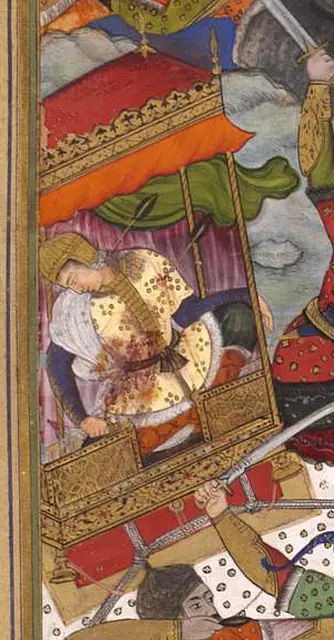
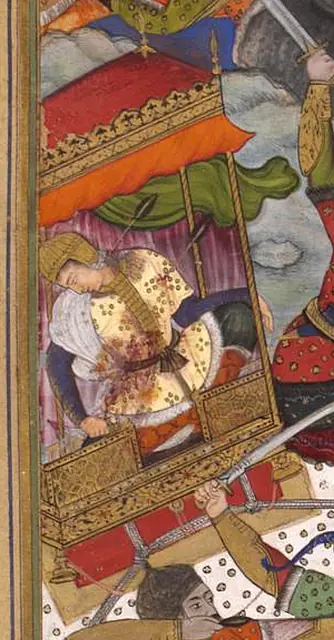
Sangram Shah’s son Dalpat Shah married Durgavati, a Chandela princess of Mahoba. He died within a few years, and Durgavati ruled for their young son Vir Narayan, moving her seat from Singorgarh to the safer Chauragarh. She beat back Baz Bahadur of Malwa. In 1564 Akbar sent Asaf Khan against her. At Narrai, between a hill and the Gaur and Narmada rivers, she fought from her elephant until she was wounded by arrows, and she took her own life with her dagger rather than be captured. Vir Narayan fell defending Chauragarh soon after. The Akbarnama counts seventy thousand villages in Garha-Katanga, and records the treasure the Mughals carried off.
03Ramnagar and the long decline
Akbar gave the kingdom back to Chandra Shah, another son of Sangram Shah, in return for ten garhs and Mughal overlordship. Madhukar Shah and Prem Narayan followed; Prem Narayan was killed by Jujhar Singh Bundela of Orchha, and the Mughals then placed Hriday Shah on the throne. Hriday Shah moved the capital to Ramnagar on the Narmada near Mandla, where the Moti Mahal and its inscription of 1667 still stand. After him the court was torn by faction. Narendra Shah gave Seoni and other districts to Bakht Buland of Deogarh for help against rebels, and by the time of Maharaj Shah only twenty-nine of the fifty-two garhs remained.
04The Marathas and 1857
In 1742 the army of Peshwa Balaji Bajirao and the Sagar Marathas attacked Mandla and killed Maharaj Shah. His son Shivraj Shah kept the throne by paying four lakh rupees a year. In 1781 the last raja, Narhar Shah, was overthrown by the Sagar Marathas and died a prisoner at Khurai. Mandla passed to the Bhonsles of Nagpur in 1799 and to the British in 1818. The line was not forgotten. In 1857 Raja Shankar Shah, a descendant living on a British pension at Jabalpur, and his son Raghunath Shah were arrested for planning a rising; on 18 September 1857 both were blown from cannon at Jabalpur.
The rulers
- 1Yadavaraya (Jadurai)Founder in the Ramnagar inscription’s listc. 14th century (by tradition)
- 2KharjiEnlarged the armyc. 1440–1460
- 3Sukhan Dasc. 1480–1500
- 4Sangram ShahHeld fifty-two garhsc. early 16th century
- 5Dalpat ShahHusband of Rani Durgavatito c. 1550
- 6Rani Durgavati (regent)Fell fighting Asaf Khan at Narraic. 1550–1564
- 7Vir NarayanFell defending Chauragarhc. 1550–1564
- 8Chandra ShahRestored under Mughal overlordshipc. after 1564
- 9Madhukar Shahc. late 16th century
- 10Prem NarayanKilled by Jujhar Singh Bundelac. early 17th century
- 11Hriday ShahBuilt Ramnagar; inscription of 1667c. mid-17th century
- 12Narendra Shahc. late 17th–early 18th century
- 13Maharaj ShahKilled in the Maratha attack of 1742c. 1732–1742
- 14Shivraj ShahPaid tribute to the Marathasc. 1742–mid-18th century
- 15Narhar ShahLast raja; died a prisoner at Khuraic. to 1781
What they left
- Madan Mahal fort on its rock at Jabalpur
- The Moti Mahal at Ramnagar and its inscription of 1667 listing the rajas
- Chauragarh fort, Rani Durgavati’s last stronghold
- The memory of Rani Durgavati, honoured across Gondwana and all Bharat
- The garh, chaurasi and barhot system of governing the hills