Cite
MLA
“Shri Vitthal (Vithoba).” Hindu History, 2026, https://www.hinduhistory.in/devata/vithoba/. Accessed .
APA
Hindu History. (2026). Shri Vitthal (Vithoba). Retrieved , from https://www.hinduhistory.in/devata/vithoba/
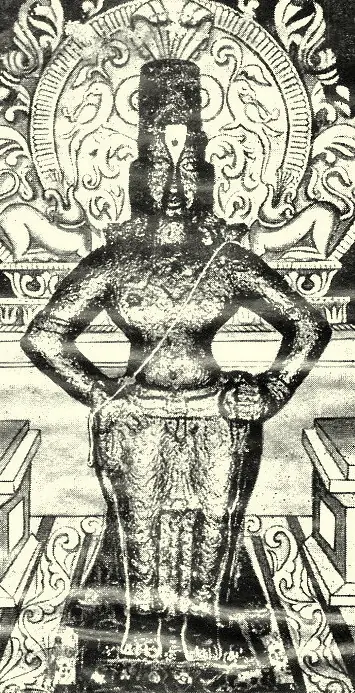
A dark standing figure on a brick, both hands on the hips (kati), holding a conch and a lotus stalk, makara earrings at his ears and a tall cap-like crown; Rukmini, called Rakhumai, has her own shrine.
01Pundalika’s brick
Pundalika was serving his aged parents when Krishna came to his door, having come from Dwarka looking for Rukmini, who had gone off to the Dindirvana forest. Pundalika did not stop his service; he tossed a brick out for the Lord to stand on until he was free. Krishna stood on the brick with his hands on his hips, pleased with a son who put his parents first, and stands there still. That is why Varkaris say vīṭ, brick, is part of his name.
02The Varkari saints
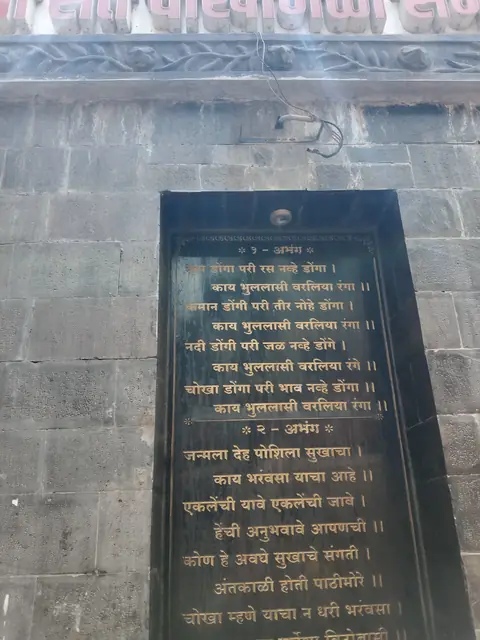
Sant Jnaneshwar wrote the Jnaneshwari, a Marathi commentary on the Gita, in 1290, and took samadhi at Alandi. Namdev the tailor, Gora the potter, Chokhamela, Janabai, Eknath of Paithan, and Tukaram of Dehu poured their abhangas out to Vithoba in the language of the people. Their message was simple: chant Vitthal’s name, walk to Pandharpur, see God in every pilgrim. The Varkaris wear a tulsi mala, mark their foreheads with gopichandan, and sing Rama Krishna Hari as they walk.
03The wari
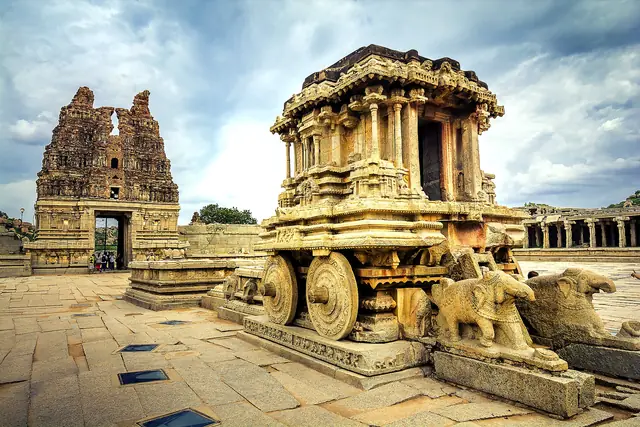
Every year in Ashadha, the palkhis of Jnaneshwar from Alandi and Tukaram from Dehu set out for Pandharpur, about 250 kilometres, and lakhs walk with them in dindis, singing, for some three weeks. They arrive for Ashadhi Ekadashi, when the Chief Minister of Maharashtra performs the mahapuja with a Varkari couple chosen from the crowd. Kartiki Ekadashi brings a second great gathering. At Hampi, the Vijayanagara kings built a great Vittala temple with musical pillars and a stone chariot in the sixteenth century.
In the texts
- Jnaneshwari of Sant Jnaneshwar (1290)
- Abhangas of Namdev and Tukaram (Tukaram Gatha)
- Pandurang Mahatmya