Cite
MLA
“Battle of Sobraon.” Hindu History, 2026, https://www.hinduhistory.in/battles/battle-of-sobraon-1846/. Accessed .
APA
Hindu History. (2026). Battle of Sobraon. Retrieved , from https://www.hinduhistory.in/battles/battle-of-sobraon-1846/
The Sikh entrenchments were stormed and the bridge of boats broke; the Company crossed to Lahore and imposed the Treaty of Lahore.
01A camp with the river behind
The Khalsa had built a great horseshoe of earthworks on the left bank of the Sutlej at Sobraon, joined to its camp on the right bank by a single bridge of boats. Tej Singh, the commander-in-chief, and Lal Singh, the wazir, were both in secret contact with the British, as Cunningham and later historians record. The real fighting leadership fell to men like the old general Sham Singh Attariwala.
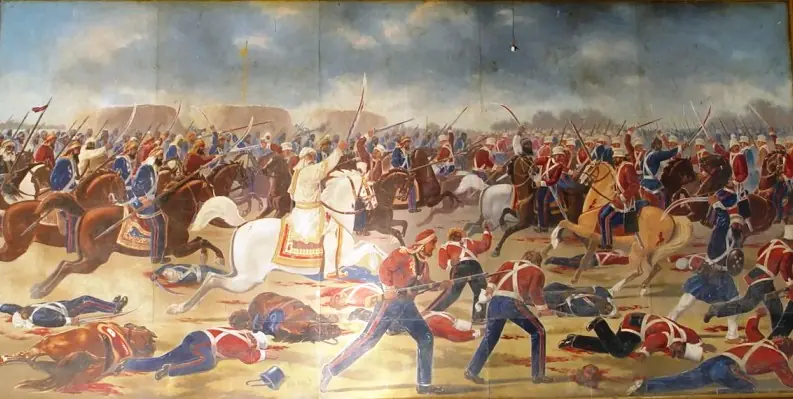
02Sham Singh’s last charge
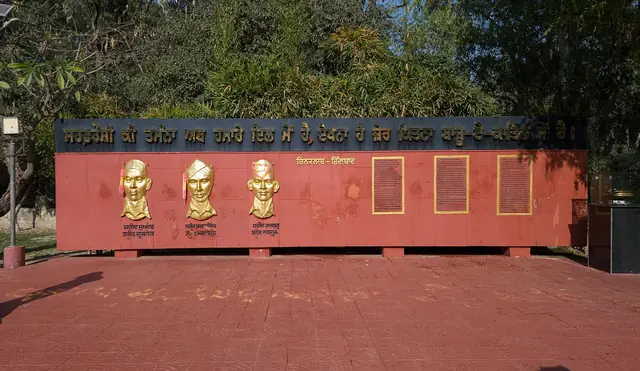
On the morning of 10 February 1846 Gough’s guns bombarded the works, and then his infantry attacked. The first assaults were thrown back. Breaking in at last on the weaker western end, the Company troops fought along the trenches. Tej Singh crossed the river early, and the bridge was broken, whether by the swollen river or by design is still argued. Sham Singh Attariwala, dressed in white, led his men against the attackers and fell. The Khalsa soldiers fought with the river behind them; many drowned trying to cross.
03Lahore and Kashmir
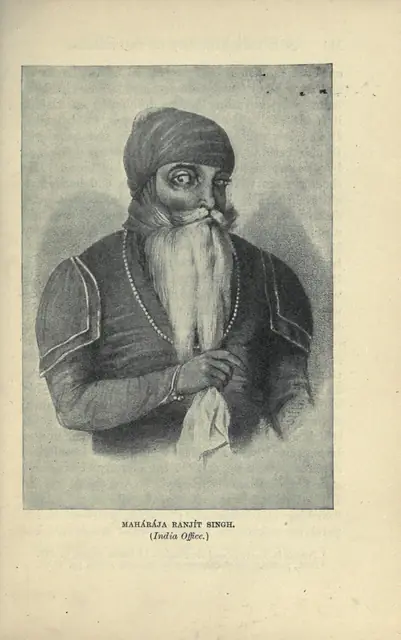
The Company crossed the Sutlej and marched to Lahore. By the Treaty of Lahore of 9 March 1846 the boy Maharaja Duleep Singh kept his throne but lost the Jalandhar Doab, his army was cut down, and Kashmir was ceded in lieu of indemnity and sold to Gulab Singh of Jammu a week later. Sham Singh’s village of Attari, now on the border, keeps his memory each year.
Sobraon ended the independence of the Sikh kingdom in all but name and made the Company master of the Punjab’s affairs.