
Cite
MLA
“Rising of Dhondia Wagh.” Hindu History, 2026, https://www.hinduhistory.in/battles/dhondia-wagh-1800/. Accessed .
APA
Hindu History. (2026). Rising of Dhondia Wagh. Retrieved , from https://www.hinduhistory.in/battles/dhondia-wagh-1800/
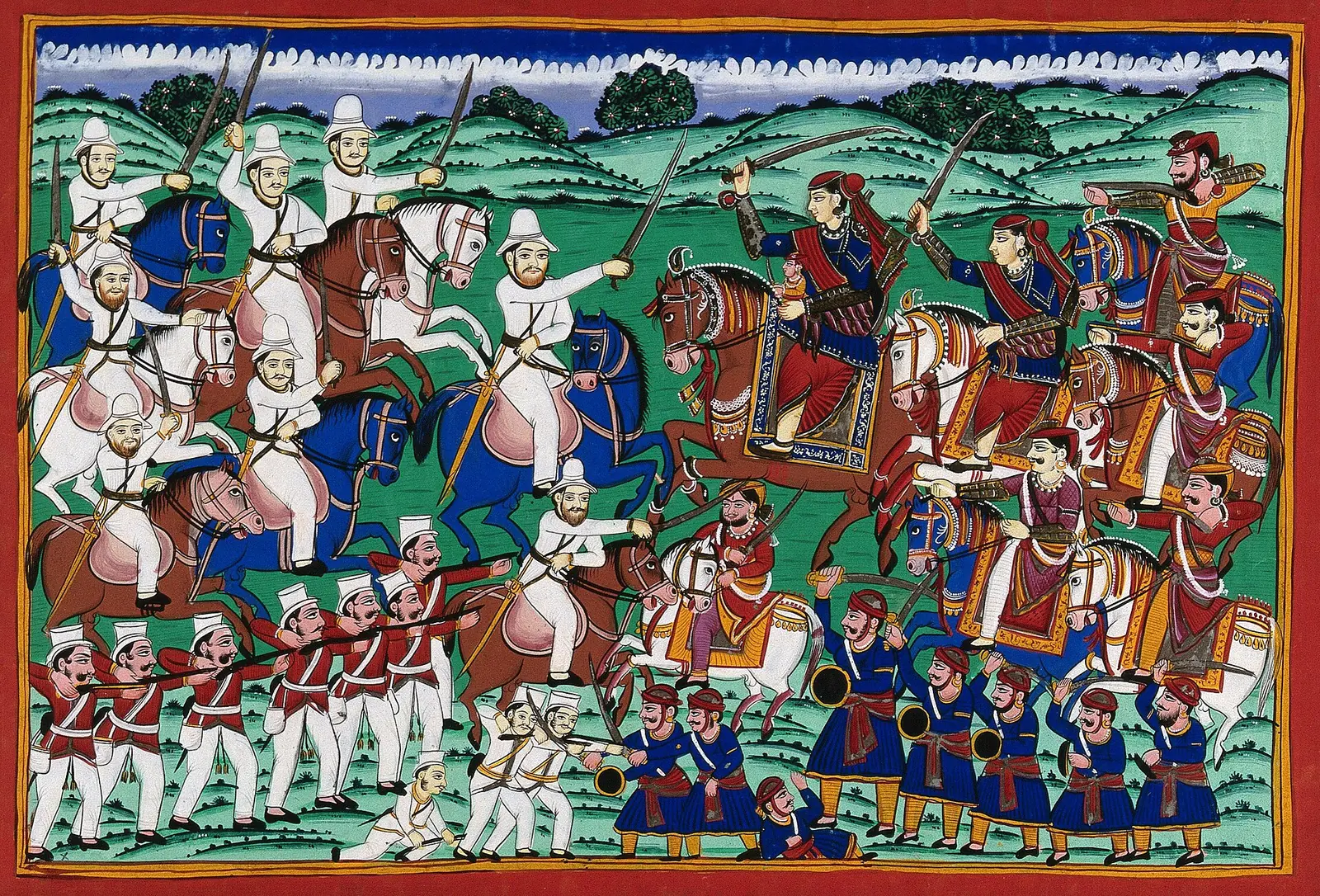
Wellesley ran Dhondia down and he was killed in a cavalry charge at Konagal on 10 September 1800.
01King of two worlds
Dhondia Wagh, a Maratha from Channagiri, had served Haidar Ali, then raided the Maratha–Mysore border on his own account and ended in Tipu’s prison. The storming of Srirangapatna in May 1799 set him free. Disbanded Mysore horsemen flocked to him, and he seized forts in the Bednur and Savanur country, calling himself Ubhaya-Lokadhishwara, lord of two worlds. He raided Peshwa lands as freely as the Company’s.
02The chase
In 1800 Arthur Wellesley took the field with light columns of cavalry, and the Peshwa’s commanders moved against Dhondia from the north. Through the monsoon Wellesley pressed him from fort to fort across the Tungabhadra and the Malaprabha. On 10 September he caught Dhondia’s camp at Konagal and charged it at the head of four cavalry regiments. Dhondia died in the charge and his band broke up.
The campaign trained Wellesley in the fast, supplied marches across the Deccan that he used against the Marathas in 1803.