Cite
MLA
“Second Pazhassi Revolt.” Hindu History, 2026, https://www.hinduhistory.in/battles/second-pazhassi-revolt-1800/. Accessed .
APA
Hindu History. (2026). Second Pazhassi Revolt. Retrieved , from https://www.hinduhistory.in/battles/second-pazhassi-revolt-1800/
After five years of forest war Pazhassi Raja was killed at Mavila Thodu on 30 November 1805, and the revolt ended.
01Wayanad
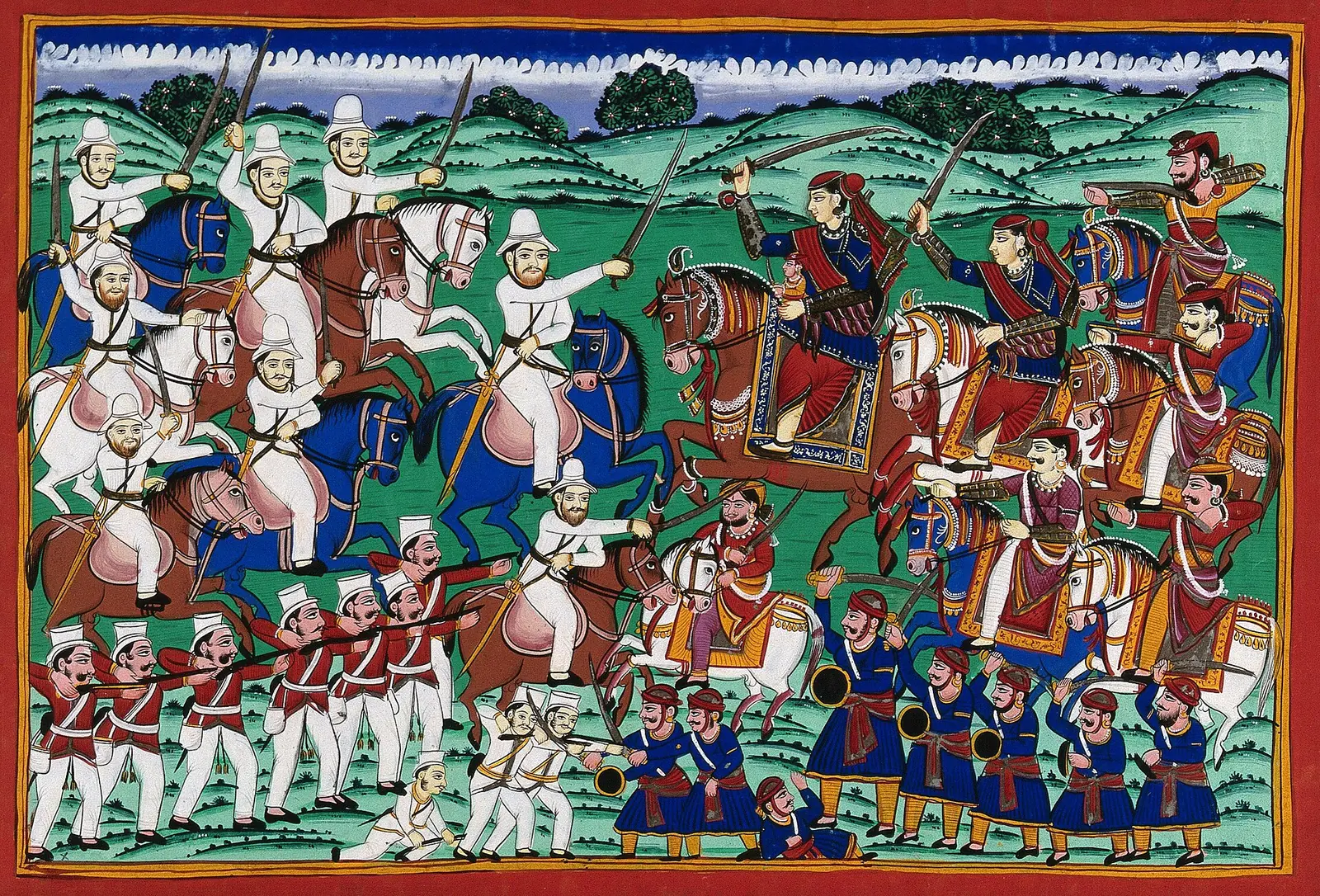
Pazhassi Raja had fought Haidar and Tipu for twenty years and first rose against the Company in 1793 over its revenue farming in Kottayam. That quarrel was patched up in 1797. In 1800 the Company took Wayanad, which the Raja held as his own, as part of the Mysore spoils. He went back to the forest. Wellesley, commanding in Mysore and Malabar, built roads and posts into the hills, but the Raja’s men cut convoys and vanished.
02Panamaram and Mavila Thodu
In October 1802 Thalakkal Chandu and Edachena Kunkan led the Kurichyas against the Company post at Panamaram and took it, a blow remembered in Wayanad to this day. The Company raised a special police of local men, the Kolkars, and in 1805 put the sub-collector Thomas Baber in charge. Baber’s parties tracked the Raja to a stream on the Karnataka border, Mavila Thodu, where he was killed in a skirmish on 30 November 1805. Baber had him cremated with honour.
Kerala remembers Pazhassi Raja as the Kerala Simham, among the first in the south to wage a long war against Company rule; his samadhi stands at Mananthavady.