Cite
MLA
“Capture of Chandernagore.” Hindu History, 2026, https://www.hinduhistory.in/battles/capture-of-chandernagore-1757/. Accessed .
APA
Hindu History. (2026). Capture of Chandernagore. Retrieved , from https://www.hinduhistory.in/battles/capture-of-chandernagore-1757/
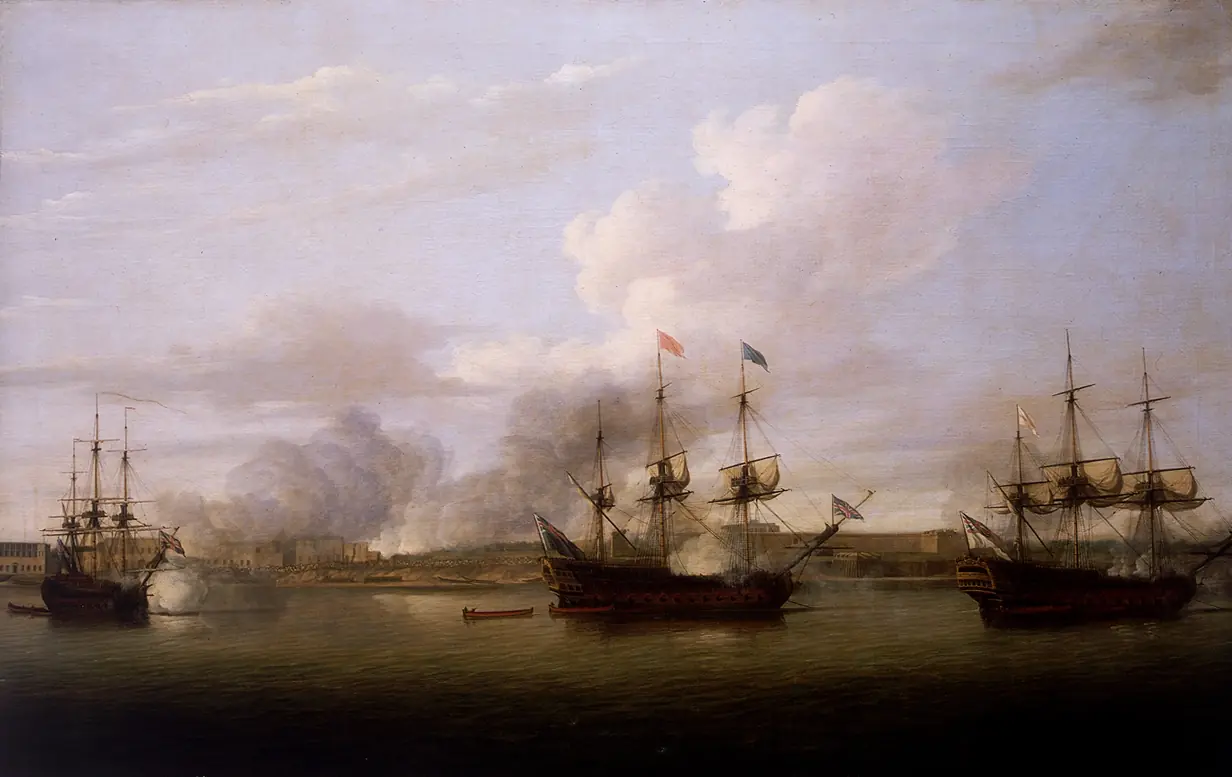
Fort d’Orléans surrendered after Watson’s ships battered it from the river, and the French lost their main base in Bengal.
01War in Europe reaches the Hooghly
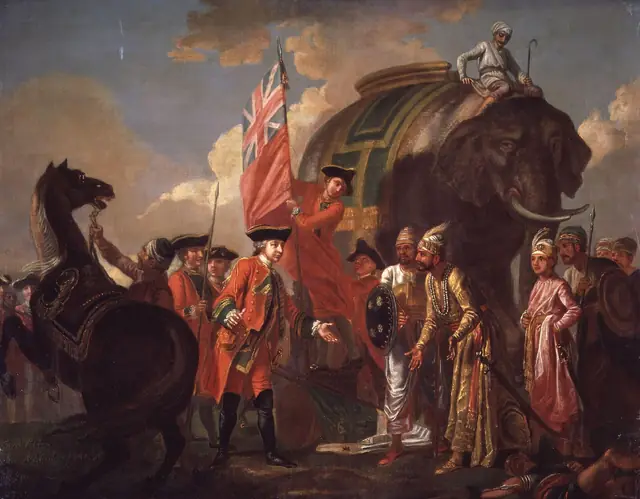
Clive and Watson had retaken Calcutta from Siraj ud-Daulah in January 1757 and made peace with him in February. Britain and France were now at war in Europe, the Seven Years’ War, and Chandernagore, a few hours up the river, was the French company’s chief settlement in Bengal. Siraj, who needed both nations, at first forbade an attack, then gave a doubtful consent. Clive marched on the town in mid-March and drove the French from their outer posts into Fort d’Orléans.
02Ships against the walls
The French had sunk ships in the channel to block it, but a deserter showed the English where the passage lay. On the morning of 23 March Watson’s ships, the Kent and the Tiger among them, worked up to the river face of the fort and opened fire at close range. Both sides suffered heavily, and the Kent was badly hit. After some hours the French governor hoisted the white flag. The garrison became prisoners, and some officers, Jean Law among them, escaped upriver to the Nawab’s country.
With the French gone from Bengal, Siraj ud-Daulah had no European ally left, and the plot that led to Plassey went ahead.