Cite
MLA
“Guru Har Krishan.” Hindu History, 2026, https://www.hinduhistory.in/people/guru-har-krishan/. Accessed .
APA
Hindu History. (2026). Guru Har Krishan. Retrieved , from https://www.hinduhistory.in/people/guru-har-krishan/
Life in moments
- 011656
Born at Kiratpur in 1656
- 021661
Became the eighth Guru in 1661, aged five
- 03
Stayed in Raja Jai Singh’s bungalow in Delhi, now Gurdwara Bangla Sahib
- 041664
Died of smallpox in Delhi on 30 March 1664
- 05
Named the next Guru with the words Baba Bakale
01Called to Delhi
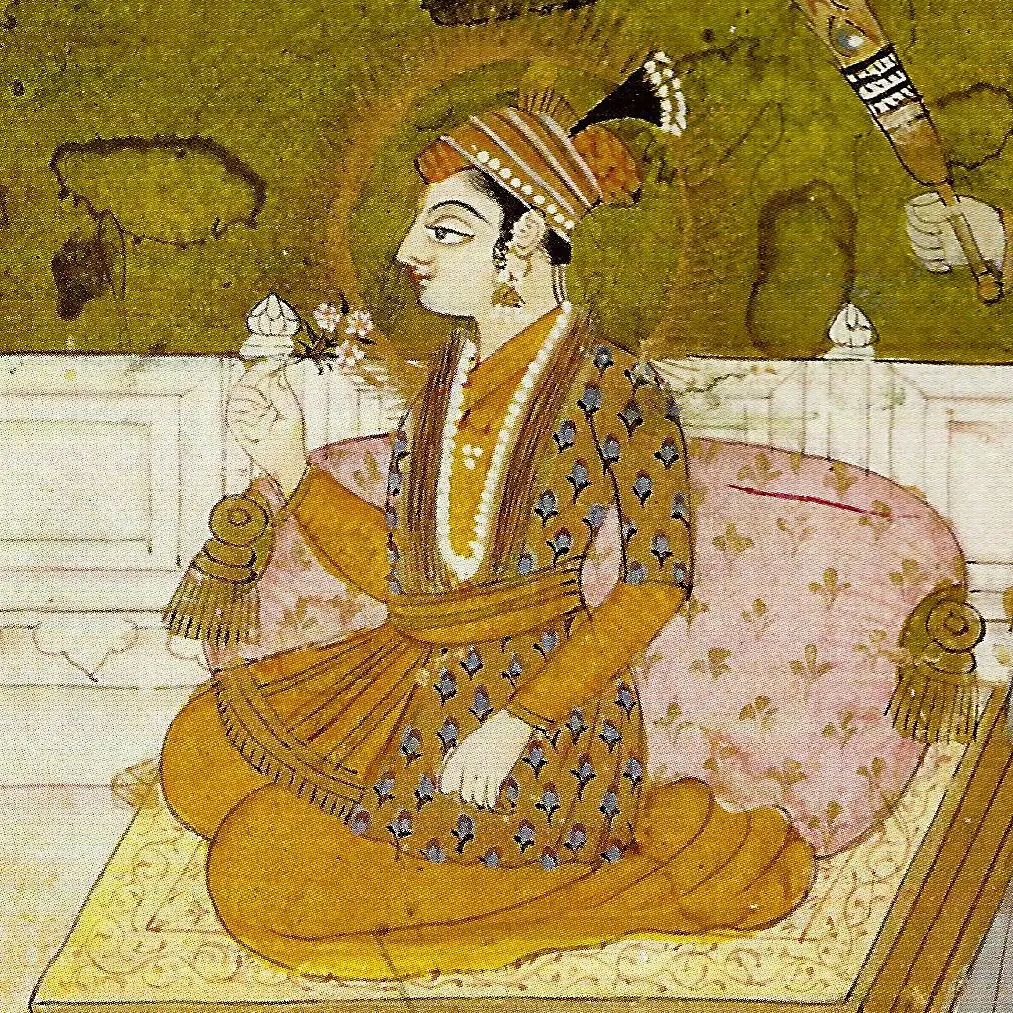
Har Krishan was born at Kiratpur, the younger son of Guru Har Rai, and was installed as Guru in 1661. His elder brother Ram Rai, disowned by their father, appealed to Aurangzeb, and the emperor called the child to Delhi. The Guru stayed in the bungalow of Raja Jai Singh of Amber, near Raisina. Sikh tradition says he refused to show himself to the emperor. A katha is told of Panjokhara on the way, where a proud pandit mocked the boy and the Guru had a mute water-carrier explain the Gita to him.
02Bangla Sahib
That year smallpox and cholera ran through Delhi. The child Guru went among the sick, Hindu and Muslim alike, and the water of the well at Jai Singh’s bungalow was given to them. He caught the disease himself. On his deathbed, on 30 March 1664, unable to say more, he spoke the words Baba Bakale, meaning that the next Guru would be found at the village of Bakala. That was his grand-uncle, Tegh Bahadur. The bungalow became Gurdwara Bangla Sahib, and its sarovar is still taken home by devotees as healing water.