
Cite
MLA
“Bidriware.” Hindu History, 2026, https://www.hinduhistory.in/kala/bidri/. Accessed .
APA
Hindu History. (2026). Bidriware. Retrieved , from https://www.hinduhistory.in/kala/bidri/
What defines it
- 01
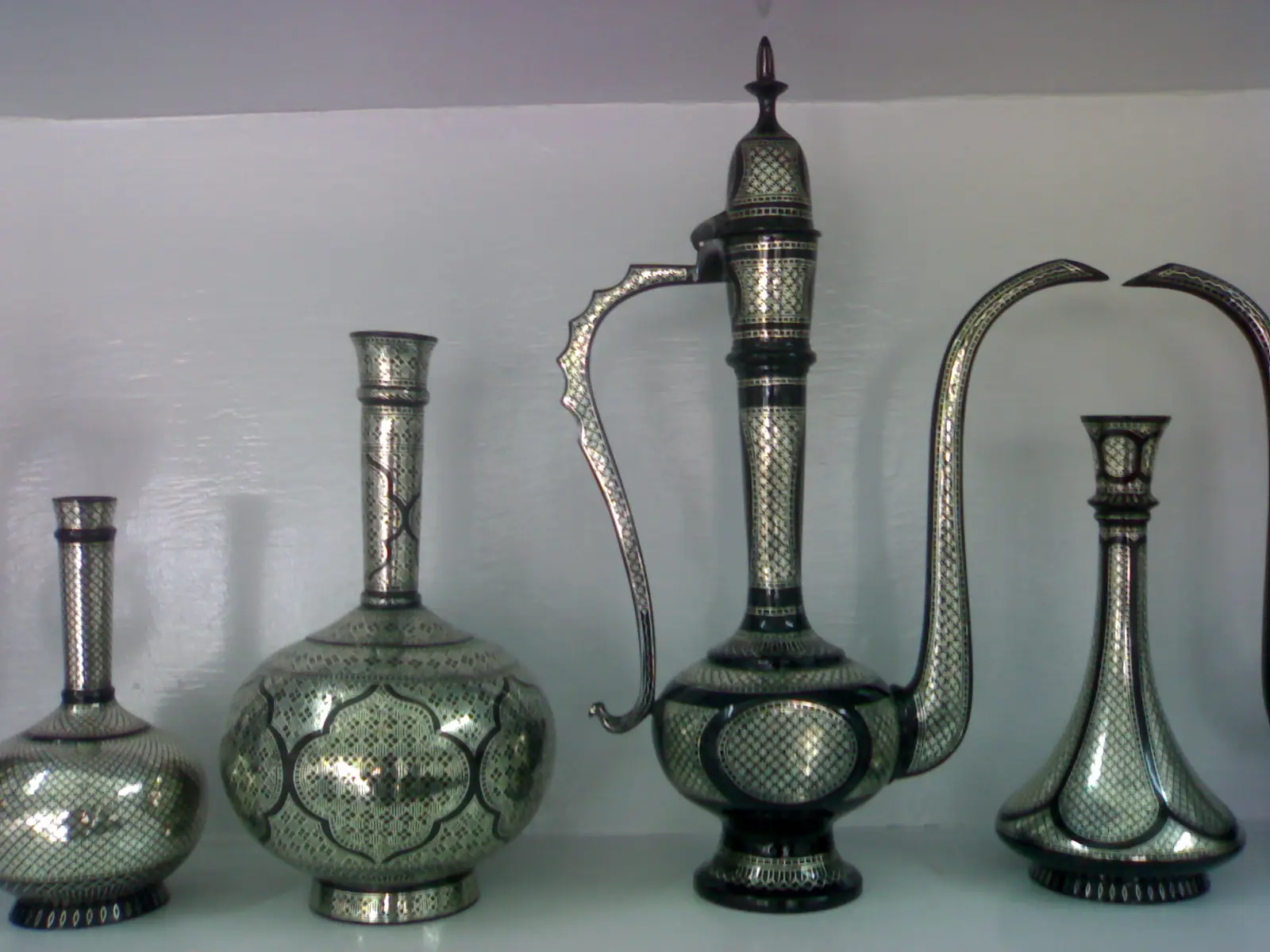
Zinc-copper alloy body
- 02
Silver wire and sheet inlay
- 03
Blackened with Bidar fort soil
- 04
Floral and geometric patterns
01The town and its craft
Bidar, on a red laterite plateau in northern Karnataka, became the capital of the Bahmani Sultanate in the 15th century, and the craft is associated with its courts and those of the Barid Shahis who followed. Hookah bases, ewers, boxes, trays and spittoons were made in it, and pieces reached museums in London and beyond. The craftsmen today are both Hindu and Muslim, and many of the same families have worked it for generations.
02Zinc, silver and fort soil
An alloy of zinc with a little copper is cast in sand moulds and smoothed. A temporary blackening lets the craftsman scratch the design, which he then deepens with chisels, and silver wire or sheet is hammered into the grooves. The piece is filed and polished, then rubbed with a hot paste of soil from the old parts of Bidar fort mixed with ammonium chloride and water. The zinc turns a deep, permanent black; the silver stays bright. Bidar’s soil, say the craftsmen, is what makes the black.
03Today
Bidriware holds a Geographical Indication. Workshops in Bidar town, around the Chaubara and the Bidri lanes, still make it by hand, as do workshops in Hyderabad. Shah Rasheed Ahmed Quadri of Bidar, a master of the craft, received the Padma Shri. The Salar Jung Museum in Hyderabad and the Victoria and Albert Museum in London hold fine old pieces. Ask a Bidar workshop to show the blackening step; it takes only minutes and is the craft’s secret.