
Cite
MLA
“Jaintia Kings (Syiem Sutnga).” Hindu History, 2026, https://www.hinduhistory.in/dynasties/jaintia/. Accessed .
APA
Hindu History. (2026). Jaintia Kings (Syiem Sutnga). Retrieved , from https://www.hinduhistory.in/dynasties/jaintia/
01Hills and plains
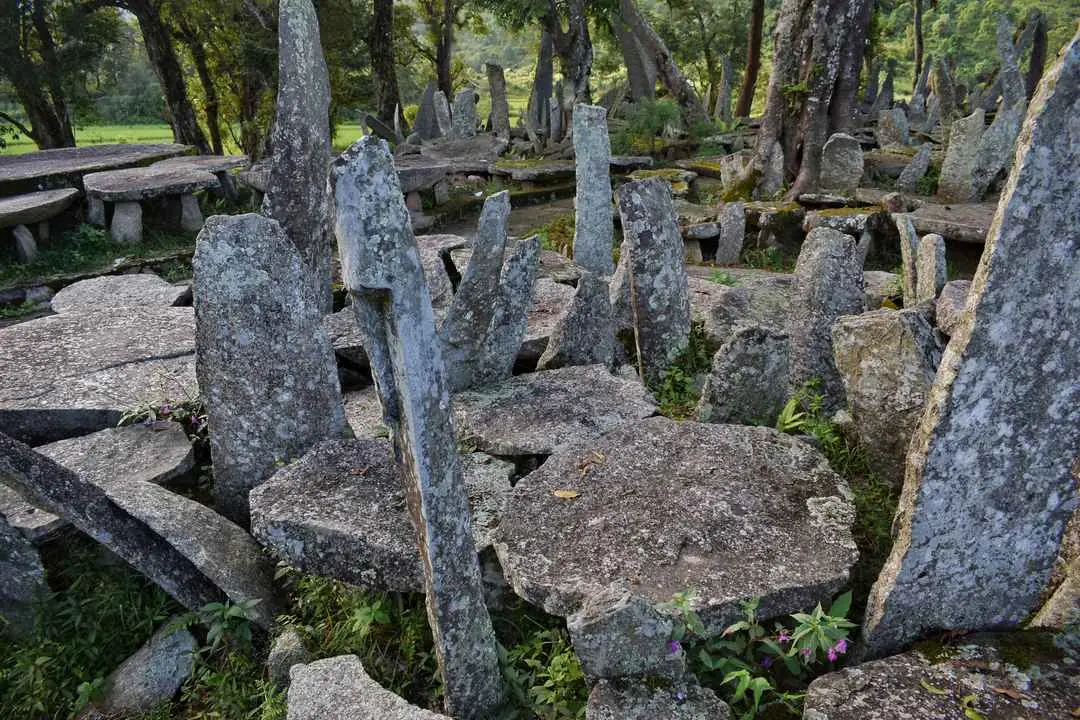
The Jaintia kingdom had two halves. In the hills the Pnar chiefs, the dolois, chose and served a king of the Syiem Sutnga clan; on the plains below, around Jaintiapur at the foot of the hills, the same king ruled villages of rice farmers and traders, and his quarries supplied lime to Bengal. Nartiang, in the hills, was a summer seat. Its field of standing stones is one of the largest groups of monoliths in Bharat, the tallest about eight metres high; Jaintia tradition says the great one was raised by U Mar Phalyngki, a champion of the king. Earlier kings are named in tradition back to the seventh century, but the line becomes firm history only around 1500.
02Jayanti Devi
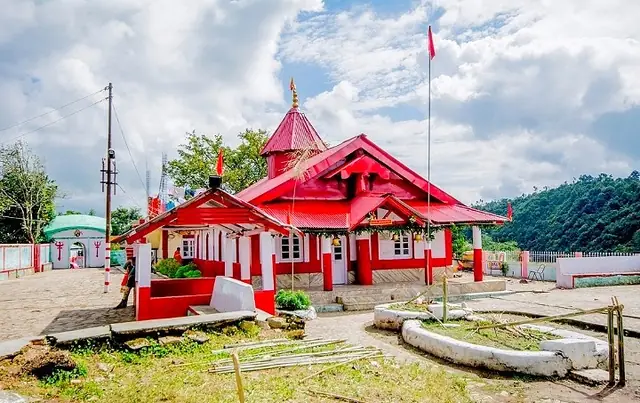
The kingdom took its name, by one account, from the goddess Jayanti, Jainteshwari. At Nartiang the kings kept a temple of Durga, which the Shakta lists count as the Jayanti Shakti Peetha, where the left thigh of Mata Sati fell; another shrine of Jainteshwari stood near the palace at Jaintiapur. Durga Puja is still kept at Nartiang each autumn, with the old royal family taking part. The kings struck coins with Sanskrit inscriptions in Bengali script, and took Hindu names: Dhan Manik, Jasa Manik, Ram Singh, Jaya Narayan. The palace ruins at Jaintiapur, now in Bangladesh, still show the brick gateways of the winter capital.
03Ahoms, Kacharis and the Company
Early in the seventeenth century the Jaintia king fought the Kachari Satrudaman over Dimarua and sought the Ahoms as allies, giving a princess in marriage to the Ahom king Pratap Singha. In 1707 Ram Singh seized the fleeing Kachari king Tamradhwaj; the Ahom king Rudra Singha sent armies through the hills, took Jaintiapur, and carried Ram Singh away, and he died a captive. The East India Company met the Jaintias after it took the diwani of Bengal in 1765. In 1832 four men from British territory were carried off for a sacrifice at a temple in the plains; three were killed. The Company demanded the guilty men, and when they were not given up it annexed the kingdom on 15 March 1835 and pensioned the last king, Rajendra Singh.
04After the kings
The Company ruled the plains directly and left the hills to the dolois under its officers. New taxes and interference with Pnar custom brought risings in 1860 and 1862. The second was led by U Kiang Nangbah, who fought from the forests for months before he was captured and hanged at Jowai on 30 December 1862. The dolois still sit as chiefs under the Jaintia Hills Autonomous District Council, and the Syiem Sutnga family still leads the Durga Puja at Nartiang.
The rulers
- 1Prabhat RayFirst of the Syiem Sutnga listc. 1500–1516 (by the family list)
- 2Dhan Manikc. early 17th century
- 3Jasa ManikAllied with the Ahoms by marriagec. early 17th century
- 4Jasamanta Raic. mid-17th century
- 5Ram Singh ISeized Tamradhwaj; died an Ahom captivec. 1694–1708
- 6Jaya Narayanc. 1708–1731
- 7Ram Singh IIc. 1790–1832
- 8Rajendra SinghLast king; deposed by the Company1832–1835
What they left
- The Durga temple at Nartiang, the Jayanti Shakti Peetha
- The monoliths of Nartiang
- The palace ruins at Jaintiapur
- The dolois of the Jaintia hills, still serving as chiefs