01Naranarayan and Chilarai
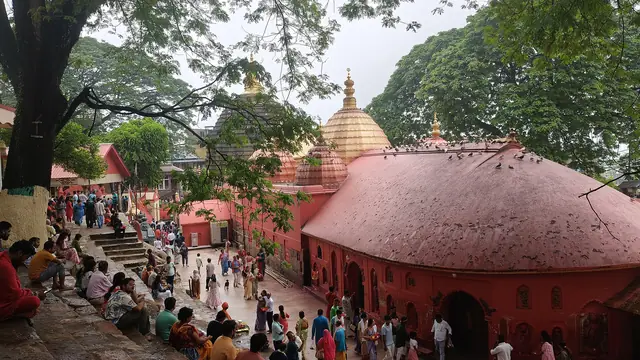
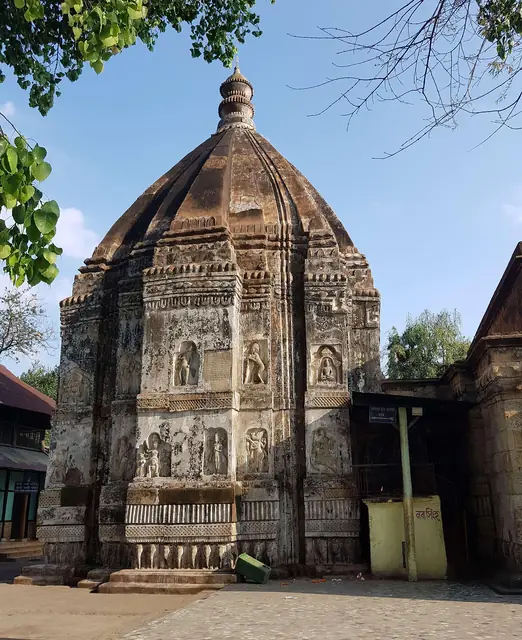
Naranarayan was a scholar-king; his younger brother Shukladhvaja, called Chilarai, the kite, for the speed of his marches, led the armies. In the 1560s Chilarai campaigned east against the Ahoms and south into the hill kingdoms of Jaintia, Tripura and Kachar, and many of them paid tribute. In 1565 Naranarayan rebuilt the temple of Devi Kamakhya on Nilachal hill, which had been ruined; an inscription in the temple records the work, and the Koch king’s figures are carved there.
02Sankardev at the Koch court
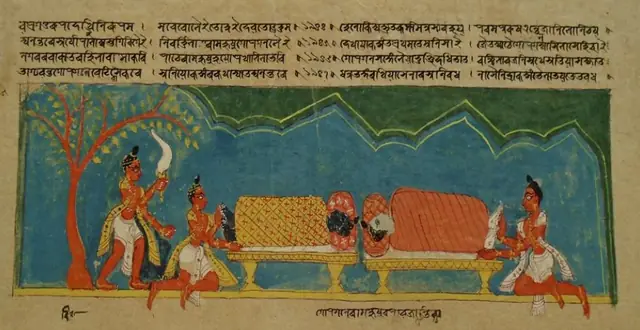
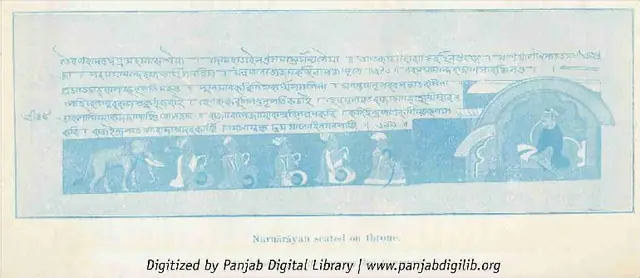
When Srimanta Sankardev left the Ahom country, he came to Koch territory, and Chilarai, married to Sankardev’s niece, brought him before Naranarayan. Sankardev spent his last years under Koch protection at Cooch Behar, where he died in 1568. The great woven cloth showing the life of Shri Krishna, the Vrindavani Vastra, was made at Naranarayan’s request under Sankardev’s direction. The court also had Sanskrit and Assamese scholars translate the Puranas and the epics.
03Split and survival
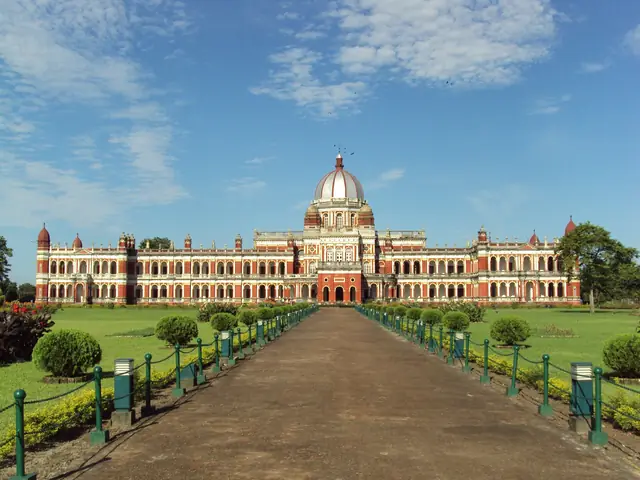
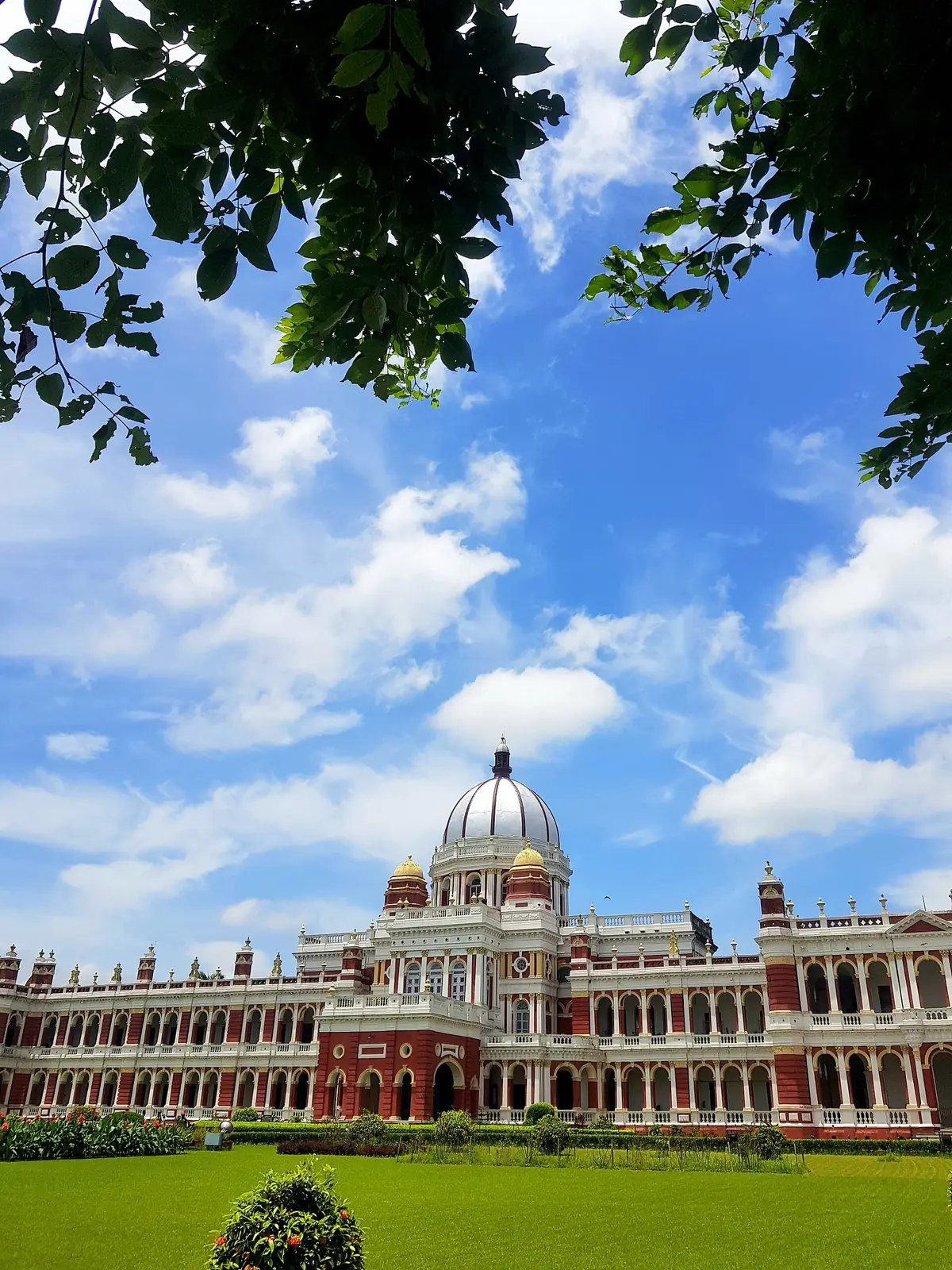
In 1581 the kingdom split: Chilarai’s son Raghudev took the eastern half, Koch Hajo, while Naranarayan’s line kept Koch Bihar in the west. The eastern branch was ground between the Mughals and the Ahoms. Koch Bihar survived by turns of alliance with the Mughals, the Bhutanese and, from 1773, the East India Company, and lived on as a princely state. Nripendra Narayan built the palace at Cooch Behar in 1887. Jagaddipendra Narayan signed the merger with India in 1949.
The rulers
- 1Biswa SinghaFounder of the kingdomc. 1515–1540
- 2NaranarayanRebuilt Kamakhya, 1565c. 1540–1587
- 3Lakshmi NarayanKoch Bihar after the split1587–1621
- 4Raghudev (Koch Hajo)Chilarai’s son; eastern branch1581–1603
- 5Pran Narayanc. 1633–1665
- 6Nripendra NarayanBuilt the Cooch Behar palace1863–1911
- 7Jagaddipendra NarayanMerged the state with India1922–1949
What they left
- The rebuilt Kamakhya temple on Nilachal hill (1565)
- Shelter for Srimanta Sankardev and the Vrindavani Vastra
- The Cooch Behar palace (1887)
- Assamese translations of the Puranas and epics