
Cite
MLA
“Shri Devnarayan.” Hindu History, 2026, https://www.hinduhistory.in/devata/dev-narayan/. Accessed .
APA
Hindu History. (2026). Shri Devnarayan. Retrieved , from https://www.hinduhistory.in/devata/dev-narayan/
A crowned rider on a horse, often with a snake twined about him, sometimes four-armed with conch and discus as Vishnu; in the old shrines he is worshipped as an upright row of large bricks, sometimes covered in tinsel.
01The twenty-four Bagaravats
The epic opens a generation before Devnarayan. Baghji, a Gurjar chief, had twelve wives and twenty-four sons, the Bagaravats. Their guru, the jogi Rupnath, gave them a nugget of gold that brought them wealth for twelve years, and they spent it freely on feasting, cattle and gifts. The bravest was Savai Bhoj. A feud with the ruler of the town of Ran led to war, and when the twelve years ran out the brothers died in battle one after another. This first half, the Bagaravat Bharat, is a song of loss. Only Savai Bhoj’s wife, Sadu Mata, escaped, with the hope that a son of hers would come to set things right.
02Devnarayan is born
The second half tells of that son. By the tradition of his devotees, Devnarayan was born on Magha Shukla Saptami of Samvat 968, about 911 CE, at Malaseri Dungri near Asind, as an avatar of Vishnu, and left the world on Akshaya Tritiya of Samvat 999, aged about thirty-one. Scholars do not agree on his period: one view keeps him in the tenth century, another would place the events between Samvat 1200 and 1400. The epic makes him a worker of wonders who gathers his surviving cousins, among them Mehndu, Madan, Kanh Bhangi and Bhunaji, and at last takes revenge for the Bagaravats. Lakhs gathered at Malaseri in January 2023 for his 1111th Jayanti.
03The phad and the jantar
The bhopas of Devnarayan are themselves Gurjars. They sing through the nights from about November to July, in the villages of Rajasthan and Malwa, playing the jantar, a fretted veena with gourd resonators. The lead singer is the patavi; his companion, the diyala, holds the lamp to the part of the phad being sung. The phad, about thirty feet long, is painted by the Joshi families of Shahpura and Bhilwara and is carried as a moving temple. The oldest surviving one, kept at Rupayan Sansthan in Jodhpur, the institute for folk arts and music founded by Komal Kothari, is signed by Surajmal and Bagtavarchand and dated Samvat 1924, that is 1867. Aditya Malik’s studies of the epic remain the fullest in English.
04Savai Bhoj, Demali and the brick shrines
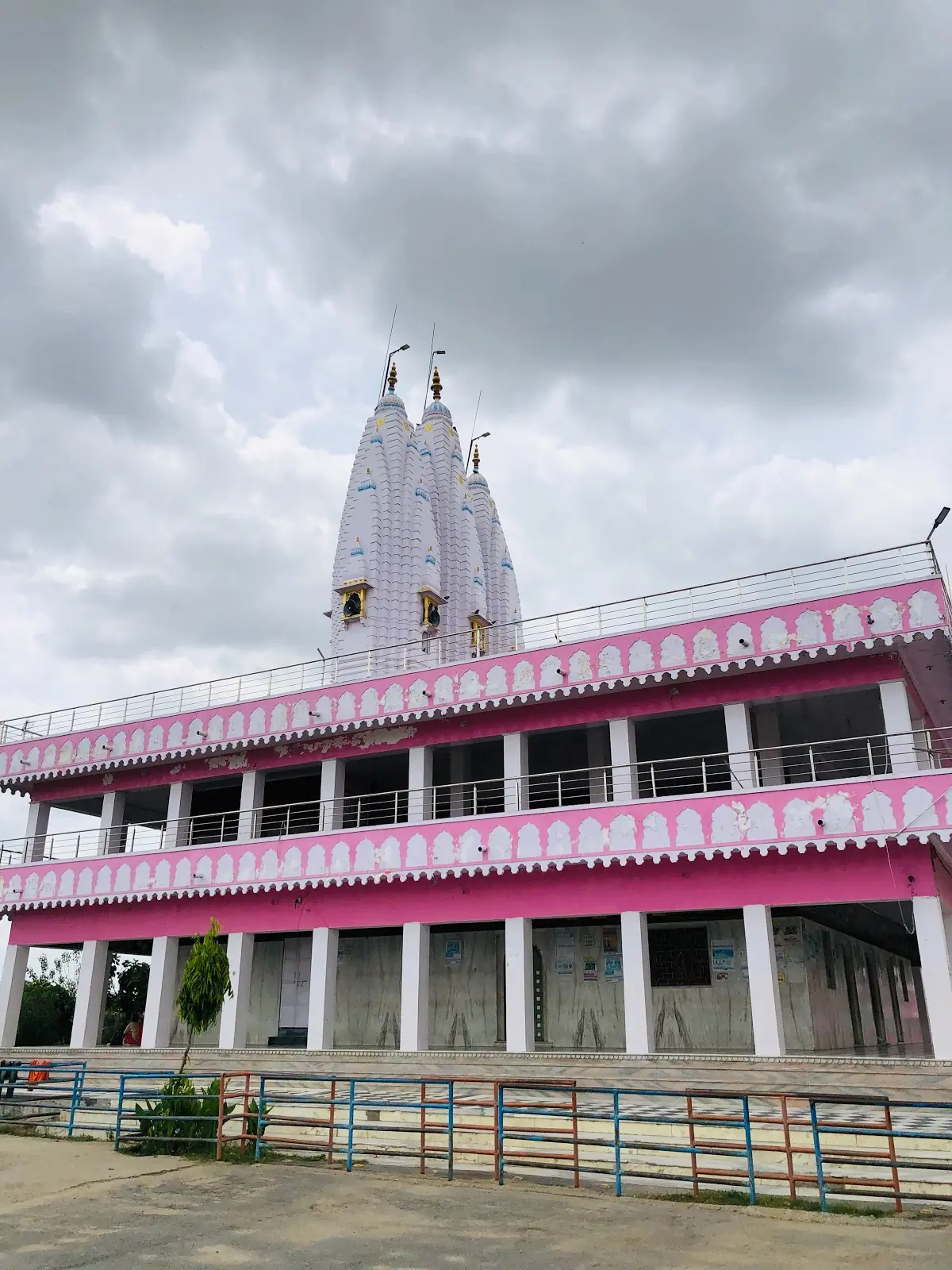
His principal shrine is at Savai Bhoj near Asind, on the battlefield of the Bagaravats. Demali is held to be the first shrine Devnarayan founded himself; Malaseri Dungri marks his birth; Jodhpuriya, near the Mashi dam in Tonk district, holds two fairs a year. In the older devras he is worshipped not as a carved figure but as a row of upright bricks. Rana Sanga of Mewar is said to have built a temple to him. Gurjar families in Rajasthan, Malwa and north Gujarat keep his day on Magha Shukla Saptami and at Makar Sankranti and Dev Ekadashi. India Post issued stamps in his name in 1992 and again in 2011.
In the texts
- Bagaravat Bharat and Devnarayan ki phad (oral epic, Rajasthani)