Cite
MLA
“Siege of Savendroog (Savandurga).” Hindu History, 2026, https://www.hinduhistory.in/battles/siege-of-savendroog-1791/. Accessed .
APA
Hindu History. (2026). Siege of Savendroog (Savandurga). Retrieved , from https://www.hinduhistory.in/battles/siege-of-savendroog-1791/
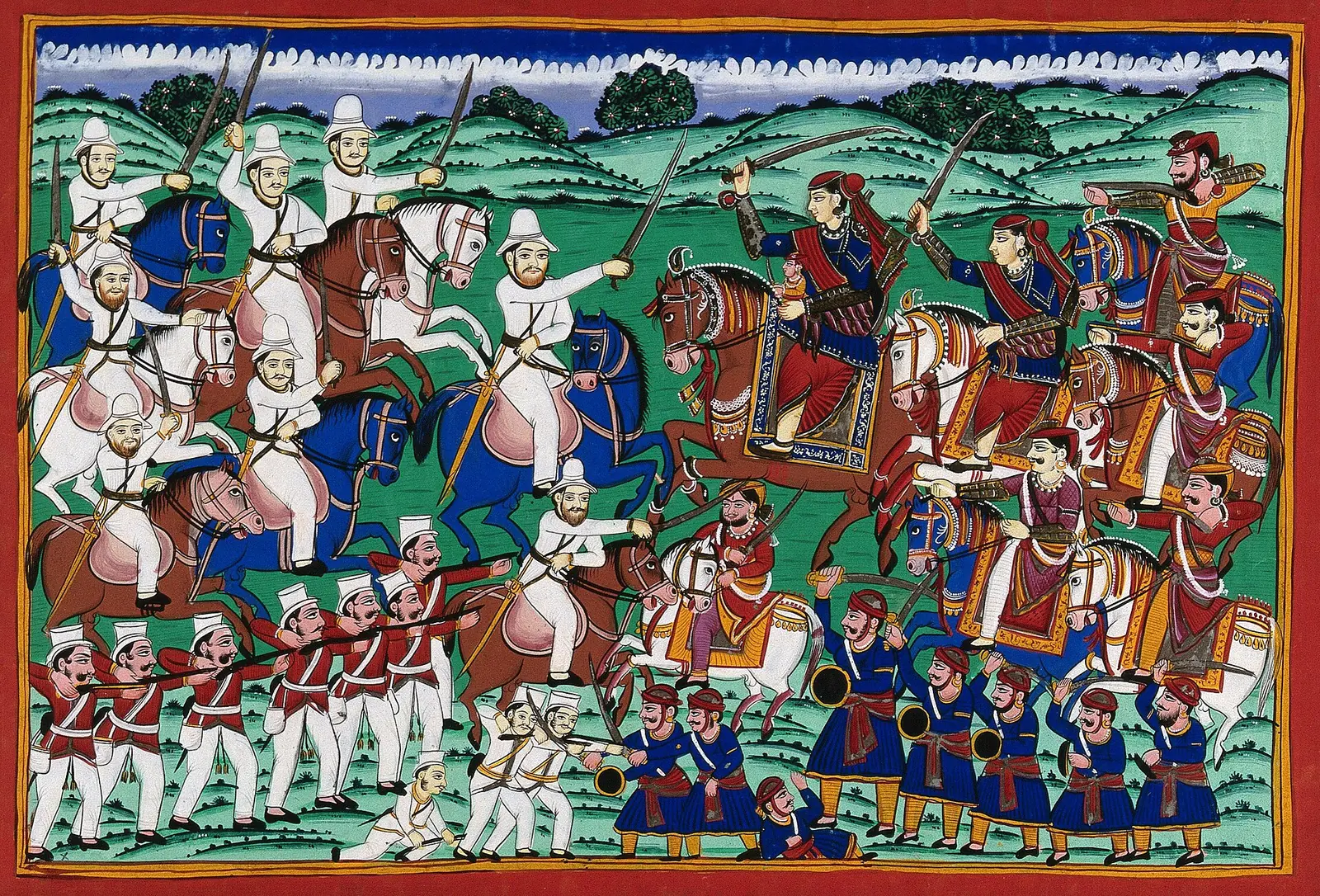
After a short battering the Company columns stormed both summits of the rock on 21 December 1791.
01The black hill and the white
Savandurga is two great domes of granite, known locally as Karigudda, the black hill, and Biligudda, the white. Kempegowda’s Magadi chiefs had used it as a second seat, and Mysore had held it since the 1720s. In 1791 its walls ran across both summits, and the bamboo jungle around its foot made approach slow. Robert Home, the painter who went with Cornwallis, called it the fort of death. It stood on the flank of the road to Srirangapatna.
02Taken in a morning
Cornwallis sent Lieutenant-Colonel James Stuart against it in December 1791. Guns were cut through the jungle and dragged up to batter the walls on the eastern side. On the morning of 21 December the storming parties went up both heights at once. The defenders, who had trusted the rock more than their own muskets, broke, and the fort was carried within the morning. Smaller forts nearby, such as Ramagiri and Shivanagiri, gave up soon after.
The last major obstacle before Cornwallis’ second march on Srirangapatna in January–February 1792.