Cite
MLA
“Siege of Raisen.” Hindu History, 2026, https://www.hinduhistory.in/battles/siege-of-raisen-1543/. Accessed .
APA
Hindu History. (2026). Siege of Raisen. Retrieved , from https://www.hinduhistory.in/battles/siege-of-raisen-1543/
Puranmal surrendered on a promise of safe passage; his camp was then attacked and he and his Rajputs were killed with their families.
01The fort on the sandstone ridge
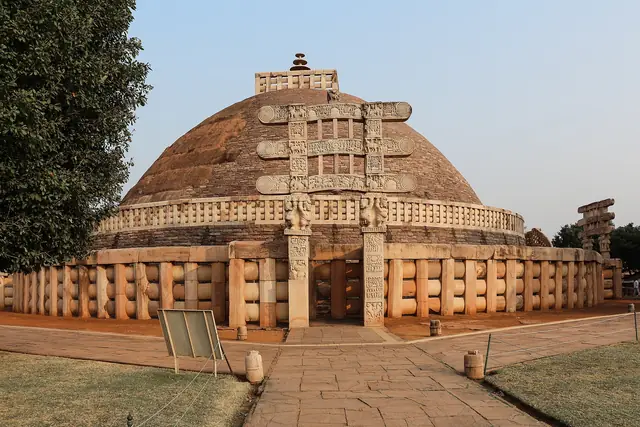
Raisen stands on a sandstone ridge east of Bhopal, not far from Sanchi. Its Purbiya Rajput lords had held it against the Sultans of Gujarat, whose siege of 1532 ended with a jauhar. Puranmal, son of Silhadi, ruled there when Sher Shah, having driven Humayun out of India, turned to Malwa in 1542.
02The broken pledge
After a long siege and heavy bombardment Puranmal agreed to give up the fort in return for safe passage for himself, his family and his men, and came down to camp nearby. The Afghan chroniclers, Abbas Khan Sarwani in the Tarikh-i-Sher Shahi and later Nurul Haq, record what followed. Learned men in Sher Shah’s camp gave the opinion that the promise need not be kept, and the army surrounded the Rajput camp at dawn. The Rajputs killed their women and children so they would not be taken, and fought until they were cut down. Puranmal died with them, in January 1543.
03Remembered
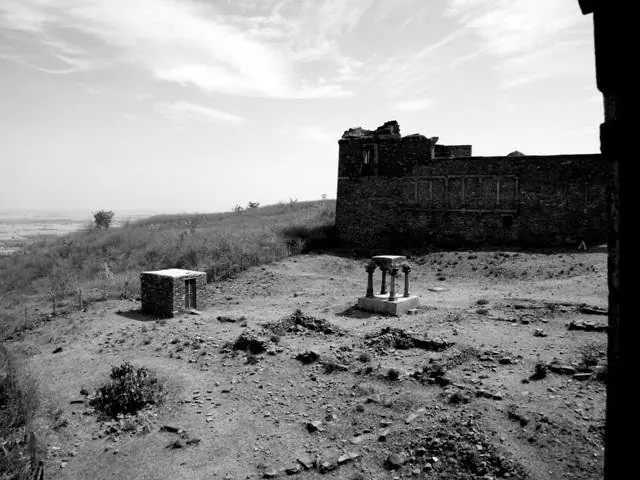
The Afghan writers themselves set down the charge that Puranmal kept captive Muslim women in his household, which they give as the reason for the jurists’ ruling. Hindu memory kept the other side: a king who came down from his walls on a promise and was killed for trusting it. The ruins of Raisen fort still crown the ridge.
Raisen became a byword in Rajput memory for a surrender betrayed, and Sher Shah’s next siege, at Kalinjar, would cost him his life.