Cite
MLA
“Siege of Kalinjar (1545).” Hindu History, 2026, https://www.hinduhistory.in/battles/siege-of-kalinjar-1545/. Accessed .
APA
Hindu History. (2026). Siege of Kalinjar (1545). Retrieved , from https://www.hinduhistory.in/battles/siege-of-kalinjar-1545/
The fort was taken on the day Sher Shah was mortally burned by an exploding store of gunpowder; Kirat Singh was put to death.
01Six months on the hill
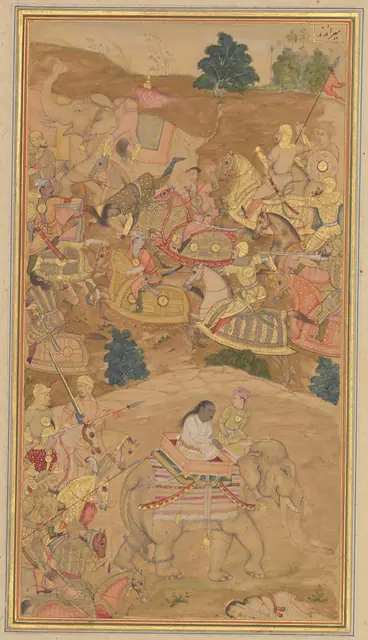
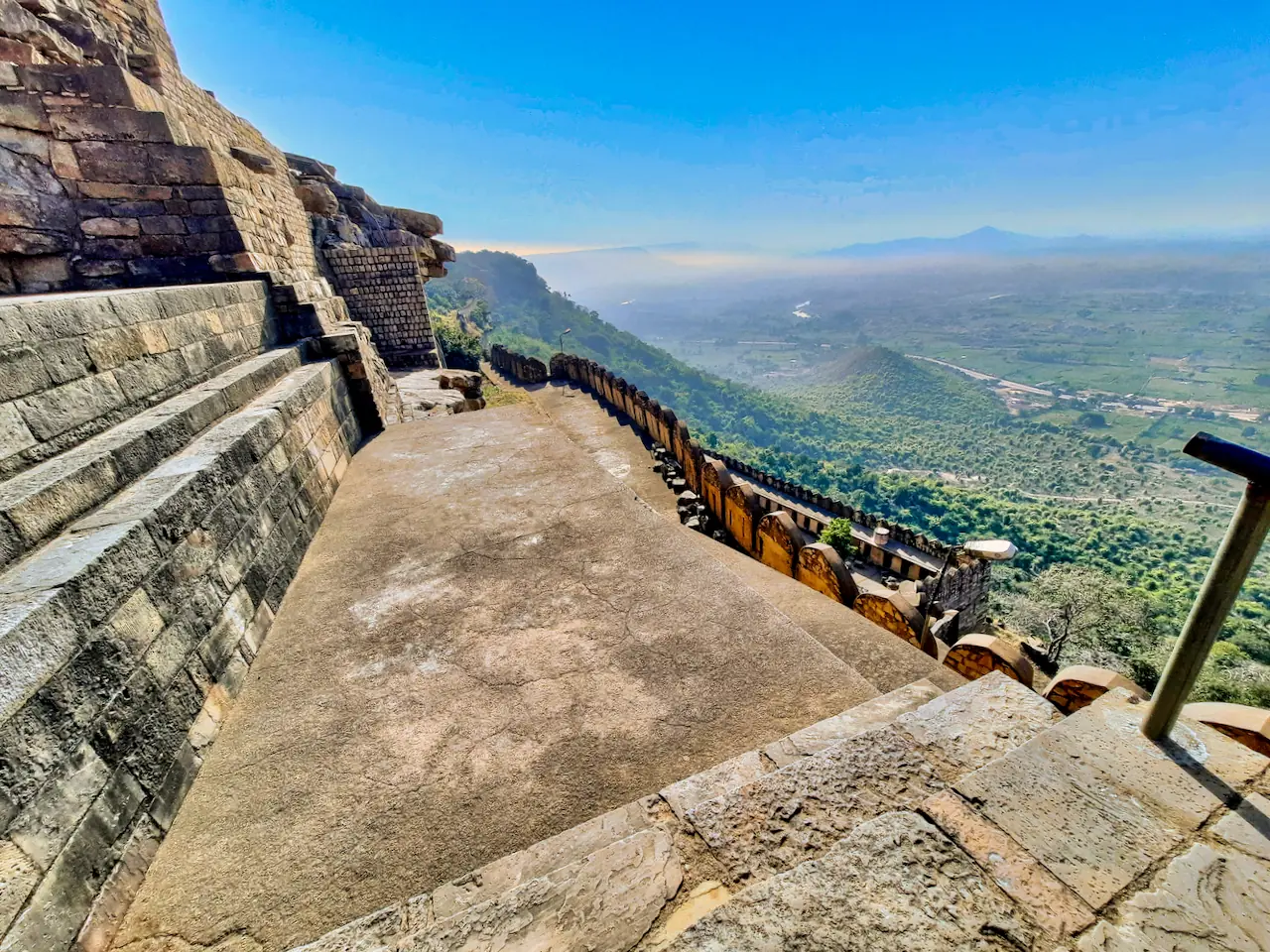
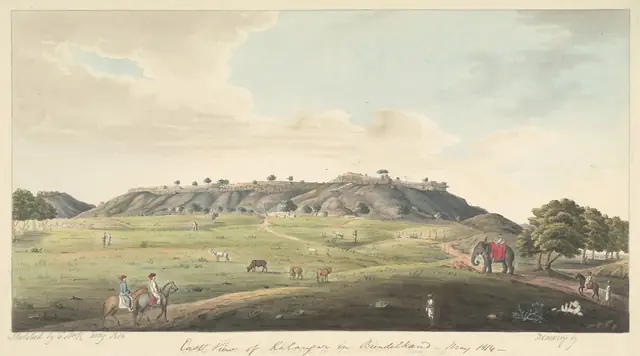
By 1544 Sher Shah ruled from Bengal to the Indus. Kalinjar, the old Chandela stronghold, was held by Raja Kirat Singh and would not bow. Sher Shah besieged it from November 1544, raising mounds and covered approaches against the walls, as Abbas Khan Sarwani describes. The hill’s tanks and springs let the garrison hold through the winter and spring.
02The explosion
On 22 May 1545 Sher Shah ordered a general assault and stood near the battery throwing fire-rockets over the wall. One struck the gate, rebounded and fell among the stored gunpowder. The blast burned him terribly. He was carried to his tent and urged his officers on through the day. Towards evening he was told the fort was taken, and died soon after. Kirat Singh, captured with his men, was put to death soon after. Sher Shah’s son Jalal Khan took the throne as Islam Shah.
03What it changed
Sher Shah’s death after only five years of rule left his empire to weaker heirs. Within a decade the Sur state had broken into pieces, Hemu had risen as its last great general, and Humayun had come back to Delhi. Sher Shah was buried at Sasaram in Bihar, in the great tomb he had begun for himself in the middle of a lake.
Kalinjar killed the ablest ruler of the Sur dynasty and opened the way for the Mughal return.