Cite
MLA
“Siege of Bharatpur (1825–26).” Hindu History, 2026, https://www.hinduhistory.in/battles/siege-of-bharatpur-1826/. Accessed .
APA
Hindu History. (2026). Siege of Bharatpur (1825–26). Retrieved , from https://www.hinduhistory.in/battles/siege-of-bharatpur-1826/
The walls were breached by mines and stormed on 18 January 1826; Durjan Sal was captured and the boy Raja Balwant Singh was placed on the throne under Company protection.
01A disputed throne
In 1825 Raja Baldeo Singh of Bharatpur died, leaving a young son, Balwant Singh, whom the Company had already recognised as heir. His cousin Durjan Sal seized the fort and the boy. Sir David Ochterlony, the Resident at Delhi, called out troops at once, but the Governor-General, Lord Amherst, overruled him, and Ochterlony resigned. Later in the year Amherst changed his mind. Lord Combermere, the commander-in-chief, marched on Bharatpur in December 1825 with a large army and a heavy siege train.
02Mines under the mud walls
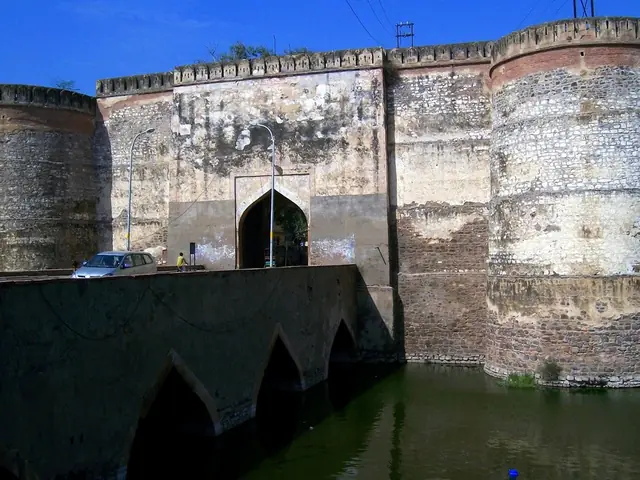
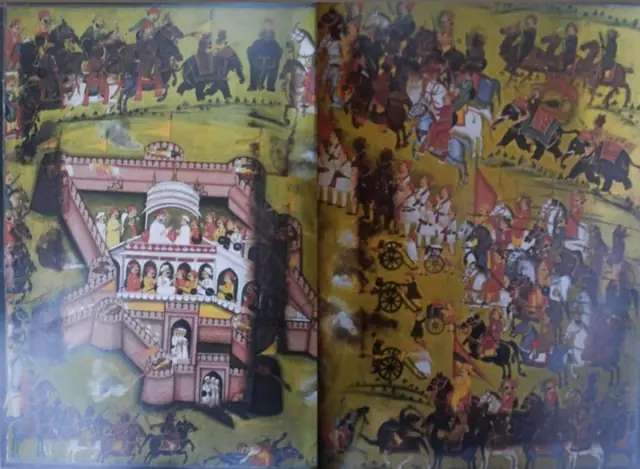
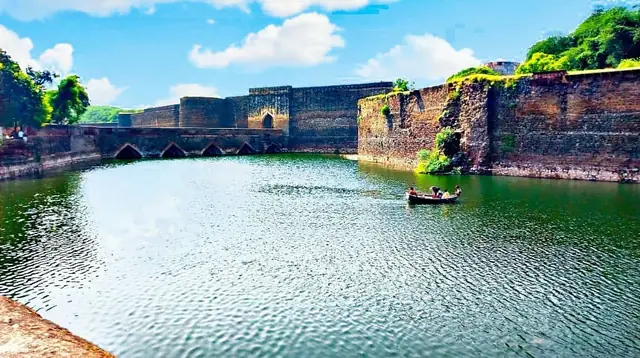
Lohagarh, the ‘iron fort’ of the Jats, had thick walls of rammed earth that swallowed cannon shot, and a moat that could be flooded from a lake. In 1805 Lake had lost four assaults against them. Combermere first cut the embankment so the moat could not be filled. Then, after weeks of bombardment, his sappers drove mines under the north-east bastion. On 18 January 1826 the largest mine was fired, the bastion went up, and the storming columns went in through the breach. Fighting went on through the streets before the fort was taken. Durjan Sal tried to escape and was captured.
The storming of Bharatpur wiped out the memory of Lake’s failure, which had been held up across India as proof that the Company could be beaten.