Cite
MLA
“The Kol rising.” Hindu History, 2026, https://www.hinduhistory.in/battles/kol-rising-1831/. Accessed .
APA
Hindu History. (2026). The Kol rising. Retrieved , from https://www.hinduhistory.in/battles/kol-rising-1831/
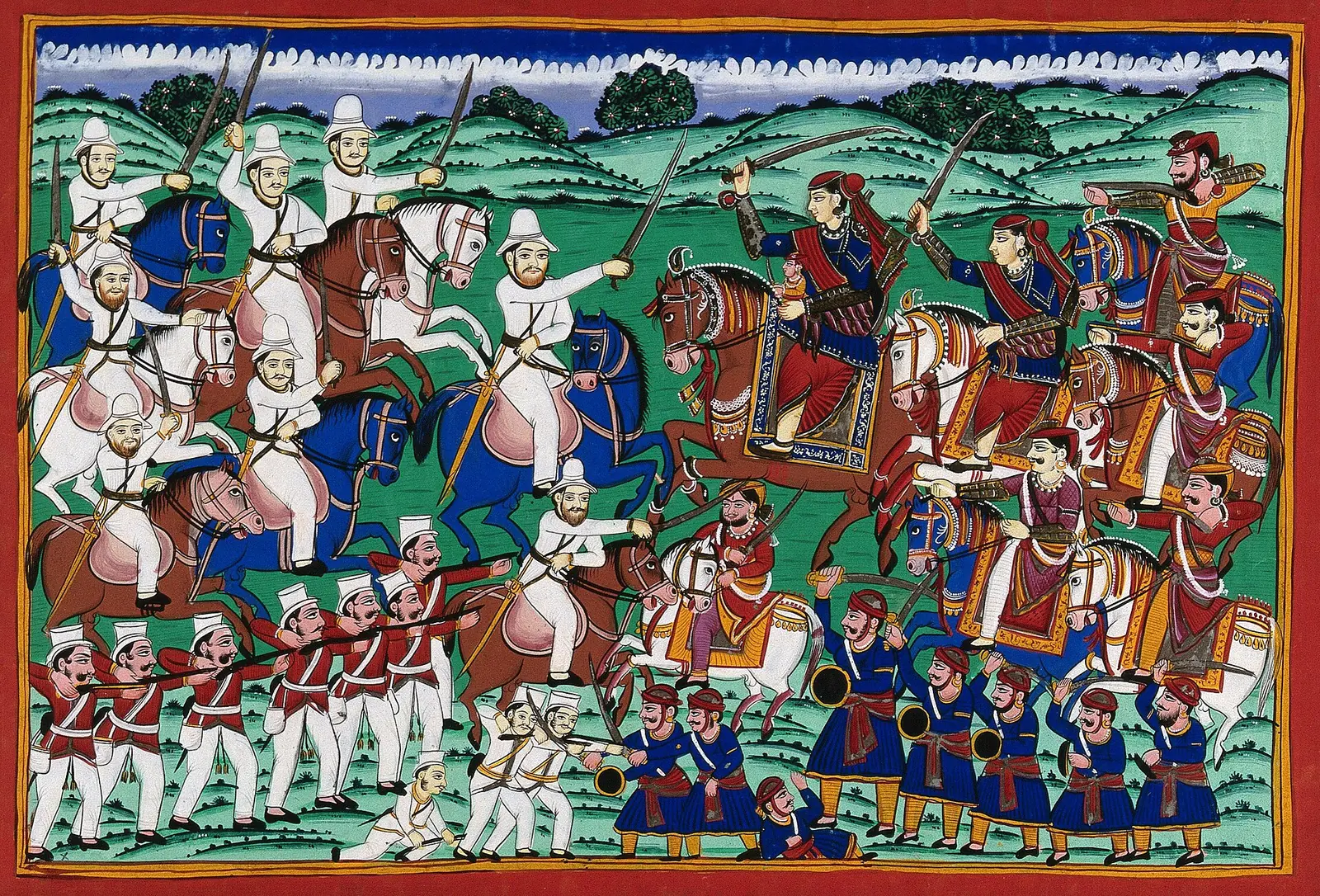
The rising was crushed by Company troops in 1832; its leaders were killed or captured, and Chota Nagpur was put under a separate administration as the South-West Frontier Agency.
01Land taken from the mankis
In the Munda-Manki system the villages of Chota Nagpur were held by their own headmen, the mundas and mankis. In the early nineteenth century the Nagvanshi Maharaja of Chota Nagpur, in debt, farmed out villages to thikedars, revenue contractors from outside, who raised rents and pushed out the old headmen. Company courts upheld the contractors. A tax on salt and other goods added to the anger. In December 1831 the dispossessed mankis of Sonepur and their followers began to attack the thikedars’ villages.
02Fire across the plateau
The rising spread across the plateau into Tamar, Singhbhum and the Ho country. Houses of thikedars and moneylenders were burnt, and the violence fell also on the settler villages around them. Buddhu Bhagat, an Oraon leader of Silagai, was killed with his sons and followers when troops surrounded his village. Company troops from Bengal and Bihar under Captain Wilkinson took the field in 1832, and by the spring the mankis had surrendered or been hunted down.
The Kol rising led to the South-West Frontier Agency of 1834, which took Chota Nagpur out of the ordinary Bengal regulations and partly restored the headmen’s place.