Cite
MLA
“Battle of Nesari.” Hindu History, 2026, https://www.hinduhistory.in/battles/battle-of-nesari-1674/. Accessed .
APA
Hindu History. (2026). Battle of Nesari. Retrieved , from https://www.hinduhistory.in/battles/battle-of-nesari-1674/
Prataprao Gujar and six companions charged Bahlol Khan’s army and were all killed.
01Umrani and the rebuke
In 1673 Prataprao Gujar, Shivaji’s sarnaubat or commander of horse, surrounded Bahlol Khan’s Bijapuri army near Umrani and cut off its water. Bahlol Khan asked for terms and promised not to march against Swarajya again; Prataprao let him go. Shivaji was angry. The Sabhasad Bakhar records that he wrote to Prataprao not to show his face until he had beaten Bahlol Khan. Within months the Khan was back on Maratha land.
02Seven riders
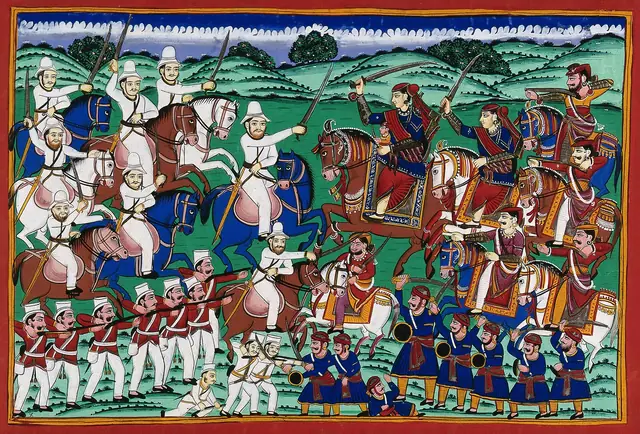
On 24 February 1674, Mahashivratri, Prataprao learned that Bahlol Khan was camped near Nesari in the Ghataprabha country. Without waiting for his main body he spurred towards the enemy with six of his officers. A letter of April 1674 written by Narayan Shenvi, interpreter to the English at Bombay, reports the charge of the seven. They cut into the Bijapuri ranks and were killed to a man.
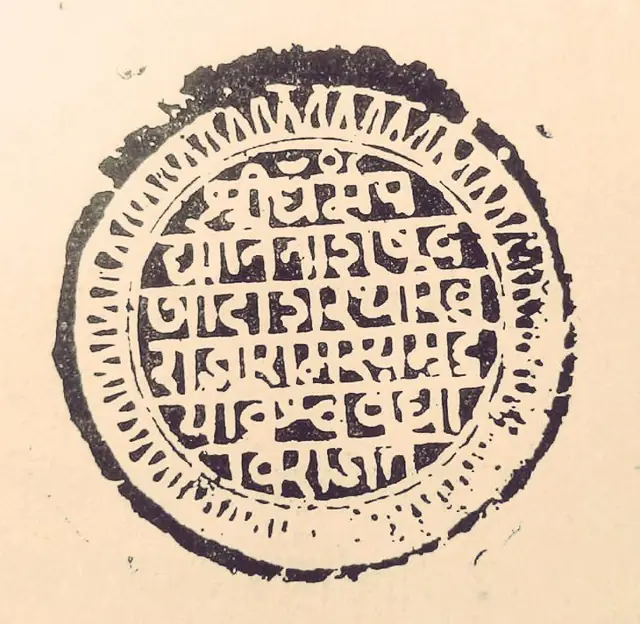
03Vedat Marathe Veer Daudale Saat
Shivaji grieved for him and made Hambirrao Mohite the new sarnaubat, who soon drove Bahlol Khan back. Prataprao’s daughter was later married to Shivaji’s younger son Rajaram. Nearly three centuries on, the Marathi poet Kusumagraj wrote of the seven riders in ‘Vedat Marathe Veer Daudale Saat’, and Lata Mangeshkar’s singing made it known in every Maharashtrian home. A memorial stands at Nesari.
Nesari was a defeat, but the charge of the seven became one of the best-loved stories of Swarajya, told a few months before Shivaji’s coronation.