Cite
MLA
“Battle of Asal Uttar.” Hindu History, 2026, https://www.hinduhistory.in/battles/battle-of-asal-uttar-1965/. Accessed .
APA
Hindu History. (2026). Battle of Asal Uttar. Retrieved , from https://www.hinduhistory.in/battles/battle-of-asal-uttar-1965/
The Pakistani armoured thrust was trapped in flooded fields and destroyed; Indian accounts count about 97 Pakistani tanks destroyed or captured.
01The Patton thrust
When India struck towards Lahore on 6 September 1965, Pakistan answered with its strongest card. Its 1st Armoured Division crossed near Khem Karan on 7–8 September, aiming to cut the Grand Trunk Road and reach the Beas bridges, which would have threatened Amritsar. The Indian 4th Mountain Division under Major General Gurbaksh Singh fell back and dug in around the village of Asal Uttar.
02The horseshoe and the flood
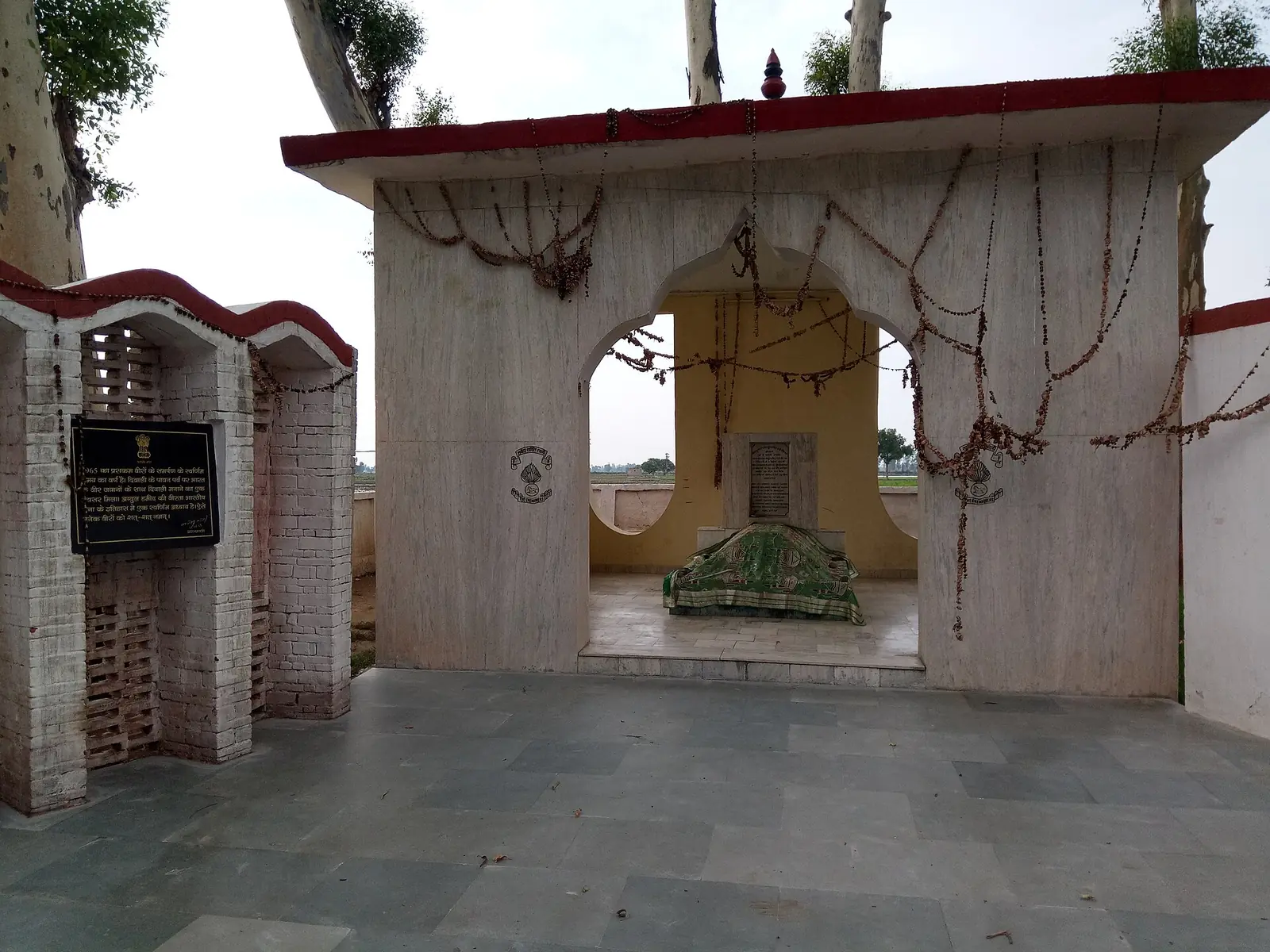
The Indians laid out their positions in a horseshoe, with Centurion and Sherman tanks of the 2nd Armoured Brigade under Brigadier T. K. Theograj hidden in the tall sugarcane, and breached the canal banks to flood the fields in front. The Pattons came on into soft, waterlogged ground and bogged down, and the hidden tanks and recoilless guns fired into them at close range. Company Quartermaster Havildar Abdul Hamid of 4 Grenadiers, firing a jeep-mounted recoilless gun, knocked out several Pattons before he was killed on 10 September; he was awarded the Param Vir Chakra.
03Patton Nagar
By 10 September the Pakistani division had lost most of its tanks and its attack was over. Indian accounts count about 97 Pakistani tanks destroyed or captured, the figure on the memorials; Indian tank losses were far fewer. The captured and wrecked Pattons were gathered at Bhikhiwind, which soldiers named Patton Nagar. Abdul Hamid’s grave and memorial stand at Asal Uttar.
Asal Uttar destroyed Pakistan’s main armoured striking force and is counted among the turning points of the 1965 war.