Cite
MLA
“Battle of Agra (1713).” Hindu History, 2026, https://www.hinduhistory.in/battles/battle-of-agra-1713/. Accessed .
APA
Hindu History. (2026). Battle of Agra (1713). Retrieved , from https://www.hinduhistory.in/battles/battle-of-agra-1713/
Jahandar Shah was beaten and fled to Delhi, where he was handed over and put to death; Farrukhsiyar became emperor.
01A throne won and lost
Bahadur Shah died in 1712, and his sons fought for the throne. Jahandar Shah won with the help of the great noble Zulfiqar Khan, but his reign was remembered for the influence of his favourite, the singer Lal Kunwar, and the insults heaped on old nobles. Farrukhsiyar, son of his murdered brother Azim-ush-Shan, was in Bengal. Sayyid Husain Ali Khan, governor of Bihar, and his brother Abdullah Khan of Allahabad took up his cause and marched west with him.
02The battle and after
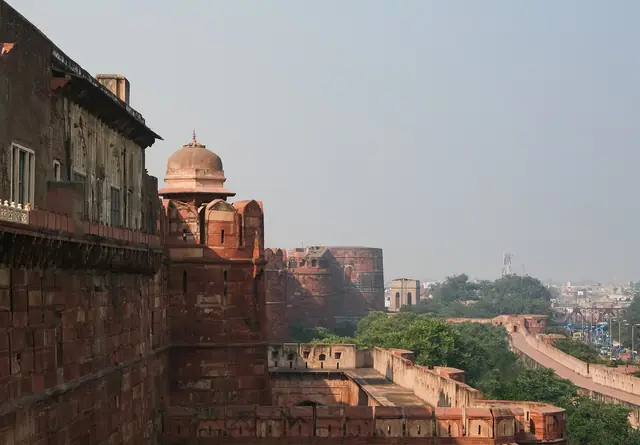
Jahandar Shah came down to Agra with a large army, but it was poorly led. On 10 January 1713 the armies met near the city. The Sayyids’ Barha troops broke Jahandar’s lines, and he fled the field, reaching Delhi in disguise. There Zulfiqar Khan’s father Asad Khan handed him over to Farrukhsiyar, hoping to save his own family. Jahandar was strangled in the Red Fort, and Zulfiqar Khan was also put to death. For the next seven years the Sayyid brothers ruled in the emperor’s name.
The battle made the Sayyid brothers masters of the Mughal court; in 1719 they made the alliance with the Marathas that let Peshwa Balaji Vishwanath’s army march into Delhi.