01Badalgarh to the red fort
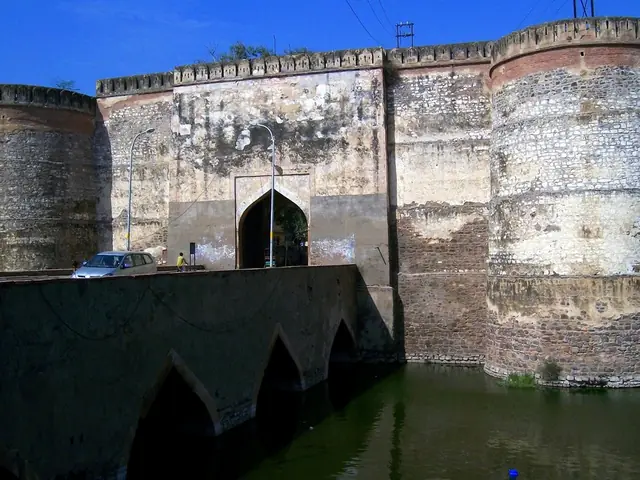
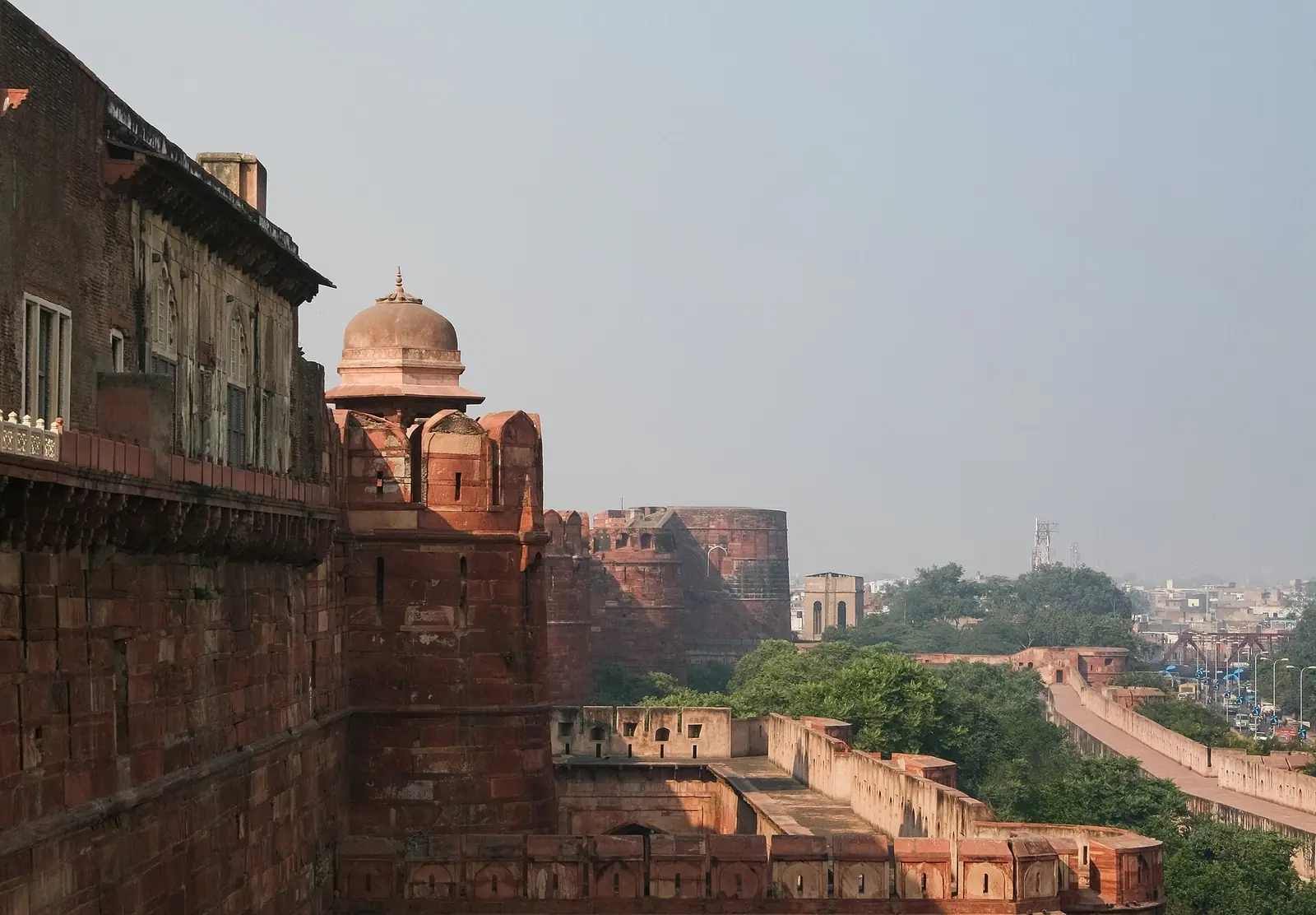
Before the Mughals there was an older brick fort here called Badalgarh. Sikandar Lodi made Agra his capital in 1504, and Babur took it after Panipat in 1526. Akbar pulled down the old fort and from 1565 had the present one built in red sandstone, two and a half kilometres of wall, finished c. 1573. Shah Jahan added the white marble halls and, between 1632 and 1653, the Taj Mahal for his wife Mumtaz Mahal. The land for the tomb belonged to Raja Jai Singh of Amber; Shah Jahan’s farman of 1633 records that he gave it in exchange for four other houses. Aurangzeb kept his father a prisoner in the fort from 1658 until Shah Jahan died in 1666.
02Shivaji in Agra
Under the treaty of Purandar, Shivaji came to Agra and stood before Aurangzeb in the Diwan-i-Am on 12 May 1666, the emperor’s birthday. Placed among the lower ranks of nobles, he walked out of the court in anger, and was put under guard in Jai Singh’s son Ram Singh’s quarters. For three months he waited. Then he fell ill, as he let it be known, and sent out large baskets of sweets to Brahmins and holy men each day. On 17 August 1666 he and his son Sambhaji left in the baskets, and he reached Rajgad that September. A statue of Shivaji now stands outside the fort.
03Jats, Marathas, British
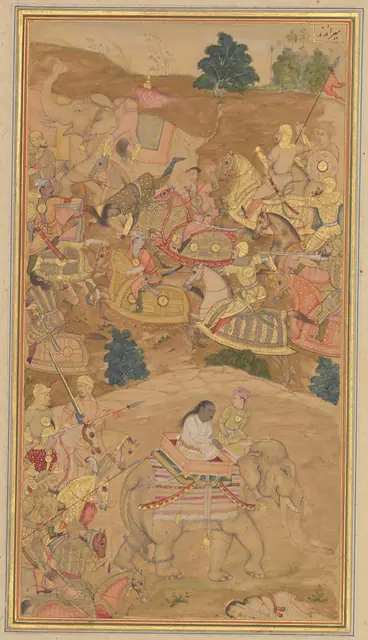
Mughal Agra was never safe from the Jats of Braj. In 1688, under Raja Ram Jat, they plundered Akbar’s tomb at Sikandra, as Niccolao Manucci recorded. In June 1761 Suraj Mal of Bharatpur took the Agra fort itself and held it for more than a decade. The Marathas under Mahadji Scindia held Agra from 1785, and the British under General Lake took the fort from its Maratha garrison in October 1803. In 1857 the British of Agra shut themselves inside the fort for months. Agra’s own temples, the Mankameshwar of Shiva by the Jama Masjid among them, have stood through all of it.
The life of this place
- 1504Sikandar Lodi makes Agra his capital.
- 1565–c. 1573Akbar rebuilds the fort in red sandstone.
- 1632–1653The Taj Mahal is built on land taken from Raja Jai Singh of Amber in exchange.
- 12 May – 17 August 1666Shivaji at Aurangzeb’s court, his house arrest, and his escape.
- 1688Raja Ram Jat plunders Akbar’s tomb at Sikandra.
- June 1761Suraj Mal takes the Agra fort.
- 1785Mahadji Scindia takes Agra for the Marathas.
- October 1803General Lake takes the fort from the Marathas.
The fort and the Taj are 2.5 km apart; the Taj is shut on Fridays. Most of the fort is still an army area, so only the southern part is open.