Cite
MLA
“Kurma Avatar.” Hindu History, 2026, https://www.hinduhistory.in/devata/kurma/. Accessed .
APA
Hindu History. (2026). Kurma Avatar. Retrieved , from https://www.hinduhistory.in/devata/kurma/
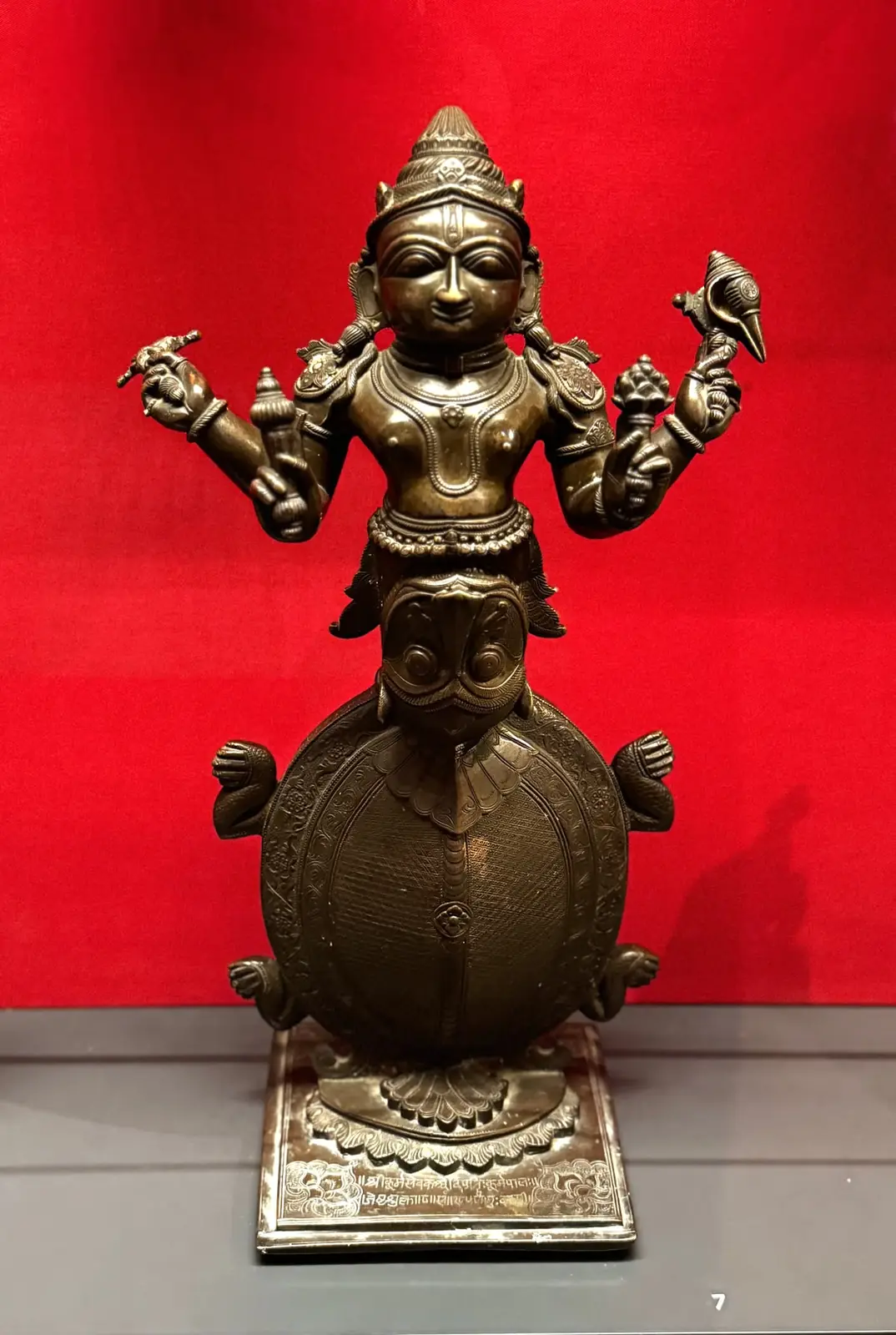
A tortoise bearing the mountain, with Vasuki wound round it and devas and asuras pulling at either end; or Vishnu’s four-armed upper body rising from a tortoise shell.
01The churning of the ocean
Cursed by Durvasa, the devas had lost their strength and splendour. Vishnu advised them to make peace with the asuras and churn the ocean of milk for amrita, using Mount Mandara as the churning rod and the serpent Vasuki as the rope. But the mountain sank into the ocean floor. Then Bhagwan took the form of a tortoise a hundred thousand yojanas wide, went under it and held it up on his back, and the churning went on (Bhagavata Purana 8.7; Vishnu Purana 1.9).
02What rose from the ocean
First came the halahala poison, which Shiva drank and held in his throat, turning it blue. Then the wish-fulfilling cow Kamadhenu, the horse Uchchaihshravas, the elephant Airavata, the Kaustubha gem, the Parijata tree, the apsaras, Varuni, and Shri Lakshmi herself. Last rose Dhanvantari with the pot of amrita. Vishnu, as Mohini, gave the amrita to the devas. Every Kumbh Mela recalls the drops of amrita that fell at Haridwar, Prayag, Ujjain and Nashik. The Shatapatha Brahmana says Prajapati took the form of a tortoise to create living beings.
03Srikurmam
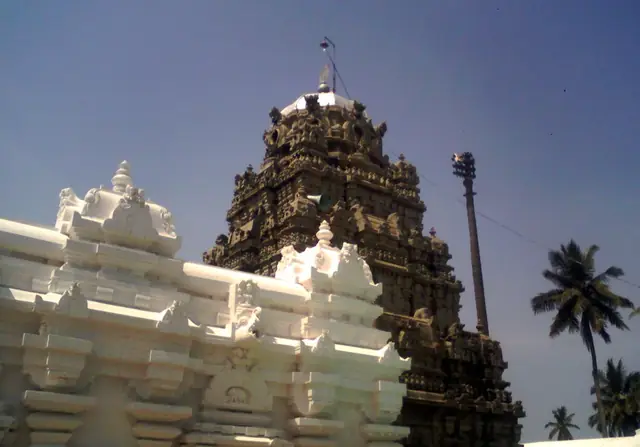
Kurma Jayanti is kept on Vaishakha Purnima. The one great temple where Vishnu is worshipped in the tortoise form is Srikurmam near Srikakulam in Andhra Pradesh, on the coast of old Kalinga, with inscriptions of the Eastern Gangas on its walls. The murti faces west, unlike most Vishnu temples, and the tank beside it is home to many living tortoises cared for by the temple. Every home that keeps a brass tortoise before the puja shelf remembers him.
In the texts
- Bhagavata Purana 8.5–8.9
- Vishnu Purana 1.9
- Mahabharata, Adi Parva (Astika Parva)
- Kurma Purana