Cite
MLA
“Third Anglo-Burmese War.” Hindu History, 2026, https://www.hinduhistory.in/battles/third-anglo-burmese-war-1885/. Accessed .
APA
Hindu History. (2026). Third Anglo-Burmese War. Retrieved , from https://www.hinduhistory.in/battles/third-anglo-burmese-war-1885/
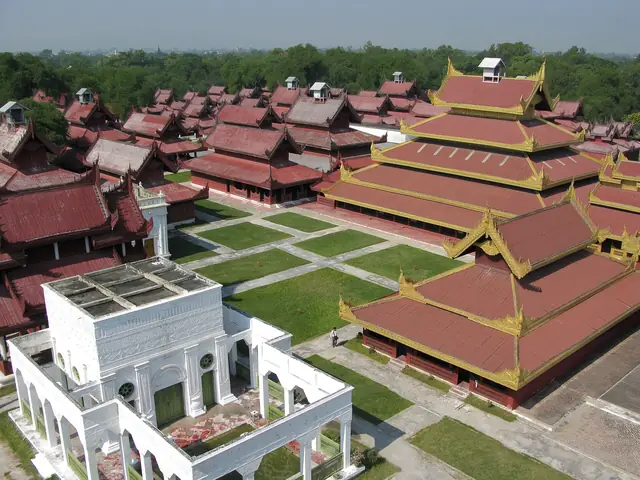
Mandalay surrendered, King Thibaw was sent into exile at Ratnagiri in India, and Upper Burma was annexed on 1 January 1886.
01The ultimatum
After the wars of 1824–26 and 1852 the Konbaung kings kept only Upper Burma, ruled from Mandalay. In 1885 the Hluttaw, the royal council, fined the Bombay Burmah Trading Corporation for timber dues it said had been evaded. At the same time Mandalay was talking with France. The Viceroy, Lord Dufferin, sent an ultimatum in October demanding that the case be reopened and that a British agent be received and Burma’s foreign relations be placed under India. Thibaw’s court refused.
02Up the river to Mandalay
Prendergast’s force, carried on river steamers and flats, crossed the frontier on 14 November. The fort at Minhla was stormed on 17 November, the only serious fight of the advance. The Burmese army had little time to gather, and Thibaw sent to treat as the flotilla came near. On 28 November the British entered Mandalay; the next day Thibaw and Queen Supayalat were taken down the river. The king lived out his life at Ratnagiri on the Konkan coast, where he died in 1916.
Burma became a province of British India until 1937; the quick capture was followed by years of resistance in the countryside.