Cite
MLA
“Prince Govindachandra repels the Turushkas.” Hindu History, 2026, https://www.hinduhistory.in/battles/govindachandra-repels-the-turushkas/. Accessed .
APA
Hindu History. (2026). Prince Govindachandra repels the Turushkas. Retrieved , from https://www.hinduhistory.in/battles/govindachandra-repels-the-turushkas/
The Rahan plate says Govindachandra’s repeated victories made the Hammira lay aside his hostility.
01The Rahan plate
The Rahan copper plate of the Gahadavala Madanapala, dated 1109, says that his son Govindachandra, by his matchless fighting, again and again made the Hammira put aside his enmity. Hammira is the Sanskrit rendering of amir, the title Indian records used for Turkish commanders. Persian sources confirm Ghaznavid raids toward Kanauj in the reign of Masud III, and one of them names the capture of a Hindu prince there for ransom.
02The Turushka tax
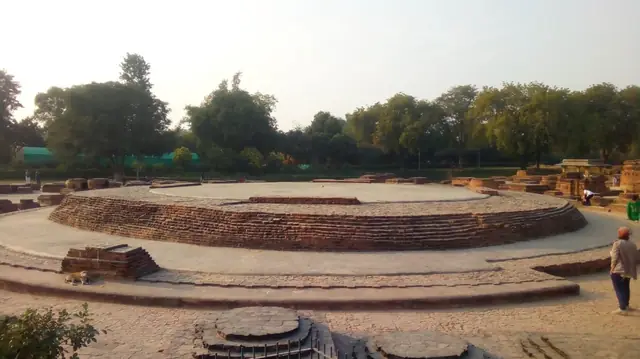
Gahadavala grants of these decades mention a levy called the turushkadanda, the Turushka levy, which most historians read as a tax raised to pay for defence against the Turks, or possibly as tribute. Govindachandra became king around 1114 and ruled for some forty years, holding the middle Ganga from Kanyakubja to Kashi. His queen Kumaradevi built a monastery at Sarnath, and his minister Lakshmidhara compiled the great Dharmashastra digest, the Kritya-kalpataru.
It kept the Ghaznavids out of the middle Ganga for the rest of their rule in Lahore.