
Cite
MLA
“Battle of Rajmahal (1747).” Hindu History, 2026, https://www.hinduhistory.in/battles/battle-of-rajmahal-1747/. Accessed .
APA
Hindu History. (2026). Battle of Rajmahal (1747). Retrieved , from https://www.hinduhistory.in/battles/battle-of-rajmahal-1747/
Ishwari Singh beat the coalition supporting his half-brother Madho Singh.
01The promise of 1708
Jai Singh II had married a Mewar princess in 1708 on the condition that her son would succeed him. But Ishwari Singh, his elder son by another queen, took the throne in 1743. Madho Singh, the Mewar princess’s son, had the backing of his uncle Maharana Jagat Singh II, and of the Hada rajas of Kota and Bundi, who had their own quarrels with Jaipur. Both sides also bid for Maratha help, and the Maratha chiefs took money from each in turn.
02Rajmahal
In March 1747 the allied armies of Mewar, Kota and Bundi marched for Jaipur in Madho Singh’s name. Ishwari Singh met them at Rajmahal on the Banas river and beat them; his minister Hargovind Natani and the Jaipur artillery are given credit. To mark the victory Ishwari Singh built the Isarlat, a tall tower that still rises over Jaipur’s Tripolia Bazaar. The victory was short-lived: in 1748 Madho Singh came back with the Marathas behind him.
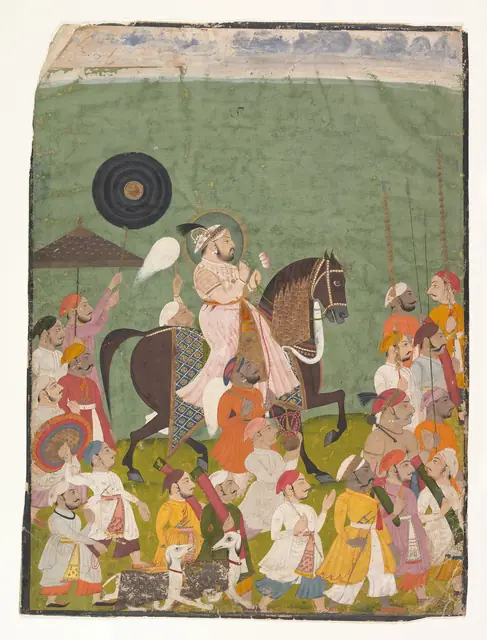
Rajmahal was Ishwari Singh’s high point in the Jaipur succession war, which ended with Maratha intervention at Bagru and his death in 1750.