Cite
MLA
“Varuna.” Hindu History, 2026, https://www.hinduhistory.in/devata/varuna/. Accessed .
APA
Hindu History. (2026). Varuna. Retrieved , from https://www.hinduhistory.in/devata/varuna/
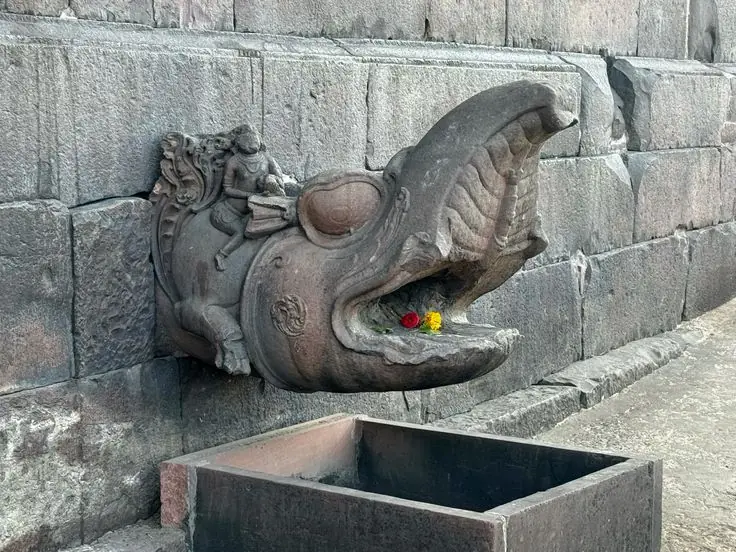
Seated on a makara, the crocodile-like sea creature, holding the pasha (noose) and sometimes a pot of water or a lotus; carved as guardian of the west on temple walls.
01Keeper of rita
The Rigveda praises Varuna, often paired with Mitra, as the one who set the sun on its path and keeps the order of the world, rita, by which rivers flow and seasons turn. His spies watch everywhere; his noose binds the one who breaks a vow. Vasishtha’s hymns to him (Rigveda 7.86–89) are among the most personal in the Veda: the rishi asks what wrong he has done, begs release from his fault, and calls himself Varuna’s friend. The Taittiriya Upanishad gives the wisdom of Varuna to his son Bhrigu, who learns step by step that Brahman is bliss.
02Lord of the waters
In the Itihasa and Puranas he is lord of the seas and of all waters, and the guardian of the west. Every kalasha set up for a puja is first filled with the invocation of Varuna, so that the water in it becomes holy. In the Mahabharata he gives Arjuna a divine noose, and at Khandava he provides the Gandiva and the inexhaustible quivers that Agni hands on. Sindhi Hindus worship Jhulelal, the saint of the river, as an avatar of Varuna.
03Festivals of the sea
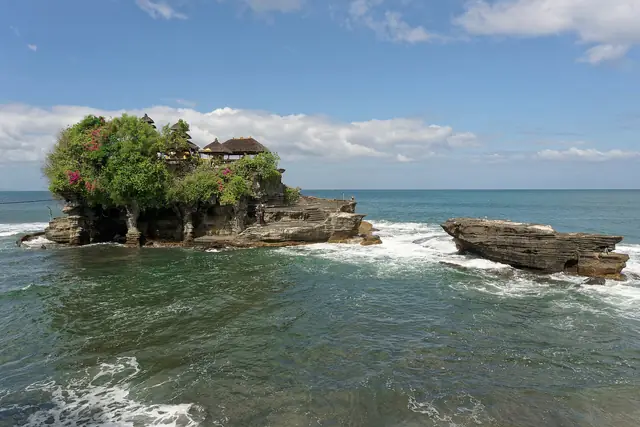
On Narali Purnima, the full moon of Shravan, the fishing communities of the Konkan coast throw coconuts into the sea for Varuna, marking the end of the monsoon closure and the start of the fishing season. Sindhis keep Cheti Chand, the new year at the start of Chaitra, as Jhulelal’s birth, with lamps floated on the water. In Bali, Tanah Lot on its sea-rock is held sacred to the deities of the sea.
In the texts
- Rigveda 7.86–89 (hymns of Vasishtha)
- Taittiriya Upanishad, Bhriguvalli
- Mahabharata, Adi and Vana Parvas