Cite
MLA
“Khandoba (Malhari Martand).” Hindu History, 2026, https://www.hinduhistory.in/devata/khandoba/. Accessed .
APA
Hindu History. (2026). Khandoba (Malhari Martand). Retrieved , from https://www.hinduhistory.in/devata/khandoba/
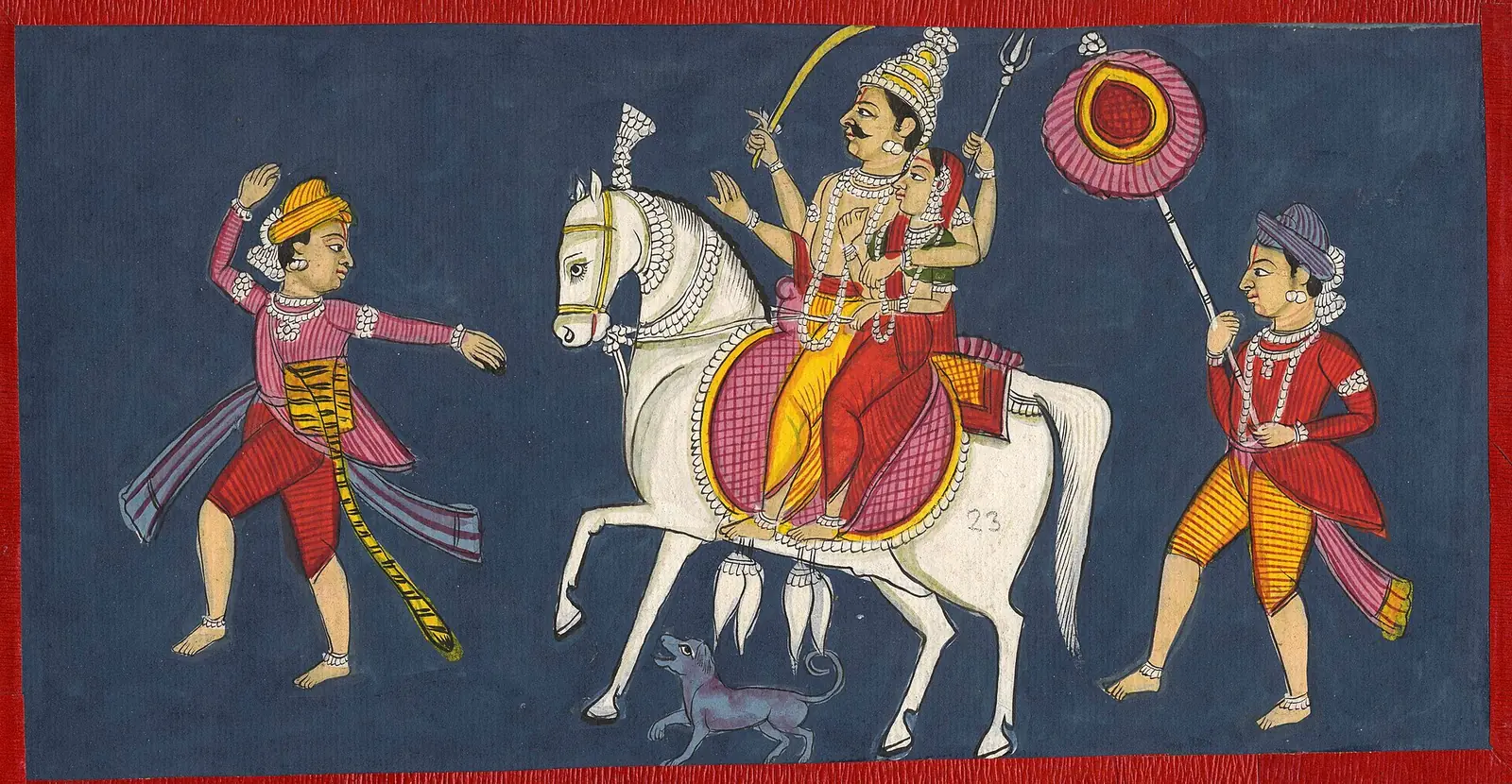
A warrior on a white horse, often with Mhalsa seated before him, holding a sword, a trident, a damaru and a bowl; a dog runs beside the horse. In the sanctum he is worshipped as a linga, with the turmeric-yellow murtis beside it.
01Malla and Mani
The Malhari Mahatmya tells that the demon brothers Malla and Mani, made strong by a boon from Brahma, harassed the rishis at Maninchula. The seven rishis prayed to Shiva, who took the form of Martanda Bhairava, shining like the sun, and rode out with an army of seven crore. He killed Mani, who in dying asked that his head be placed at Shiva’s feet and that he be given a share of the worship. Then he killed Malla, and took the name Malhari. The battle ground is held to be Jejuri.
02Bhandara at Jejuri
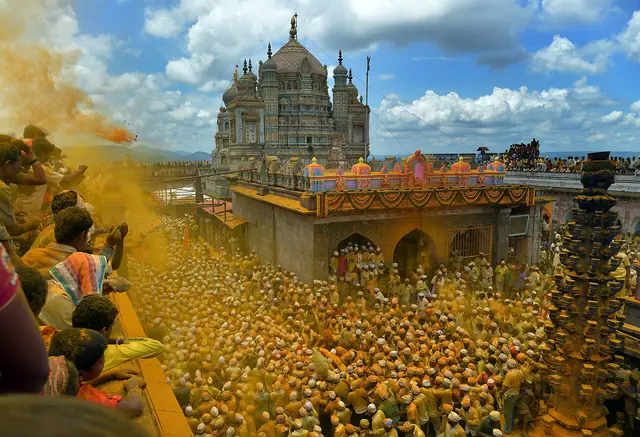
Jejuri sits on a hill south-east of Pune, the temple inside a fort reached by about two hundred steps. Devotees throw fistfuls of bhandara, turmeric powder, until the whole hill turns gold, and shout yeḷkoṭ yeḷkoṭ jai malhār. Families bring newly married couples to him; the bride and groom climb together. Champa Shashthi, at the end of a six-day festival in Margashirsha, marks his victory, and the Somvati Amavasya yatra, when the palkhi is carried down to the Karha river, draws huge crowds.
03Kuladevata of the Deccan
Khandoba is the family deity of farmers, herders, warriors and brahmins alike across Maharashtra and north Karnataka. The Holkars of Indore counted him their kuladevata, and the Maratha armies went to war with his name on their lips. Waghyas and Muralis, men and women dedicated to his service, sing his songs, the jagaran and gondhal, through the night. His second wife Banai, a shepherd girl, ties him to the Dhangar community, and his first, Mhalsa, to the Lingayat merchants.
In the texts
- Malhari Mahatmya (Sanskrit, counted part of the Brahmanda Purana)
- Jejuri temple traditions