
Cite
MLA
“Kalki Avatar.” Hindu History, 2026, https://www.hinduhistory.in/devata/kalki/. Accessed .
APA
Hindu History. (2026). Kalki Avatar. Retrieved , from https://www.hinduhistory.in/devata/kalki/
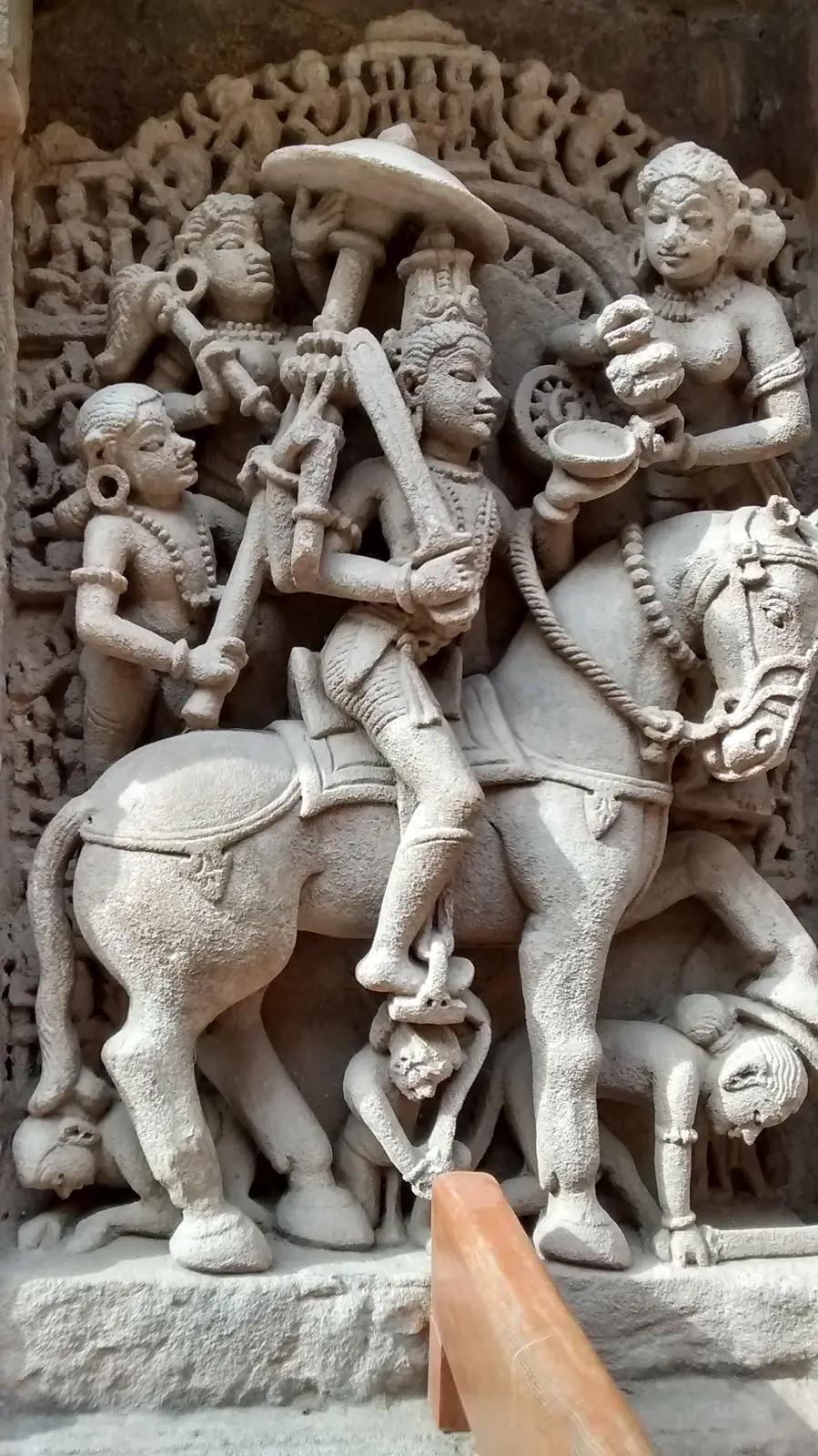
A warrior on a white horse with a raised sword; sometimes four-armed with conch and discus, sometimes shown as a horse-headed figure in older panels.
01At the end of Kali Yuga
The Bhagavata Purana (12.2) describes the late Kali Yuga: wealth alone will be counted as virtue, might as right, and kings will be no better than thieves. Then, it says, Bhagwan will be born as Kalki in the house of the brahmin Vishnuyasha in the village of Shambhala. Mounted on the swift horse Devadatta, sword in hand, he will ride over the earth and destroy the robbers in the guise of kings, and the minds of the people will become pure again. The Vishnu Purana (4.24) and the Mahabharata’s Vana Parva tell the same.
02The Kalki Purana
The Kalki Purana fills in the katha: Kalki studies under Parashurama, receives the horse and sword from Shiva, marries Padmavati of Simhala, and with his brothers fights the forces of Kali. When the work is done, Satya Yuga returns. Kalki Jayanti is kept on Shravan Shukla Shashthi. By the traditional reckoning Kali Yuga lasts 4,32,000 years, of which only a little over 5,100 have passed, so the tradition sees his coming as very far off.
03In temples
Kalki closes every Dashavatara frieze. At Rani ki Vav in Patan, the eleventh-century stepwell of the Chaulukyas, he rides in stone beside Buddha. At Chamba a temple niche of the Lakshmi Narayan group shows him, and Bengal’s terracotta temples set him at the end of the row of ten above their doors. Temples where Kalki is the main murti are few and mostly recent.
In the texts
- Bhagavata Purana 1.3.25 and 12.2
- Vishnu Purana 4.24
- Mahabharata, Vana Parva
- Kalki Purana