
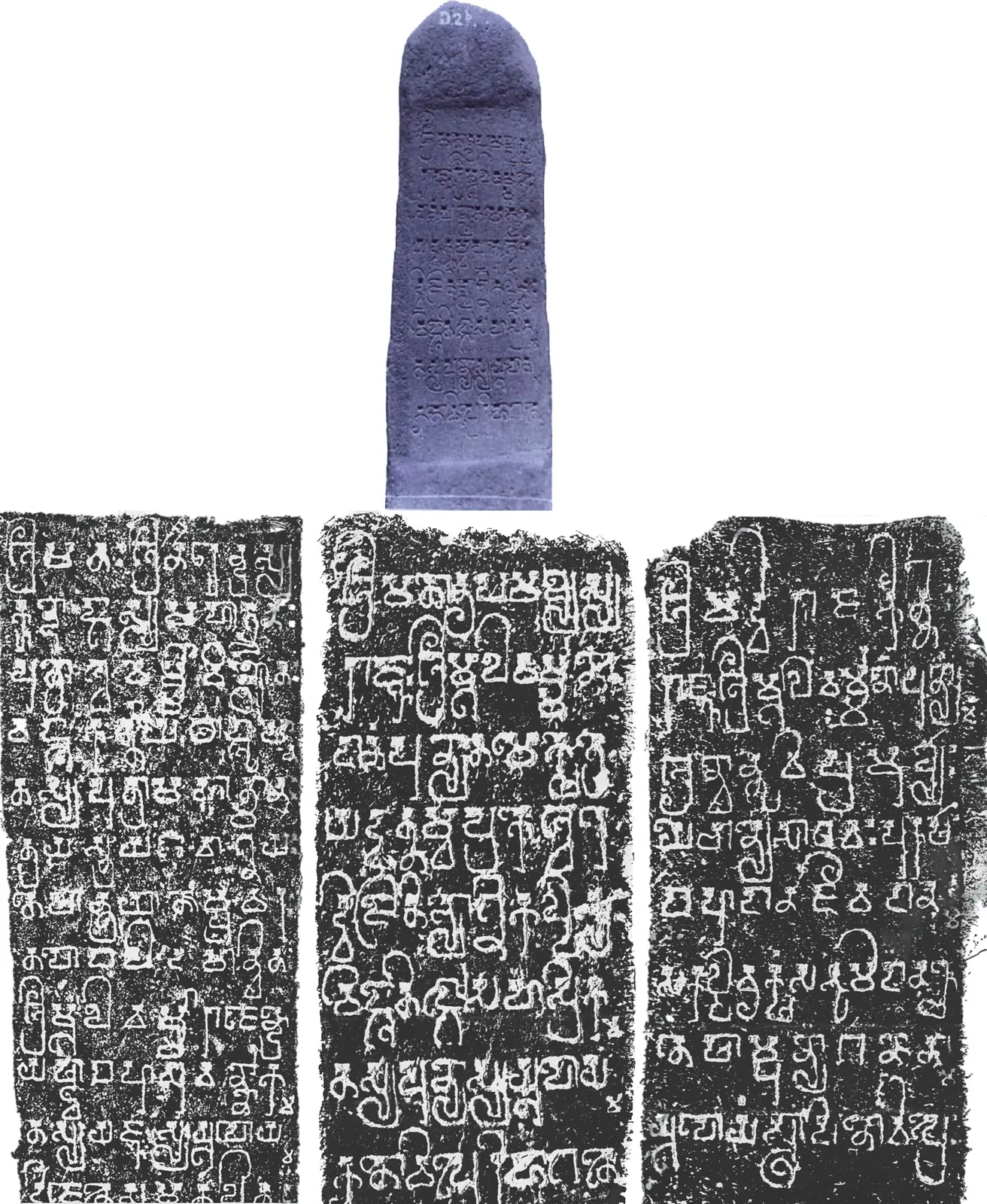
01Seven yupas on the Mahakam
At Muara Kaman on the Mahakam river, seven stone pillars were found, carved in Sanskrit verse in an early southern Brahmi script of about 400 CE. A yupa is the post to which the sacrificial animal was tied in a Vedic yajna, and these stones take that form. They are the oldest written records of Indonesia and are kept today in the Museum Nasional in Jakarta.
02Kundunga, Ashvavarman, Mulavarman
The yupas give three generations. The grandfather is Kundunga, a name that is not Sanskrit and seems local. His son Ashvavarman is called the founder of the line, vamsha-karta, likened to Amshuman. His son Mulavarman is the king who performed the bahusuvarnaka yajna, the sacrifice of much gold, and gave twenty thousand cows to the Brahmins at the holy place called Vaprakeshvara. Here you can see a local chief’s family taking up Sanskrit names and Vedic rites within two generations.
03What came after
Nothing more is written at Muara Kaman for many centuries. The later sultanate of Kutai Kartanegara, on the same river, kept a memory of an older kingdom upstream, and the name Martadipura is given to it in Kutai tradition. The yupas remain the only firm record. Four of the stones were found in 1879 and three more in 1940, and scholars soon read them as the earliest Sanskrit writing in the whole archipelago, older than anything yet found on Java or Sumatra.
The rulers
- 1KundungaGrandfather; a local namelate 4th century
- 2AshvavarmanCalled founder of the linelate 4th century
- 3MulavarmanSet up the seven yupasc. 400
What they left
- The seven yupa inscriptions, Indonesia’s oldest writing
- The first record of Vedic yajna in the archipelago